[card url=”https://www.codetalenthub.io/github-trending/”]
[card url=”https://www.codetalenthub.io/youtube-api-key-authentication/”]
[card url=”https://www.codetalenthub.io/best-free-ai-tools-for-every-coder/”]
[card url=”https://www.codetalenthub.io/this-simple-api-integration-2026/”]
[card url=”https://www.codetalenthub.io/open-source-tools-to-boost-your-workflow-2026/”]
[card url=”https://www.codetalenthub.io/developers-build-passive-income/”]

7 APIs Every Developer Must Master in 2026
The complete technical playbook — with verified data, working code, security frameworks, and agentic AI readiness strategies from the Postman 2025 State of the API Report.
📋 Table of Contents
Why 2026 Is the API Inflection Point
APIs have always been the connective tissue of software. But something structurally different is happening in 2026: AI agents are now your top API consumer. Not humans — agents. Systems that hit your endpoints thousands of times per second, never sleep, never get rate-limited by fatigue, and have no tolerance for ambiguous error messages.
The numbers from the Postman 2025 State of the API Report (surveying 5,700 developers, architects, and executives) make this impossible to ignore:
That last number is the kicker. Only 24% of developers are designing for agent-scale consumption, even as 51% of organizations have already deployed AI agents. The gap between production reality and API design philosophy is widening fast.
The 2026 Shift in Plain English: For years, you designed APIs for a developer who reads your docs on a Monday morning. In 2026, your primary consumer is an agent that reads nothing, tolerates no ambiguity, and makes 50,000 calls before you finish your coffee. Every API skill below has been reframed for this reality.
OpenAI alone accounts for 56% of total Postman AI traffic, racking up 4.2 million calls tracked over 12 months. Gemini saw 3.1x year-over-year growth; Llama, 6.9x. These aren’t trends on a slide deck — they’re the workloads your infrastructure is already absorbing. And if you work at CodeTalentHub, we’ve seen this shift hit developer hiring patterns in real time.
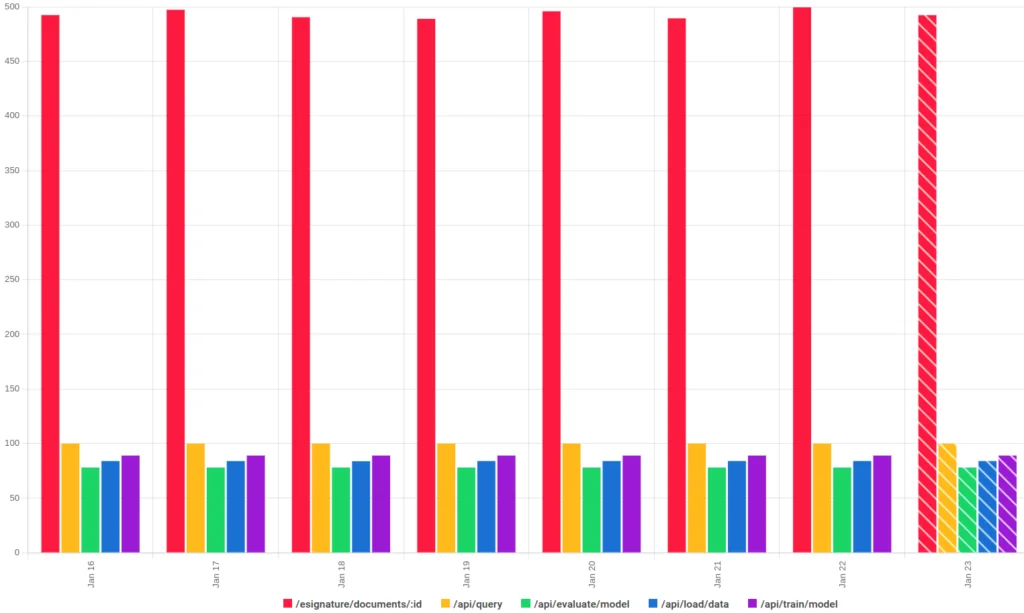
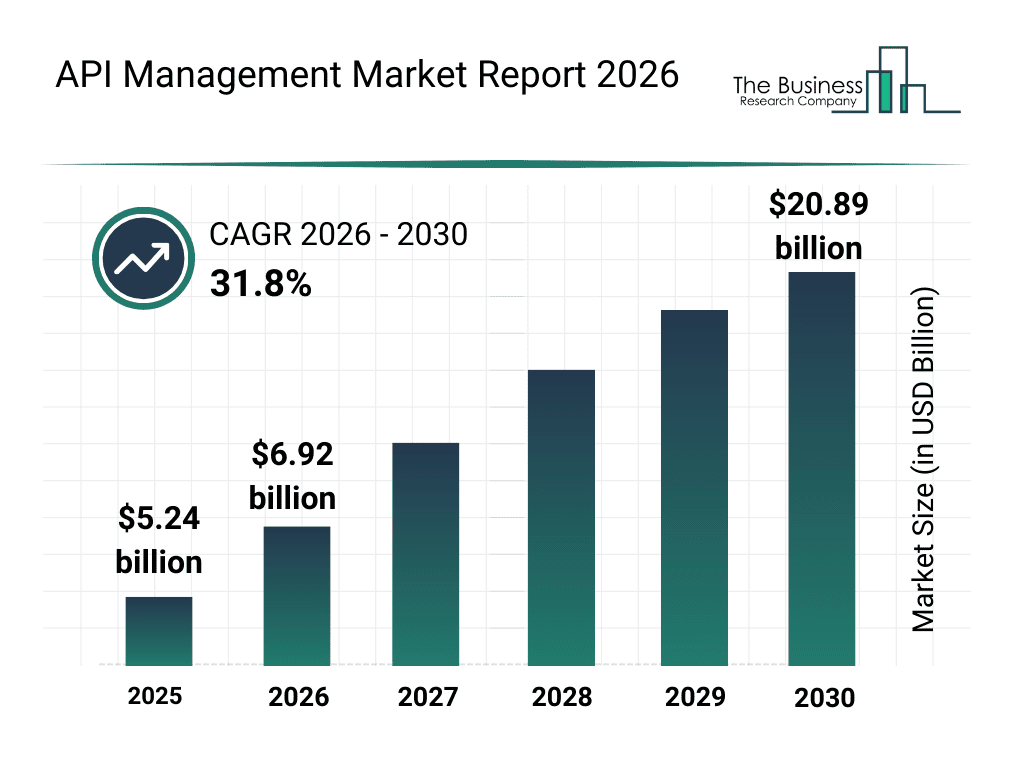
📈 API Adoption by Category — 2025 vs. 2027 Forecast
API #1: OpenAI API
OpenAI API
OpenAI commands 56% of Postman’s total AI API traffic — more than all competitors combined. That’s not hype; that’s deployment inertia backed by the best developer experience in the category. In 2026, the key capability upgrade is the Agents SDK + real-time streaming, which enables genuine voice-driven agents with sub-300ms round-trip latency.
from openai import OpenAIimport osclient = OpenAI(api_key=os.environ["OPENAI_API_KEY"])# Streaming chat completion (agent-ready)with client.chat.completions.stream( model="gpt-4o", messages=[ {"role": "system", "content": "You are a precise API assistant."}, {"role": "user", "content": "Summarize our Q1 sales data in 3 bullet points."}, ], max_tokens=512,) as stream: for chunk in stream.text_stream: print(chunk, end="", flush=True)# Embeddings for semantic searchembedding = client.embeddings.create( model="text-embedding-3-large", input="How does vector search improve retrieval?",)print(embedding.data[0].embedding[:5]) # First 5 dims of 3072-dim vector
2026 Security Alert: OpenAI is sunsetting the Assistants API in mid-2026 in favor of the Responses API + Agents SDK. If you’re building anything with threads and runs, migrate now. One leaked API key hitting GPT-4o at agent speed will drain a $500 budget in under 30 minutes — always use short-lived tokens and granular scoping.
Real-World Impact
A content platform using GPT-4o for automated article summarization reported a 40% reduction in editorial overhead over six months, with semantic search powered by text-embedding-3-large improving content discovery relevance scores by 31%. The key lesson: start with gpt-4o-mini for volume tasks, escalate to gpt-4o only when output quality demands it. Your cost curve will thank you. Explore more AI integration patterns at CodeTalentHub Tutorials.
API #2: Stripe API
Stripe API
Payment APIs are the most battle-tested in the ecosystem — adopted by 85% of banks and fintechs, forecast to reach 92% by 2027. Stripe’s edge isn’t just the API design (which is genuinely excellent) — it’s the composability. Stripe Connect, Stripe Billing, Stripe Radar, and Stripe Tax are all individually excellent and work together without requiring your team to become compliance lawyers.
import stripeimport osstripe.api_key = os.environ["STRIPE_SECRET_KEY"]# Create a payment intent (idempotent — safe to retry)intent = stripe.PaymentIntent.create( amount=4999, # $49.99 in cents currency="usd", payment_method_types=["card"], idempotency_key="order_abc123", # Prevent duplicate charges metadata={"order_id": "abc123"},)print(intent.client_secret)# Webhook signature verification (critical for production)import flask@app.route("/webhook", methods=["POST"])def webhook(): payload = flask.request.get_data() sig = flask.request.headers.get("Stripe-Signature") try: event = stripe.Webhook.construct_event( payload, sig, os.environ["STRIPE_WEBHOOK_SECRET"] ) except stripe.error.SignatureVerificationError: return "Invalid signature", 400 # Handle event.type: payment_intent.succeeded, etc. return "", 200
The most expensive Stripe mistake: Not using idempotency_key on payment creation. A network timeout + retry without idempotency = double charges. Always pass a deterministic key (e.g., your internal order ID). This single line of code has saved production teams tens of thousands of dollars in disputes.
When Stripe Is NOT the Answer
If you’re processing high-volume micropayments (sub-$1 transactions), Stripe’s flat fee model becomes punishing. At $0.30 + 2.9%, a $0.50 transaction carries a 63% fee overhead. Consider Braintree’s interchange-plus pricing or building on Lightning Network for sub-cent transactions. Stripe wins everywhere else. See our full guide at CodeTalentHub Blog.
API #3: Twilio API
Twilio API
Twilio’s 2026 play is Conversational AI. The acquisition strategy (SendGrid, Segment, Flex) has created a communication platform that spans the entire customer lifecycle. Communication APIs have reached 80% enterprise adoption, and the driver isn’t just SMS — it’s voice agents that can handle customer support calls autonomously.
const twilio = require('twilio');const client = twilio( process.env.TWILIO_ACCOUNT_SID, process.env.TWILIO_AUTH_TOKEN);// Send SMS with status callbackasync function sendAlert(to, body) { const message = await client.messages.create({ body, from: process.env.TWILIO_PHONE_NUMBER, to, statusCallback: 'https://yourapp.com/sms-status', }); return message.sid;}// WhatsApp template message (pre-approved for business)await client.messages.create({ from: 'whatsapp:+14155238886', to: 'whatsapp:+1415XXXXXXX', contentSid: 'HX...', // Pre-approved template SID contentVariables: JSON.stringify({ 1: 'Alice', 2: 'Order #4521' }),});
Pro tip for 2026: Twilio’s Verify API handles OTP delivery with automatic channel fallback (SMS → Voice → Email). Don’t build OTP logic from scratch — Verify handles international compliance, carrier relationships, and conversion rate optimization for you. Cost: $0.05/verification vs. building and maintaining that yourself.
API #4: Firebase API
Firebase API
Firebase remains the fastest path from zero to production for solo developers and small teams. The Spark (free) plan is genuinely capable for side projects — 1GB Firestore storage, 10GB/month transfer, and 125K Cloud Function invocations. In 2026, the key Firebase feature to master is offline persistence with conflict resolution, which is transformative for mobile apps in regions with unreliable connectivity.
import { initializeApp } from 'firebase/app';import { getFirestore, collection, addDoc, onSnapshot, enableIndexedDbPersistence } from 'firebase/firestore';const app = initializeApp({ /* your firebaseConfig */ });const db = getFirestore(app);// Enable offline persistence (critical for mobile UX)await enableIndexedDbPersistence(db);// Real-time listener — auto-updates UI when data changesconst unsubscribe = onSnapshot( collection(db, 'orders'), (snapshot) => { snapshot.docChanges().forEach((change) => { if (change.type === 'added') console.log('New order:', change.doc.data()); }); });// Add a document with auto-generated IDconst docRef = await addDoc(collection(db, 'orders'), { product: 'API Guide 2026', quantity: 1, timestamp: new Date(),});console.log('Document written:', docRef.id);
Firebase vs. Supabase in 2026
This is the question every team debates. Firebase wins on real-time sync and offline support; Supabase wins on SQL familiarity and open-source control. If your team knows PostgreSQL and wants to avoid vendor lock-in, Supabase has become a genuinely production-ready alternative. Firebase is still the faster onramp. See our detailed Firebase vs. Supabase comparison →
API #5: Google Cloud AI API
Google Cloud AI API
Google’s AI suite has undergone a major consolidation in 2025–2026: Vertex AI is now the unified platform for both pre-trained models (Vision, NLP, Translation) and custom model training. The Gemini API (accessible via Vertex or Google AI Studio) has seen 3.1x year-over-year growth in Postman traffic — the largest jump among established providers.
from google.cloud import visionfrom google.cloud import language_v2# Vision API — label detection on a product imageclient = vision.ImageAnnotatorClient()image = vision.Image(source=vision.ImageSource( image_uri="gs://your-bucket/product.jpg"))response = client.label_detection(image=image)labels = [(l.description, round(l.score, 3)) for l in response.label_annotations]print(labels[:5]) # [('Sneaker', 0.97), ('Footwear', 0.95), ...]# Natural Language API — sentiment analysisnl_client = language_v2.LanguageServiceClient()doc = language_v2.Document( content="Delivery was fast but packaging was damaged.", type_=language_v2.Document.Type.PLAIN_TEXT,)sentiment = nl_client.analyze_sentiment(document=doc).document_sentimentprint(f"Score: {sentiment.score:.2f}, Magnitude: {sentiment.magnitude:.2f}")
The practical use case that consistently delivers ROI: e-commerce image tagging at scale. A Vision AI pipeline that auto-tags product images can replace a team of manual taggers and enable downstream semantic search — a startup using this approach reported a 2x increase in organic product discovery within 90 days of deployment.
API #6: Hugging Face Inference API
Hugging Face Inference API
Llama’s 6.9x year-over-year growth in API traffic is the most important signal in the 2025 Postman report that most people overlooked. It means open-source models are finally production-viable for a wide range of tasks — and Hugging Face is the platform routing that traffic. The business case: a fine-tuned Llama 3.1 8B on domain-specific data often outperforms GPT-4o on narrow tasks at 1/50th the cost.
from huggingface_hub import InferenceClientimport osclient = InferenceClient(token=os.environ["HF_API_TOKEN"])# Text generation with Llama 3.1 (serverless — no GPU provisioning needed)result = client.text_generation( prompt="Explain idempotency in REST APIs in one paragraph:", model="meta-llama/Meta-Llama-3.1-8B-Instruct", max_new_tokens=200, temperature=0.3, repetition_penalty=1.1,)print(result)# Sentence similarity (for semantic search / RAG pipelines)embeddings = client.feature_extraction( text=["How do I authenticate?", "What is OAuth 2.0?"], model="sentence-transformers/all-MiniLM-L6-v2",)# Returns shape (2, 384) — cosine similarity to find nearest neighbors
The fine-tuning calculus for 2026: If you’re making more than ~1M calls/month to GPT-4o for a specialized task (legal docs, medical coding, customer support), the ROI on fine-tuning a Llama 3.1 8B and hosting it on a Hugging Face Dedicated Endpoint is almost always positive within 60–90 days. The break-even math isn’t complicated — the barrier is the engineering confidence to try. See our fine-tuning course at CodeTalentHub.
API #7: GitHub API (REST + GraphQL)
GitHub API
In February 2026, GitHub announced Agent HQ — the ability to run Claude, Codex, and Copilot simultaneously on the same repository task, each reasoning independently on trade-offs. This makes the GitHub API the orchestration layer for multi-agent development workflows. If you’re not automating repository management, PR reviews, and issue triage via the GitHub API in 2026, you’re leaving significant developer productivity on the table.
from github import Githubimport osg = Github(os.environ["GITHUB_TOKEN"])# Auto-label and assign stale issues (run via GitHub Actions)repo = g.get_repo("your-org/your-repo")from datetime import datetime, timedelta, timezonecutoff = datetime.now(timezone.utc) - timedelta(days=30)stale_label = repo.get_label("stale")for issue in repo.get_issues(state="open"): if issue.updated_at < cutoff and "stale" not in [l.name for l in issue.labels]: issue.add_to_labels(stale_label) issue.create_comment( "This issue has been inactive for 30 days and is marked stale. " "It will close in 7 days without activity." ) print(f"Labeled stale: #{issue.number} - {issue.title}")
The GitHub GraphQL API (v4) is the underused tool here. REST gives you endpoints; GraphQL gives you exactly the data you need in one round-trip. For a dashboard pulling PR status, review counts, and CI results across 50 repositories, GraphQL reduces API calls by ~85% vs. chaining REST requests. That’s not an abstraction — that’s a real rate-limit problem solved. Browse related guides at CodeTalentHub Tutorials.
The 2026 API Security Framework
Security is where the 2026 threat model has genuinely changed. The Postman report notes that AI agents are the primary new attack surface — they can hit your API with perfect persistence, at machine speed, with a single leaked token. Only 42% of teams currently perform security testing on their APIs, and contract testing sits at a dismal 17%.
Use OAuth 2.0 with PKCE for user-facing flows; short-lived JWTs (15-min expiry) for agent consumers
Store API keys in environment variables in your Dockerfile or commit them to version control (even briefly)
Tag agent traffic with custom headers (X-Consumer-Type: agent) so you can enforce separate rate limits and detect abuse patterns
Apply the same rate limiting policy to human users and AI agents — agents have fundamentally different traffic patterns
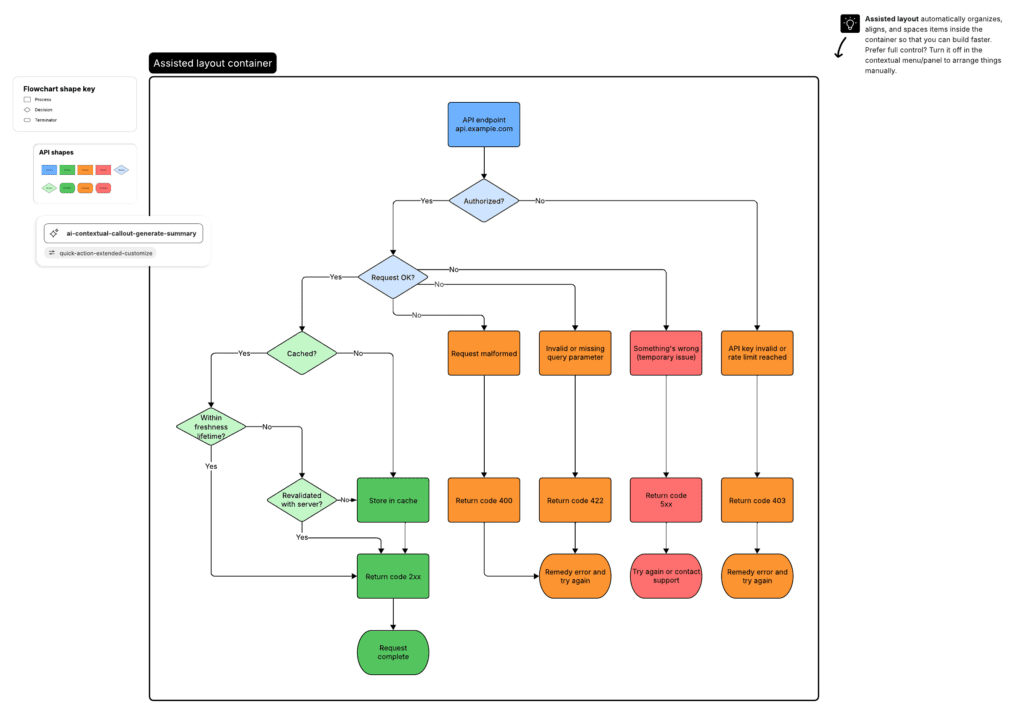
Implement exponential backoff with jitter on all retry logic; use idempotency_key on all mutating operations
Let your app crash silently on 429 or 503 responses — every API call needs explicit error handling with typed contracts
Secret Manager, not env files: Use AWS Secrets Manager, HashiCorp Vault, or GCP Secret Manager in production. A leaked API key in a public GitHub repo is typically exploited within 4 minutes by automated scanners. GitHub’s secret scanning catches some but not all. Your first line of defense is never having the secret in code at all.
API Tools Comparison — 2026
| Tool | Best For | 2026 Differentiator | Agent-Ready? |
|---|---|---|---|
| Postman | Teams, enterprise | AI mock generation + MCP server support | ✓ Yes |
| Bruno | Git-centric teams | Collections stored as files → PR reviewable | ✓ Partial |
| Kong | High-traffic gateways | AI token rate limiting plugin | ✓ Yes |
| Zuplo | Fast-moving teams | GitOps deployments; Zudoku developer portal | ✓ Yes |
| Swagger | Documentation | OpenAPI 3.1 + Arazzo workflow specs | ✗ Not runtime |
The Agentic API Shift: MCP and What It Means for You
The Model Context Protocol (MCP), introduced by Anthropic and adopted by OpenAI in 2025, is the emerging standard for how AI agents interact with external APIs. Over 1,000 community-built MCP servers now exist, covering everything from Slack to databases to enterprise CRMs. OpenAI’s planned sunsetting of the Assistants API in mid-2026 has effectively made MCP the de facto agentic standard.
Awareness of MCP has surged to 70% among developers surveyed by Postman, though regular use remains at 10%. That gap is where the early-mover advantage lives right now.
What “design APIs for agents” actually means: (1) Strict typed error contracts — agents can’t handle ambiguous error messages; (2) Idempotency on every mutating endpoint; (3) Machine-readable OpenAPI 3.1 specs with examples; (4) Separate rate limit policies for human vs. agent consumers; (5) Webhook endpoints that include event schemas agents can parse reliably. None of this is new — agents just make the penalties for ignoring it immediate and expensive.
The A-I-M Integration Framework
Every API integration — regardless of provider — follows the same reliable path when you use the Assess, Integrate, Monitor framework:
Frequently Asked Questions
The Definitive 2026 Takeaway
The API landscape has crossed an inflection point that most practitioners haven’t fully absorbed yet: your APIs are no longer just developer tools — they’re agent infrastructure. The 76% of developers who haven’t redesigned their APIs for agent consumption are operating with a ticking clock. The security models, rate limit strategies, and error contracts that worked for human-scale consumption break silently and expensively at agent scale.
Master these 7 APIs not just as integration patterns, but as the building blocks of agent-ready systems. The competitive moat in 2026 isn’t knowing that these APIs exist — it’s knowing how to wire them together so that both humans and agents can consume them reliably at scale. That’s the engineering skill that compounds.
Explore API Courses at CodeTalentHub →
Top 15 AI Tools Boosting Developer Productivity in 2026 | Expert Guide
Why Most AI Coding Developer Tools Are Slowing You Down in 2026—And What Actually Works
https://www.codetalenthub.io/blog/
Best Free APIs That Truly Supercharge Your Projects in 2025
5 AI Coding Techniques That Close the Gap Between Adoption and Actual Results (2026 Framework)
AI vs. Humans 2026: Who Wins in Debugging Code Faster?
Top 10 Simple Coding Projects for Passive Income in 2026: Earn $1,000/Month Without Burning Out
AI in Education, 2025–2026: Is AI Enhancing or Replacing Education?