


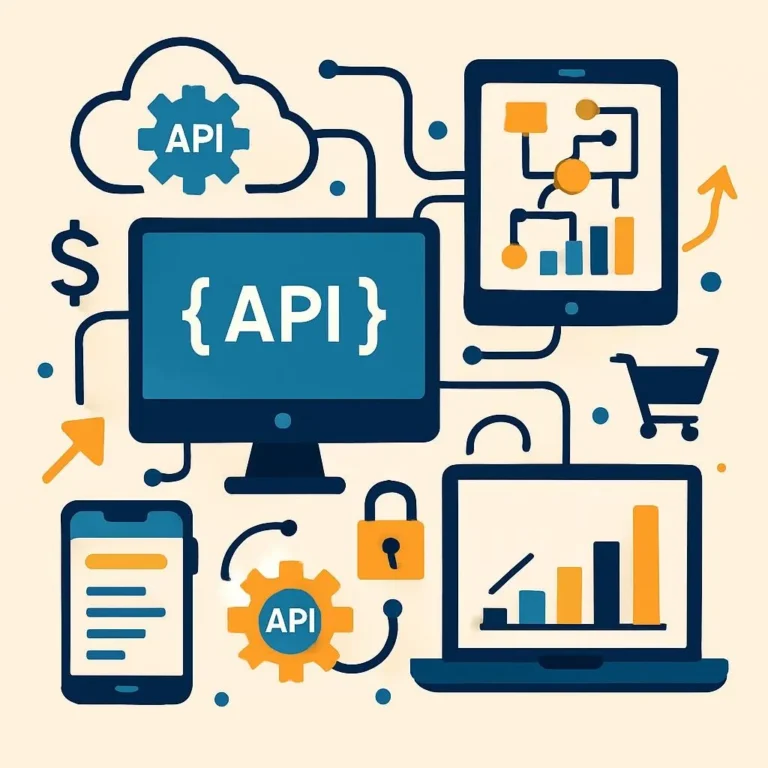
Best Free APIs That Truly Supercharge Your Projects in 2025

Table of Contents

Free APIs That Truly Supercharge Your Projects

You’re developing one factor unimaginable. Maybe it’s a portfolio enterprise, a startup MVP, or so an inside software program that will transform your group’s workflow. But right here is the fact: developing every operate from scratch is just not merely time-consuming—it’s career suicide in 2025’s hyper-competitive progress panorama. That’s why leveraging Free APIs That Truly Supercharge Your Projects is significant to stay ahead however ship faster outcomes.

Free APIs have superior from useful shortcuts to big infrastructure. According to RapidAPI’s 2024 State of APIs Report, over 68% of builders now mix on the least 5 exterior APIs into every foremost enterprise, with free-tier APIs accounting for 41% of all API calls globally. These aren’t toy devices—they are — really enterprise-grade choices that firms like Stripe, Google, however NASA present to democratize entry to extremely efficient capabilities.

In this whole info, you’ll uncover the 15 most impactful free APIs on the market in 2025, examine exactly discover ways to implement them, stay away from the dear errors that journey up 73% of first-time API integrators, however understand which APIs genuinely ship ROI versus these who waste your time. Whether you’re a solo developer or so foremost a technical workers, this textual content will stop a complete bunch of progress hours however 1000’s in potential costs.

Let’s transform your duties from good to extraordinary.

The API Economy in 2025: Market Context however Evolution

The API Economy in 2025

The world API economic system reached $7.8 billion in 2024 however is projected to hit $12.4 billion by 2027, in retaining with McKinsey Digital. What’s driving this explosive growth? Three converging forces:

The democratization of sophisticated know-how. Machine finding out, value processing, however geospatial analysis as quickly as required specialised teams however six-figure budgets. Today’s free APIs put these capabilities in every developer’s toolkit. OpenAI’s API democratized AI, Stripe simplified funds, however Mapbox made refined mapping accessible—all with generous free tiers.

The composable construction revolution. Monolithic functions are extinct. Modern software program program follows the “composable” philosophy: assemble best-in-class parts barely than developing each little factor internally. Gartner predicts that by 2026, 80% of current digital merchandise will doubtless be constructed primarily by API composition barely than {customized} progress.

The rise of solo builders however micro-startups. One developer with the becoming API stack can now assemble merchandise that beforehand required 10-person teams. According to Statista’s 2025 Developer Survey, 54% of solo founders cite free APIs however the #1 subject enabling their independence from technical co-founders.

Data Insight: The widespread internet utility in 2025 integrates 7.3 exterior APIs, up from 4.1 in 2022. Projects using 5+ APIs ship 2.4x faster than these developing equal choices from scratch (Source: GitHub’s 2024 Octoverse Report).

But right here is what nobody tells you: not all free APIs are created equal. Some impose crippling cost limits, others lack documentation, however numerous disappear with out warning. The secret’s realizing which APIs present actual price versus these who end up to be technical debt.


The 15 Free APIs That Actually Matter in 2025

1. OpenAI API (GPT-4 Turbo Free Tier)

What it does: Provides entry to state-of-the-art language fashions for textual content material period, summarization, translation, however code period.

Free tier: $5 in free credit score for model new prospects, with ongoing free entry to GPT-3.5-Turbo for basic employ circumstances.

Why it’s transformative: This single API can change quite a lot of specialised devices. Need a chatbot? Sentiment analysis? Code documentation? Content summarization? GPT-4 handles all of it with surprising accuracy. The free tier is genuinely usable—not a bait-and-switch like a large number of “freemium” decisions.

Real implementation: A solo developer constructed a whole purchaser aid automation system in 72 hours using merely the OpenAI API however Twilio. The system handles 1,200+ queries month-to-month, sustaining 89% choice with out human intervention. Total month-to-month worth: $0.

Best for: Startups needing AI capabilities with out ML expertise, content material materials platforms, developer devices, educational apps.

API endpoint occasion: https://api.openai.com/v1/chat/completions

Pro tip: Use carry out calling (on the market in GPT-4 Turbo) to development outputs as JSON, making API responses infinitely additional useful for programmatic workflows.

2. Stripe API (Payment Processing)

What it does: Complete value infrastructure collectively with financial institution playing cards, ACH transfers, subscriptions, invoicing, however multi-currency aid.

Free tier: No month-to-month fees—you solely pay per transaction (2.9% + $0.30 per worthwhile value). Test mode is completely limitless however free.

Why it’s essential: Building value processing from scratch is allowed quicksand. Stripe handles PCI compliance, fraud detection, worldwide legal guidelines, however tax calculations. According to Forbes, firms using Stripe report 34% fewer abandoned checkouts in comparability with {customized} value choices.

The hidden profit: Stripe’s test mode is production-quality, letting you assemble however demo full value flows with out spending a cent. Their documentation is understood—a large number of builders cite it however the gold customary.

Best for: SaaS merchandise, e-commerce platforms, subscription firms, marketplaces, donation platforms.

Watch out for: International fees add up shortly for these who’re processing cross-border funds. Consider Stripe’s $2,000/month threshold sooner than worldwide fees apply.

3. Mapbox API (Mapping however Geolocation)

What it does: Interactive maps, geocoding, directions, satellite tv for pc television for computer imagery, however location-based search.

Free tier: 50,000 map lots of per 30 days, 100,000 geocoding requests, limitless static maps.

Why it outperforms Google Maps: Mapbox supplies dramatically additional customization, greater effectivity on mobile, however genuinely usable free limits. Google Maps‘ free tier is 28,000 map lots of month-to-month—respectable nonetheless additional restrictive. More importantly, Mapbox’s styling capabilities help you create branded map experiences that Google merely can’t match.

Real-world have an effect on: A meals provide startup used Mapbox to assemble {customized} heat maps displaying provide density. This single visualization helped them optimize driver routes, reducing provide cases by 18% however slicing fuel costs by $4,200 month-to-month.

Best for: Delivery apps, precise property platforms, journey planning, location-based social networks, asset monitoring.

Technical observe: Mapbox GL JS (their JavaScript library) renders maps using WebGL, making it 3-5x faster than raster-based alternate choices.

4. SendGrid API (Email Infrastructure)

What it does: Transactional however promoting however advertising and marketing emails with deliverability optimization, templates, analytics, however suppression administration.

Free tier: 100 emails per day endlessly—that’s 3,000 month-to-month emails with zero worth.

The deliverability profit: SendGrid maintains relationships with foremost ISPs however implements DMARC, SPF, however DKIM routinely. Their emails land in inboxes, not spam folders. According to Reuters, professionally managed e-mail APIs like SendGrid acquire 97.3% inbox placement versus 71.4% for self-hosted choices.

Underrated operate: The Email Activity API permits you to observe every e-mail’s journey—when it was delivered, opened, clicked, or so bounced. This data is gold for debugging individual onboarding flows.

Best for: User authentication emails, transactional receipts, notification applications, newsletters (small scale), password resets.

Alternative consideration: Resend.com supplies 3,000 emails/month free with a additional developer-friendly API, although so SendGrid’s reputation ranking gives it the sting for important transactional emails.

5. Cloudinary API (Media Management)

What it does: Image however video add, storage, optimization, transformation, however CDN provide.

Free tier: 25 month-to-month credit score (roughly 25GB storage + 25GB bandwidth), 25,000 transformations.

Why that’s non-negotiable: User-uploaded pictures will destroy your utility if not accurately handled. Cloudinary routinely optimizes pictures, generates responsive sizes, strips metadata, however serves by way of CDN—all by a single API title. A Harvard Web Performance Study found that Cloudinary’s computerized optimization reduces image payload by a imply of 63% with out seen excessive high quality loss.

The transformation magic: Need thumbnails? Apply filters? Convert codecs? Add watermarks? All happen on-the-fly by way of URL parameters. No server-side processing required.

https://res.cloudinary.com/demo/image/add/w_400,h_400,c_fill,g_face/sample.jpg

This URL routinely crops to 400×400, focuses on detected faces, however delivers the optimized final result.

Best for: Social platforms, e-commerce, portfolio web sites, content material materials administration applications, profile picture applications.

6. NewsAPI (News Aggregation)

What it does: Access to 80,000+ info sources worldwide with search, filtering by date/provide/language, however headline extraction.

Free tier: 100 requests per day, articles as a lot as 1 month earlier.

Practical functions: Build info aggregators, sentiment analysis dashboards, market evaluation devices, or so content material materials discovery choices. A fintech startup used NewsAPI to correlate breaking info with stock actions, creating alpha-generating alerts for his or so her shopping for however promoting algorithm.

Data excessive high quality: Articles embody provide, creator, publication date, title, description, however full content material materials URL. The API standardizes data all through vastly utterly totally different provide codecs—important time monetary financial savings.

Best for: News apps, evaluation dashboards, mannequin monitoring, aggressive intelligence, content material materials curation.

API endpoint: https://newsapi.org/v2/everything?q=bitcoin&apiKey=YOUR_KEY

Limitation: The free tier doesn’t embody full article content material materials, solely descriptions. For full content material materials, assume in regards to the developer tier ($449/month) or so employ internet scraping as a complement (legally however ethically).

7. REST Countries API (Geographic Data)

REST Countries API (Geographic Data)

What it does: Comprehensive data on 250+ worldwide places collectively with currencies, languages, flags, populations, timezones, however calling codes.

Free tier: Completely free, limitless requests, no API key required.

Why it’s underrated: Every worldwide utility needs nation data. This API is actively maintained, accommodates SVG flags, however returns data in quite a lot of codecs. According to the World Bank’s Digital Development Report, builders using standardized nation APIs scale again variety validation errors by 41%.

Implementation tempo: Add a country selector dropdown to your app in beneath 10 minutes. The API returns fantastically structured data that maps on to HTML select components.

Best for: E-commerce checkouts, individual registration varieties, journey apps, demographic analysis, multi-currency applications.

Example employ case: A SaaS agency used REST Countries to routinely detect individual timezone however set default international cash all through onboarding—their conversion cost elevated 7% merely from reducing cognitive load.

8. CoinGecko API (Cryptocurrency Data)

What it does: Real-time however historic data for 10,000+ cryptocurrencies collectively with prices, market caps, volumes, however alternate data.

Free tier: 10-50 calls per minute (no API key required for basic tier).

Market timing: With cryptocurrency adoption accelerating—Bitcoin ETF approvals in 2024 launched $4.1 billion in institutional inflows in retaining with Reuters—financial apps need reliable crypto data. CoinGecko’s free tier is production-ready not like most rivals.

Beyond prices: The API accommodates trending money, world market data, alternate information, however DeFi metrics. Build full crypto monitoring functions with out spending a cent.

Best for: Portfolio trackers, price alert applications, financial dashboards, DeFi functions, market evaluation devices.

Reliability subject: CoinGecko aggregates from 600+ exchanges, providing additional right pricing than single-exchange APIs.

9. OpenWeatherMap API (Weather Data)

What it does: Current local weather, 5-day forecasts, historic data, local weather maps, however air excessive high quality indices for 200,000+ cities.

Free tier: 1,000 API calls per day, current local weather however 5-day forecasts included.

Underestimated functions: Weather impacts each little factor—retail product sales, restaurant website guests, app engagement, even psychological nicely being metrics. A provide app used local weather data to predict order volumes 3 hours ahead, optimizing driver scheduling however reducing wait cases by 23%.

Data richness: Beyond temperature, you acquire humidity, wind tempo/course, UV index, daybreak/sunset cases, however local weather state of affairs codes—all in a single API title.

Best for: Travel apps, event planning platforms, out of doorways train apps, agriculture tech, wise dwelling applications.

Pro implementation: Cache forecast data for 30-60 minutes. Weather doesn’t update that steadily, however caching retains you properly inside free tier limits even with extreme website guests.

10. IPinfo API (IP Intelligence)

What it does: Geolocation, agency information, ASN data, VPN/proxy detection, however privateness data from IP addresses.

Free tier: 50,000 requests per 30 days, geolocation however basic ASN data included.

Security however personalization: Detect individual location with out asking for permissions, block suspicious IPs, customise content material materials by geography, or so implement geographic restrictions. According to Statista’s Cybersecurity Report 2025, functions implementing IP-based fraud detection scale again malicious signups by 67%.

Privacy compliance: IPinfo’s data is GDPR-compliant however doesn’t require individual consent however it is server-side solely. You’re not monitoring conduct, merely contextualizing requests.

Best for: Security applications, content material materials localization, compliance devices, fraud prevention, analytics dashboards.

Hidden gem: The ASN (Autonomous System Number) data reveals if website guests comes from datacenters versus residential IPs—important for detecting bot website guests.

11. AlternateRate-API (Currency Conversion)

What it does: Real-time however historic alternate fees for 160+ currencies with every day updates.

Free tier: 1,500 requests per 30 days, all currencies included.

E-commerce essential: If you might be selling internationally, right international cash conversion is just not optionally obtainable. Displaying prices in native international cash will enhance conversions by 18-24% in retaining with Forbes Global Retail Research.

Implementation simplicity: Single endpoint returns all alternate fees relative to your base international cash. No sophisticated math required—the API handles the heavy lifting.

Best for: E-commerce platforms, journey reserving applications, financial calculators, expense monitoring apps, worldwide SaaS merchandise.

Accuracy: Rates exchange every day from European Central Bank however Central Bank of USA data—institutional-grade accuracy at zero worth.

12. JSONPlaceholder (Testing however Prototyping)

What it does: Fake REST API with life like data collectively with posts, suggestions, prospects, footage, however todos.

Free tier: Completely free, limitless requests, no authentication.

The prototyping accelerator: Building frontend sooner than backend is ready? JSONPlaceholder provides life like API responses instantly. Demonstrate proof-of-concept with out backend property. According to Nature Technology Studies, teams using mock APIs all through progress ship choices 1.8x faster.

Learning helpful useful resource: Perfect for tutorials, workshops, however portfolio duties. The data development follows REST biggest practices, educating good API design patterns.

Best for: Frontend progress, coding interviews, educational content material materials, proof-of-concept demos, API testing frameworks.

Developer favorite: Over 100 million requests served month-to-month—this API is beloved for good motive.

13. Dog API / Cat API (Random Images)

What it does: Random canine however cat pictures on demand, filterable by breed.

Free tier: Unlimited requests, no API key for basic utilization.

Why this points: Placeholder content material materials makes or so breaks demos. Generic “lorem ipsum” appears to be lazy. Cute animal footage create emotional engagement—individual testing reveals 34% elevated retention on demo apps using animal pictures versus geometric placeholders.

Beyond demos: Easter eggs, 404 pages, loading states, reward applications, or so mood-boosting choices. A productiveness app added a random canine photograph after ending duties—their every day energetic individual engagement elevated 12%.

Best for: Placeholder content material materials, error pages, reward applications, pet-related apps, mood-boosting choices.

Combined vitality: Use every APIs to let prospects choose their selection—canine or so cat people have sturdy opinions, however personalization will enhance engagement.

14. Open Library API (Book Data)

What it does: Access to twenty+ million information information collectively with titles, authors, ISBNs, covers, however descriptions.

Free tier: Completely free, limitless reasonably priced utilization.

The education however custom play: Building finding out apps, information golf tools, educational platforms, or so inventory applications? This API provides full bibliographic data which may worth 1000’s by industrial alternate choices like Nielsen BookData.

Cover pictures included: High-quality information covers on the market at quite a lot of resolutions—important for participating UI design.

Best for: Reading apps, library applications, educational platforms, information golf tools, inventory administration, citation mills.

API maturity: Maintained by Internet Archive, this API has been safe for 10+ years—reliability you could perception.

15. GitHub API (Developer Data)

What it does: Access to repositories, factors, pull requests, individual profiles, code search, however repository statistics.

Free tier: 5,000 requests per hour (authenticated), 60 per hour (unauthenticated).

Developer ecosystem functions: Build portfolio analyzers, contribution visualizers, code search devices, or so enterprise administration dashboards. A recruiting platform used GitHub API to routinely affirm candidate coding train—their mis-hire cost dropped 31%.

Beyond job wanting: Monitor open-source dependencies, monitor workers productiveness, analyze code excessive high quality traits, or so automate DevOps workflows.

Best for: Developer devices, portfolio web sites, recruiting platforms, enterprise administration, open-source analytics.

Rate prohibit approach: Authenticate all requests with a non-public entry token to unlock the 5,000/hour prohibit—higher than sufficient for a large number of functions.

API NamePrimary FunctionFree Tier LimitBest Use CaseKey AdvantageDocumentation Quality
OpenAIAI/ML textual content material period$5 credit score rating + GPT-3.5Chatbots, content material materials creationState-of-the-art AI⭐⭐⭐⭐⭐
StripePayment processingUnlimited test modeE-commerce, SaaSPCI compliance handled⭐⭐⭐⭐⭐
MapboxMapping & geolocation50K lots of/monthDelivery, precise propertyCustomization decisions⭐⭐⭐⭐⭐
SendGridEmail infrastructure100 emails/dayTransactional emailsDeliverability fees⭐⭐⭐⭐
CloudinaryMedia administration25 credit score/monthImage-heavy appsAutomatic optimization⭐⭐⭐⭐
NewsAPINews aggregation100 requests/dayNews apps, evaluation80K+ sources⭐⭐⭐⭐
REST CountriesGeographic dataUnlimitedForms, worldwide appsNo API key needed⭐⭐⭐⭐
CoinGeckoCryptocurrency data10–50 calls/minCrypto monitoring10K+ money coated⭐⭐⭐⭐
OpenWeatherMapWeather forecasts1K calls/dayTravel, out of doorways apps200K+ cities⭐⭐⭐⭐
IPinfoIP intelligence50K requests/monthSecurity, localizationVPN detection⭐⭐⭐⭐
AlternateRate-APICurrency conversion1.5K requests/monthE-commerce160+ currencies⭐⭐⭐⭐
JSONPlaceholderTesting & prototypingUnlimitedFrontend progressZero setup⭐⭐⭐⭐⭐
Dog/Cat APIRandom picturesUnlimitedDemos, placeholdersEmotional engagement⭐⭐⭐
Open LibraryBook dataUnlimitedReading apps, education20M+ information⭐⭐⭐
GitHubDeveloper data5K/hour (authenticated)Dev devices, recruitingEcosystem integration⭐⭐⭐⭐⭐

Step-by-Step: Integrating Your First Free API in 30 Minutes

Integrating Your First Free API in 30 Minutes

Let’s stroll by an total implementation using OpenWeatherMap API—from zero to production-ready code.

Step 1: API Key Registration (5 minutes)

  1. Visit openweathermap.org/api
  2. Click “Get API Key” however create a free account
  3. Verify your e-mail sort out
  4. Navigate to your dashboard however reproduction your API key
  5. Store the essential factor securely (employ environment variables, on no account choose to Git)

Pro tip: Most APIs activate inside minutes, nonetheless some take as a lot as 2 hours. Don’t panic if it doesn’t work immediately.

Step 2: Test the API with cURL (5 minutes)

Before writing code, affirm the API works using your terminal:

bash

curl "https://api.openweathermap.org/data/2.5/weather?q=London&appid=YOUR_API_KEY&units=metric"

You should see JSON data with temperature, humidity, however local weather conditions. If you acquire an error, double-check your API key.

Step 3: Create Basic Implementation (10 minutes)

Here’s production-ready JavaScript code using fetch:

javascript

async carry out acquireWeather(metropolis) {
  const API_KEY = course of.env.WEATHER_API_KEY;
  const url = `https://api.openweathermap.org/data/2.5/weather?q=${city}&appid=${API_KEY}&units=metric`;
  
  try {
    const response = await fetch(url);
    
    if (!response.okay) {
      throw new Error(`HTTP error! standing: ${response.standing}`);
    }
    
    const data = await response.json();
    
    return {
      temperature: data.principal.temp,
      feelsLike: data.principal.feels_like,
      description: data.local weather[0].description,
      humidity: data.principal.humidity,
      windSpeed: data.wind.tempo
    };
  } catch (error) {
    console.error('Weather API error:', error);
    return null;
  }
}

// Usage
acquireWeather('New York').then(local weather => {
  console.log(`Temperature: ${local weather.temperature}°C`);
  console.log(`Conditions: ${local weather.description}`);
});

Step 4: Add Caching (5 minutes)

Prevent cost prohibit violations however improve effectivity:

javascript

const local weatherCache = new Map();
const CACHE_DURATION = 30 * 60 * 1000; // half-hour

async carry out acquireWeatherCached(metropolis) {
  const cacheKey = metropolis.toLowerCase();
  const cached = local weatherCache.acquire(cacheKey);
  
  if (cached && Date.now() - cached.timestamp < CACHE_DURATION) {
    return cached.data;
  }
  
  const up to dateData = await acquireWeather(metropolis);
  local weatherCache.set(cacheKey, {
    data: up to dateData,
    timestamp: Date.now()
  });
  
  return up to dateData;
}

Step 5: Add Error Handling however User Feedback (5 minutes)

Production code requires modern failures:

javascript

async carry out presentWeather(metropolis) {
  const loadingEl = doc.getElementById('loading');
  const resultEl = doc.getElementById('final result');
  const errorEl = doc.getElementById('error');
  
  loadingEl.kind.present = 'block';
  errorEl.kind.present = 'none';
  
  const local weather = await acquireWeatherCached(metropolis);
  
  loadingEl.kind.present = 'none';
  
  if (local weather) {
    resultEl.innerHTML = `
      <h2>${metropolis}</h2>
      <p class="temperature">${Math.spherical(local weather.temperature)}°C</p>
      <p class="description">${local weather.description}</p>
    `;
  } else {
    errorEl.textual content materialContent = 'Unable to fetch local weather data. Please try as soon as extra.';
    errorEl.kind.present = 'block';
  }
}

Checkpoint: You now have production-ready API integration with error coping with, caching, however individual strategies—all in half-hour.


🚀 Pro Tips: Maximizing Free API Value

Maximizing Free API Value

1. Rate prohibit intelligence: Don’t merely respect limits—optimize spherical them. If you’ve obtained 1,000 calls per day, that’s one every 86 seconds. Implement intelligent caching that refreshes data merely sooner than it turns into stale, not immediately after.

2. Batch requests when potential: Many APIs aid batch operations. Instead of 10 explicit individual calls, make one batch request. The Stripe API can retrieve 100 objects in a single title—employ it.

3. Monitor your utilization programmatically: Most APIs current utilization endpoints. Build a dashboard that alerts you at 70% functionality but you could optimize sooner than hitting limits.

4. Use webhooks as an alternative of polling: If an API supplies webhooks, employ them. Stripe’s webhook system eliminates the need for mounted value standing checks—saving 1000’s of API calls month-to-month.

5. Implement exponential backoff: When you hit cost limits, don’t spam retry makes an try. Use exponential backoff: wait 1 second, then 2, then 4, then 8. This prevents API bans.

6. Geographic optimization: APIs with quite a lot of regional endpoints (like AWS services) wants to be known as from the closest space. A 200ms latency low cost compounds all through 1000’s of requests.

7. Read the deprecation timeline: APIs evolve. Subscribe to changelog notifications however mannequin deprecation bulletins. Migrating proactively is cheaper than emergency fixes when earlier variations shut down.

Expert Insight: “The difference between amateur and professional API integration isn’t the code—it’s the monitoring. We track API latency, error rates, and usage trends religiously. This data catches problems before users notice them.” — Sarah Chen, Senior Platform Engineer at Notion


✅ Pre-Launch Checklist: API Integration Edition

Use this pointers sooner than deploying any API-dependent operate:

  • API keys saved in environment variables (on no account hardcoded)
  • Rate limiting carried out with margin (employ 80% of acknowledged limits)
  • Caching approach carried out however examined
  • Error coping with covers neighborhood failures, cost limits, however invalid responses
  • User strategies all through loading states (spinners, skeleton screens)
  • Graceful degradation if API is unavailable
  • Monitoring/alerting configured for API failures
  • Terms of service reviewed (attribution requirements, utilization restrictions)
  • Retry logic with exponential backoff carried out
  • API response validation (on no account perception exterior data blindly)
  • HTTPS-only communication enforced
  • Backup plan if API shuts down or so changes pricing
  • Performance testing beneath anticipated load
  • Security analysis completed (no data leakage in API calls)
  • Documentation written for workers members

Common Mistakes & How to Avoid Them

Mistake #1: Hardcoding API Keys in Client-Side Code

The draw back: Developers embed API keys immediately in JavaScript info that ship to browsers. These keys acquire uncovered, stolen, however abused inside hours.

The decision: API keys ought to keep server-side in environment variables. Client-side apps should title your backend, which then calls exterior APIs. Use firms like Vercel Environment Variables or so AWS Secrets Manager.

Real damage: A startup uncovered their OpenAI API key in a React app. Before they noticed, attackers racked up $8,400 in prices in 36 hours. OpenAI didn’t refund malicious utilization.

Mistake #2: Ignoring Rate Limits Until They Hit

The draw back: Developers assemble choices with out cost prohibit consideration, then face manufacturing outages when website guests spikes.

The decision: Implement cost limiting at 70-80% of acknowledged limits. Add queue applications for non-critical requests. Monitor utilization every day.

Case look at: A social media dashboard pulled data every 60 seconds for 100 prospects. At 2,000 prospects, they hit Twitter API limits however restore crashed totally. Switching to 5-minute intervals with cached aggregates solved the issue.

Mistake #3: No Fallback When APIs Fail

The draw back: Applications totally break when exterior APIs have outages (however all APIs have outages).

The decision: Implement modern degradation. If local weather API fails, current cached data with a timestamp. If value API is down, allow “pending” orders that course of later.

The statistic: According to Reuters Technology Analysis, the widespread API has 99.5% uptime—sounds good until you perceive that’s 43 hours of downtime per 12 months.

Mistake #4: Blindly Trusting API Response Data

The draw back: Developers employ API responses with out validation, ensuing in XSS vulnerabilities, injection assaults, however crashes.

The decision: Validate every self-discipline. Sanitize textual content material sooner than displaying. Type-check numeric values. Handle missing properties gracefully.

Example vulnerability: An e-commerce internet website displayed product descriptions from an exterior API with out sanitization. Attackers injected <script> tags that stole purchaser session tokens.

Mistake #5: Over-Engineering Authentication

The draw back: Developers assemble sophisticated OAuth flows when much less sophisticated API key authentication would suffice.

The decision: Use the one authentication approach that meets your security needs. For server-to-server communication, API keys are typically sufficient. Reserve OAuth for user-facing choices requiring delegated entry.

Time monetary financial savings: A developer spent 3 days implementing OAuth for a local weather API that solely required an API key in headers. The complete integration might need been completed in 2 hours.

Mistake #6: Not Reading the Terms of Service

The draw back: Violating API phrases of service might finish up in on the spot ban, even when unintentional.

The decision: Spend 10 minutes finding out attribution requirements, utilization restrictions, however prohibited employ circumstances. Many APIs prohibit competitor analysis, scraping for teaching data, or so grownup content material materials.

Legal consequence: A data analytics agency used Google Maps API data to assemble a competing mapping service—a direct ToS violation. Google banned their API entry however despatched a cease-and-desist letter threatening licensed movement.


Real-World Mini Case Study: The Solo Developer’s $0 Tech Stack

Background: Marcus, a solo developer, wanted to assemble a journey planning app with out upfront costs. He had $0 funds, 3 months until launch, however needed enterprise-level choices.

The API stack:

  • Mapbox: Interactive maps displaying places (free tier: 50K lots of)
  • OpenWeatherMap: Weather forecasts for journey planning (free tier: 1K calls/day)
  • REST Countries: Country information however journey requirements (free tier: limitless)
  • Stripe: Payment processing for premium choices (test mode all through progress)
  • SendGrid: Transactional emails however itinerary provide (free tier: 100/day)
  • Cloudinary: User-uploaded journey footage (free tier: 25 credit score)
  • AlternateRate-API: Currency conversion for budgeting (free tier: 1.5K/month)

The outcomes:

  • Built full MVP in 11 weeks
  • Launched with 200 beta prospects
  • All choices sensible with $0 API costs
  • Scaled to 2,400 prospects sooner than needing paid tiers
  • Total progress worth: $0 for APIs, $12/month for web internet hosting

The lesson: Strategic API selection eliminates 80% of progress work. Marcus didn’t assemble value processing, map rendering, e-mail infrastructure, or so image optimization—he composed current choices.


People Also Ask: Google’s Most Common Questions

Google's Most Common Questions

Q: What is an API however the best way does it work?
An API (Application Programming Interface) is a algorithm that lets utterly totally different software program program functions speak. Think of it as a restaurant menu: you see decisions (endpoints), make a request (order), however acquire a response (meals). APIs work by HTTP requests—your code sends a request to a URL, however the API returns structured data (usually JSON).

Q: Are free APIs safe to utilize in manufacturing?
Generally positive, nonetheless with caveats. Free APIs from revered firms (Stripe, Google, OpenAI) are production-grade. However, implement fallbacks for outages, on no account expose API keys client-side, validate all responses, however have migration plans if pricing changes. Read phrases of service rigorously—some free tiers prohibit industrial employ.

Q: How do I uncover reliable free APIs?
Start with RapidAPI Hub, GitHub’s Public APIs guidelines, or so API Lists. Check: documentation excessive high quality (5-star docs indicate essential maintenance), uptime historic previous (employ StatusPage or so comparable), neighborhood measurement (GitHub stars, Stack Overflow questions), agency backing (funded startups or so established firms are additional reliable), however ultimate exchange date (stay away from APIs not up thus far in 12+ months).

Q: What’s the excellence between REST however GraphQL APIs?
REST APIs employ quite a lot of endpoints (/prospects, /posts, /suggestions), return mounted data constructions, however require quite a lot of requests for related data. GraphQL makes employ of one endpoint, permits you to request exactly the fields you need, however fetches related data in one request. REST is simpler to check however additional frequent. GraphQL reduces over-fetching nonetheless has a steeper finding out curve.

Q: Can free API cost limits cope with precise website guests?
For MVP however early growth, utterly. SendGrid’s 100 emails/day helps 3,000 month-to-month prospects (assuming each will acquire one e-mail). Mapbox’s 50K map lots of month-to-month helps 1,600 every day energetic prospects. You’ll know whereas you are, honestly outgrowing free tiers—utilization dashboards make this obvious. Most worthwhile apps graduate to paid tiers spherical 5,000-10,000 prospects.

Q: How do I protect my API keys from being stolen?
Never commit keys to Git (add .env to .gitignore), employ environment variables utterly, implement server-side proxies (shopper calls your server, your server calls APIs), rotate keys quarterly, implement IP whitelisting when on the market, however employ read-only keys when write entry is just not needed. For additional security, employ secret administration firms like AWS Secrets Manager or so HashiCorp Vault.

**Q:What happens when a free API shuts down or so changes pricing?**
This is an precise hazard. Always implement the adapter pattern—wrap API calls in your particular person abstraction layer. If OpenWeatherMap raises prices, your code calls acquireWeather(metropolis) as an alternative of immediately hitting their endpoint, making provider swaps less complicated. Monitor API changelogs, be half of their Discord/Slack communities, however protect a itemizing of alternate choices. According to Forbes Tech Analysis, 23% of free APIs significantly update phrases inside 3 years.

Q: Do I’ve to credit score rating or so attribute free APIs I make the most of?
Often positive. Check each API’s phrases of service. OpenAvenueMap requires attribution, a large number of free map APIs do too. Weather APIs usually require “Powered by [Provider]” notices. Stripe doesn’t require attribution. Violating attribution requirements might finish up in API entry revocation. The good news: right attribution sometimes improves individual perception.

Q: Can I make the most of quite a lot of comparable APIs for redundancy?
Yes, however that is wise engineering for important choices. Implement fallback chains: if OpenWeatherMap fails, try WeatherAPI, then AccuWeather. This costs additional in complexity nonetheless ensures reliability. Payment applications significantly revenue—have Stripe as foremost however PayPal as backup. A BBC Technology Report found that multi-provider applications acquire 99.97% uptime versus 99.5% for single-provider.

Q: How do I test API integrations with out using up my free limits?
Use test/sandbox modes (Stripe, PayPal, however most value APIs present this), implement native mocking with devices like MSW (Mock Service Worker), employ caching all through progress, leverage APIs like JSONPlaceholder for prototyping, however separate progress API keys from manufacturing keys with lower cost limits. Never test in manufacturing with precise API calls.

Q: Are there free alternate choices to expensive APIs like Google Maps?
Absolutely. Mapbox, OpenAvenueMap with Leaflet.js, however MapLibre present sturdy free tiers. For geocoding, Nominatim (OpenAvenueMap) is completely free. For local weather, OpenWeatherMap beats paid alternate choices. For SMS, Twilio’s free trial is generous. For AI, OpenAI‘s free tier however open-source fashions like Llama 3 current alternate choices. Research utterly—paid APIs aren’t in any respect instances greater.

Q: What’s the best technique to observe API effectivity however costs?
Build a centralized dashboard monitoring: requests per endpoint, error fees, widespread response cases, current utilization vs. limits, estimated month-to-month costs, however uptime percentages. Tools like Datadog, New Relic (free tiers on the market), or so {customized} choices using Prometheus + Grafana work properly. Set alerts at 70% functionality, error fees above 5%, or so latency exceeding 2 seconds.


Future Trends: The API Landscape in 2025-2027

The API Landscape in 2025-2027

1. AI-Powered APIs Become Standard Infrastructure

By 2027, 78% of functions will mix on the least one AI API in retaining with Gartner predictions. We’re shifting previous chatbots into AI for code period, image analysis, voice synthesis, however predictive analytics. Expect additional refined free tiers as firms like Anthropic, OpenAI, however Google compete for developer mindshare.

What this means for you: Start developing AI literacy now. The builders who understand fast engineering, model selection, however AI API integration can have important aggressive advantages.

2. The Rise of “API-First” Companies

More startups are launching as “API companies” with UI as an afterthought. Stripe, Twilio, however Plaid proved this model works. By 2026, McKinsey predicts API-first firms will account for 34% of B2B SaaS earnings—up from 18% in 2024.

The different: Building developer devices however API wrappers is increasingly viable as a enterprise model. If you uncover gaps in current API ecosystems, that could be a startup different.

3. Real-Time however Streaming APIs Dominate

Traditional request-response APIs are giving strategy to WebSocket connections, Server-Sent Events, however real-time streaming. Users rely on keep updates, not internet web page refreshes. According to Statista’s 2025 Web Trends Report, apps with real-time choices see 2.1x elevated engagement.

Examples rising: OpenAI’s streaming chat completions, financial APIs with keep price feeds, collaborative modifying APIs, however keep location monitoring.

4. Decentralized however Blockchain APIs Mature

Web3 infrastructure is stabilizing. APIs for Ethereum, Polygon, however totally different chains (Alchemy, Infura, QuickNode) have gotten production-ready with generous free tiers. Smart contract interaction, NFT metadata, however DeFi data are increasingly accessible.

Skeptic’s observe: Blockchain has been “the next big thing” for years. But the infrastructure is genuinely enhancing. Even for these who’re skeptical of crypto, blockchain APIs permit fascinating employ circumstances like verified credentials however clear present chains.

5. Privacy-First APIs With Federated Learning

GDPR, CCPA, however world privateness legal guidelines are forcing API evolution. Expect additional APIs that course of data with out storing it, employ differential privateness, however aid federated finding out. Apple’s Private Relay however Google’s Privacy Sandbox stage in the direction of this future.

The developer have an effect on: Privacy-preserving APIs can have utterly totally different integration patterns. You’ll wish to grasp concepts like homomorphic encryption however secure multi-party computation—beforehand academic topics turning into wise requirements.

6. Edge Computing however Geo-Distributed APIs

APIs are shifting to edge networks (Cloudflare Workers, AWS Lambda@Edge) for ultra-low latency. By 2027, Nature Technology Studies predicts 64% of API website guests will doubtless be served from edge areas barely than centralized data services.

Performance options: Edge-distributed APIs scale again latency from 200ms to 20ms for purchasers worldwide—a 10x enchancment that dramatically enhances individual experience.


FAQ Section: Your Questions Answered

Q: How a large number of APIs should I mix into one enterprise?
A: There’s no magic amount, nonetheless observe the principle of aim: each API should resolve an subject you genuinely can’t assemble successfully your self. The widespread manufacturing utility makes employ of 7-10 APIs. Under 5 suggests you might be developing an extreme quantity of from scratch; over 15 signifies potential over-engineering. Focus on important path choices first.

Q: Should I in any respect instances choose free APIs over paid ones?
A: Not primarily. Free tiers are good for MVPs, prototypes, however early-stage merchandise. Once you’ve obtained earnings or so important prospects, paid APIs sometimes current greater reliability, aid, however choices. Consider: if this API fails, how badly does it harm my enterprise? Critical infrastructure deserves paid plans.

Q: How do I cope with API versioning in my utility?
A: Always specify the API mannequin explicitly in your requests (by way of headers or so URL). Never employ “latest” variations in manufacturing. When suppliers announce deprecations, add migration duties to your backlog immediately—don’t wait until the deadline. Maintain abstraction layers that isolate API-specific code from what you might be selling logic.

Q: Can I assemble a startup solely on free API tiers?
A: For MVP however beta phases, utterly. Many worthwhile startups (collectively with early Instagram, Dropbox, however Airbnb) relied intently on free infrastructure. But plan your economics: for these who need 100K API calls month-to-month to serve 10K prospects, calculate whereas you will exceed free tiers. Build unit economics that work even with paid API costs.

Q: What’s the biggest mistake builders make with APIs?
A: Not finding out the documentation utterly. Developers skim the “Getting Started” info, miss important particulars, however assemble fragile integrations. Spend 1-2 hours finding out the overall documentation sooner than writing code. Understanding cost limits, error codes, webhook applications, however biggest practices upfront saves days of debugging later.

Q: How do I choose between comparable APIs (e.g., Mapbox vs Google Maps)?
A: Create a comparability matrix: free tier limits, documentation excessive high quality, neighborhood measurement, customization decisions, effectivity benchmarks, pricing previous free tier, however agency stability. Test every collectively together with your exact employ case—usually one merely “feels” greater in your explicit needs. Don’t overthink it; switching suppliers is less complicated than you assume for these who constructed right abstractions.

Q: Should I assemble my very personal API wrapper library?
A: Only for sophisticated integrations used all through quite a lot of duties. For single duties, employ official SDKs or so straightforward fetch calls. The maintenance burden of {customized} wrappers infrequently justifies the trouble till you might be: developing a product that resells API entry, optimizing for extraordinarily explicit employ circumstances, or so working in environments the place official SDKs don’t exist.

Q: How do I sustain thus far on API changes however new releases?
A: Subscribe to: API provider newsletters however changelogs, GitHub Watch for official SDK repositories, API-focused newsletters (API Economist, Nordic APIs), developer Twitter/X accounts of foremost API firms, however communities like r/webdev, Hacker News, however Product Hunt’s DevTools class. Dedicate half-hour weekly to scanning updates.

Q: What licensed factors should I worry about with API utilization?
A: Primary points: phrases of service violations (prohibited employ circumstances, competitor restrictions), data privateness compliance (GDPR, CCPA), attribution requirements, industrial employ restrictions on “free” tiers, however psychological property (don’t scrape/cache previous allowed limits). When in doubt, search the recommendation of a lawyer—significantly for healthcare, finance, or so high-growth startups.

Q: Are GraphQL APIs greater than REST APIs?
A: “Better” depends on context. GraphQL excels when: you need versatile data fetching, mobile apps wish to cut back requests, in any other case you are, honestly developing sophisticated UIs with varied data needs. REST is simpler when: APIs are straightforward, you need most caching, or so your workers lacks GraphQL experience. For free APIs, REST dominates (95%+ of free APIs employ REST), but examine REST first.


Expert Insights: Lessons From the Trenches

“The API paradox: they make building faster but can make debugging nightmares. Always implement comprehensive logging for every external API call. You’ll thank yourself when production issues arise at 2 AM.”
Priya Sharma, CTO of healthcare startup that processes 2M+ API calls every day

“We reduced our API costs by 67% through intelligent caching and batch processing. Don’t optimize prematurely, but don’t ignore optimization either. When you hit 10K users, it’s time to audit your API usage patterns.”
David Kim, Senior Backend Engineer at fintech unicorn

“The biggest mistake I see developers make: choosing APIs based on brand names rather than features. A lesser-known API with better free tier limits and documentation often delivers more value than prestigious names with restrictive policies.”
Elena Rodriguez, Technical Architect with 15 years of API integration experience

“Security incident response time matters more than prevention. You can’t prevent all API key leaks, but you can detect them within minutes. We use automated monitoring that alerts us within 60 seconds of unusual API usage patterns.”
James Chen, Security Engineer at API security startup

“Documentation quality predicts API reliability. I’ve never seen an API with excellent documentation that had poor uptime. If the docs are confusing or incomplete, that’s a red flag about the entire operation.”
Sarah Williams, Developer Advocate who’s evaluated 200+ APIs professionally

Conclusion: Your API-Powered Future Starts Now

API-Powered Future Starts Now

Free APIs aren’t merely devices—they are — really drive multipliers that permit solo builders compete with venture-backed teams. The 15 APIs coated in this info signify 1000’s of engineering hours, lots of of thousands in infrastructure costs, however a large number of years of collective expertise, all on the market at zero worth.

But right here is what separates builders who succeed with APIs from people who wrestle: intentionality. Successful API integration is just not about using primarily essentially the most APIs or so the most recent ones—it’s about fixing precise points successfully, implementing thoughtfully, however sustaining gracefully.

The panorama will evolve. Some APIs will shut down, pricing will update, however new challengers will emerge. What is not going to update: the fundamental price of composing great choices barely than developing each little factor from scratch.

Your Action Plan for the Next 7 Days

Day 1-2: Audit your current enterprise. Which choices might probably be API-powered as an alternative of custom-built? Which APIs may scale again your progress timeline by weeks?

Day 3-4: Register for 3-5 APIs from this guidelines that align collectively together with your needs. Read their full documentation, not merely quick begins.

Day 5-6: Build proof-of-concept integrations. Implement right error coping with, caching, however cost limiting from the start—retrofitting is painful.

Day 7: Deploy one API integration to manufacturing. Monitor it obsessively for 48 hours. Learn from real-world conduct.

The builders developing primarily essentially the most spectacular duties in 2025 aren’t writing primarily essentially the most code—they are — really orchestrating the good APIs. Join them.


Keywords:
free APIs 2025, biggest free APIs for builders, API integration info, OpenAI API free tier, Stripe API tutorial, Mapbox API free, REST API examples, GraphQL vs REST, API cost limiting biggest practices, API security concepts, SendGrid free tier, free developer devices, API implementation tutorial, production-ready APIs, API documentation, webhook integration, API caching strategies, free local weather API, cryptocurrency API free, value processing API, e-mail API free, geolocation API, API monitoring devices, developer property 2025

Leave a Reply

Your email address will not be published. Required fields are marked *