Cool Simple Web App Ideas 2025 | Easy Development Projects

Table of Contents

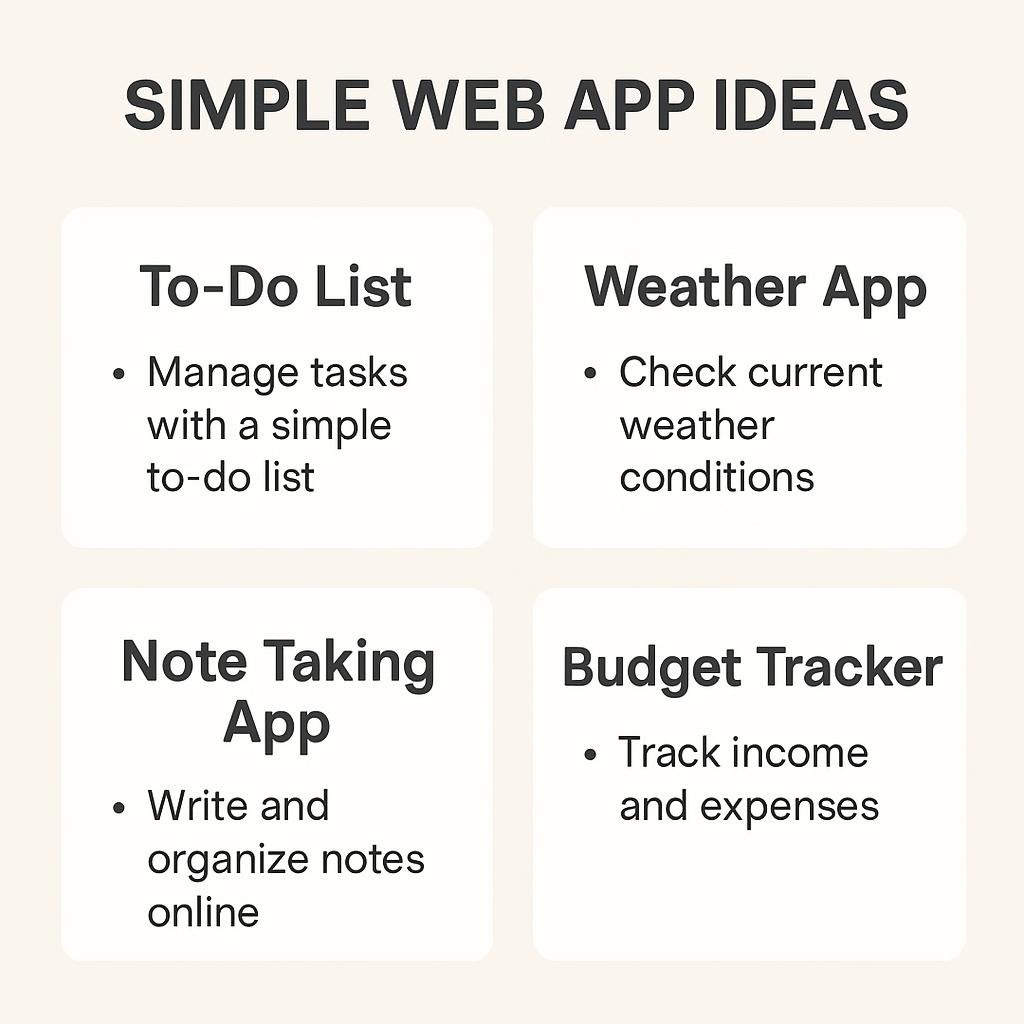
Simple Web App Ideas

Are you trying to find a web app idea that is both innovative and feasible? You’re not alone. In 2025, the digital landscape is more competitive than ever; however, there are still many opportunities for developers who can create simple solutions to specific problems.

The magnificence of easy web apps lies in their accessibility—easy for developers to assemble and for prospects to undertake. Simple web apps can be launched quickly and validated with specific prospects, unlike superior enterprise software programs that require months of development and significant resources; however, developers primarily iterate on them based on features.

This full data explores 25+ cool, nonetheless simple web app ideas, which you’ll be able to realistically assemble and launch in 2025. We will gather ideas ranging from productivity tools and lifestyle apps to niche business options and emerging market opportunities. Each idea consists of implementation particulars and monetization strategies, as well as real-world examples that may help you make educated decisions about your subsequent enterprise.

Whether you’re a solo developer looking for a side enterprise, an entrepreneur trying your first enterprise, or a seasoned expert exploring new markets, this content will contain current actionable insights that may help you succeed in the aggressive world of web functions.

Why Simple Web Apps Are Winning in 2025

Why Simple Web Apps Are Winning

The Rise of Minimalist Solutions

The sample in the direction of simplicity isn’t merely aesthetic—it’s strategic. Right now, feature-rich functions that attempt to do everything overwhelm users. Research from UX Planet shows that 76% of consumers prefer functions that excel at one main task instead of offering mediocre effectiveness across many options.

Simple web apps present plenty of advantages:

  • Faster progress cycles: You can assemble and examine, or launch, in weeks pretty than months
  • Lower maintenance costs: Fewer choices suggest fewer bugs and easier updates
  • Better shopper adoption: Simple interfaces have lower learning curves
  • Clearer value propositions: It’s easier to talk about what your app does
  • Reduced rivals: Many builders overcomplicate their choices

Market Validation Through Simplicity

The most worthwhile web apps often start simple, however, and evolve primarily based on customer options. Consider how Twitter began as a main status-sharing platform, but how Instagram focused solely on photograph sharing sooner than the other choices. This methodology permits rapid market validation without essential upfront funding.

According to Startup Genome’s 2024 report, simple web apps have a 40% higher success rate in their first 12 months in comparison with superior multi-feature functions. The key is to identify a specific pain point and address it very effectively.

25+ Cool But Simple Web App Ideas for 2025

Productivity & Organization Tools

1. AI-Powered Daily Planner

Create an online app that makes use of the main AI to help prospects plan their day based on their energy levels, priorities, and available time. Unlike superior enterprise administration devices, this focuses on day-to-day optimization.

Core Features:

  • Morning energy analysis questionnaire
  • Task prioritization primarily primarily based on energy; however, significance
  • Simple calendar integration
  • Daily reflection prompts

Monetization: Freemium model with premium AI methods; however, integration development time is 4-6 weeks, revenue potential is $50-200 per shopper yearly

2. Habit Stacking Tracker

Build on the favored habit-stacking concept by creating a visual instrument that helps prospects chain habits collectively efficiently.

Core Features:

  • Drag-and-drop conduct chain builder
  • Visual progress monitoring
  • Simple reminder system
  • Community sharing of worthwhile stacks

User Testimonial: “I tried multiple habit trackers, but nothing worked until I found a simple stacking approach. It’s genius how you can piggyback new habits onto existing ones.” – Sarah M., Marketing Manager

3. Focus Session Timer with Ambient Sounds

Combine the Pomodoro Technique with curated ambient soundscapes for enhanced productivity.

Core Features:

  • Customizable focus/break intervals
  • High-quality ambient sound library
  • Session analytics, however, streaks
  • Integration with job lists

Lifestyle & Personal Development

4. Micro-Learning Language Exchange

Connect language learners for 5-minute dialog exchanges, making language observation accessible for busy professionals.

Core Features:

  • Quick pairing algorithm primarily based on languages; however, the availability
  • Built-in dialog prompts
  • Progress monitoring
  • Rating system for companions

Revenue Model: Subscription for premium choices, however, limitless exchanges

5. Local Event Discovery Based on Interests

Help prospects uncover native events that match their explicit pursuits, shifting previous generic event platforms.

Core Features:

  • Interest-based filtering algorithm
  • Integration with native event APIs
  • Personal event calendar
  • Social sharing, however, pal, options

6. Digital Minimalism Tracker

Help prospects monitor their digital consumption across various platforms and models, while also allowing them to scale back as needed.

Core Features:

  • Screen time analysis
  • App utilization patterns
  • Digital detox challenges
  • Progress visualization

User Testimonial: “This app helped me realize I was spending 4 hours a day on social media. The gentle nudges and tracking made all the difference in reclaiming my time.” – Michael Okay, Software Developer

Health & Wellness

7. Symptom Pattern Recognition

A simple, effective monitoring app that helps users establish patterns among indicators, actions, meals, and environmental factors.

Core Features:

  • Quick symptom logging
  • Activity, however, includes meal monitoring
  • Pattern analysis, however, provides insights.
  • Export information for healthcare suppliers

Compliance Note: Include medical disclaimers; however, encourage expert sessions.

8. Micro-Meditation Scheduler

Integrate transient meditation lessons into prospects’ current calendars and routines.

Core Features:

  • Calendar integration for automated scheduling
  • 1-5 minute guided meditations
  • Mood monitoring sooner than after lessons
  • Progress streaks, however, are achievements.

9. Water Intake Gamification

Transform hydration monitoring into an engaging sport with plant progress but metropolis-developing mechanics.

Core Features:

  • Visual progress by plant progress
  • Weather-based hydration options
  • Social challenges with buddies
  • Integration with well-being trackers

Business & Finance

Business & Finance

10. Expense Splitting for Digital Nomads

Simplify expense sharing for remote workers and vacationers; however, distributed teams operate with different currencies.

Core Features:

  • Multi-currency help
  • Automatic foreign exchange conversion
  • Receipt photographs seize, however, OCR
  • Integration with payment platforms

Development Consideration: Use reliable foreign exchange APIs; however, ensure information security for financial knowledge

11. Freelancer Rate Calculator

Help freelancers determine acceptable expenses primarily based on their experience, location, and market information.

Core Features:

  • Skills, however, experience analysis
  • Market worth database
  • Location-based adjustments
  • Rate improvement monitoring over time

12. Small Business Social Media Scheduler

A simplified social media administration instrument significantly designed for small corporations with restricted time and resources.

Core Features:

  • Template library for varied industries
  • Optimal posting time methods
  • Basic analytics dashboard
  • Content idea generator

User Testimonial: “As a small bakery owner, I don’t have time for complex social media tools. This simple scheduler helped me maintain consistent posting without the overwhelm.” – Lisa R., Bakery Owner

Creative & Entertainment

13. AI Story Prompt Generator

Generate creative writing prompts using AI, tailored to various genres, themes, and writing styles.

Core Features:

  • Genre, however, is theme customization
  • Difficulty stage adjustment
  • Prompt historic previous favorites
  • Community sharing of achieved tales

14. Color Palette Generator from Photos

Extract, however, creates coloration palettes from uploaded images for designers and artists.

Core Features:

  • Photo add, however, coloration extraction
  • Palette export in plenty of codecs
  • Color harmony methods
  • Palette library, however, group

15. Plant Care Reminder System

A simple app focused significantly on plant care, with species-specific care instructions and reminders.

Core Features:

  • Plant species database
  • Customizable care schedules
  • Photo progress monitoring
  • Care options, however, include troubleshooting.

Technology & Development

16. Code Snippet Manager with Tags

Create a transparent, searchable repository for code snippets with superior tagging and search efficiency.

Core Features:

  • Syntax highlighting for plenty of languages
  • Advanced tagging system
  • Full-text search
  • Team sharing capabilities

17. API Testing Simplified

A beginner-friendly API testing instrument that focuses on ease of use over full choices.

Core Features:

  • Visual request builder
  • Response formatting, however, analysis
  • Test assortment group
  • Basic authentication help

18. Website Performance Monitor

Track the Net website performance and efficiency metrics with simple, actionable options for enhancement.

Core Features:

  • Automated effectivity testing
  • Historical information monitoring
  • Simple enhancement methods
  • Alert system for effectivity degradation

Education & Learning

image 66

19. Skill Practice Tracker

Help prospects monitor and observe time and progress for any potential, from musical gadgets to programming languages.

Core Features:

  • Flexible observation session logging
  • Progress visualization
  • Goal setting, however, monitoring
  • Community challenges

20. Quiz Creator for Educators

A streamlined instrument for lecturers to create and share quizzes without superior LMS integration.

Core Features:

  • A multiple-question form helps
  • Automatic grading
  • Student Effectivity Analytics
  • Easy quiz sharing

Niche Market Opportunities

21. Pet Medication Reminder

This reminder is specifically designed for pet owners to provide hints about medication schedules and vet appointments while effectively managing data.

Core Features:

  • Multiple pet administration
  • Medication schedule monitoring
  • Vet appointment reminders
  • Health historic previous logging

22. Garden Planning Tool

Help gardeners plan their plots primarily based on location and season, as well as companion planting concepts.

Core Features:

  • Location-based planting calendars
  • Companion planting methods
  • Plot format designer
  • Harvest monitoring

23. Recipe Scaling Calculator

A specialized instrument for scaling recipes up or down while maintaining appropriate ratios and making necessary conversions.

Core Features:

  • Intelligent ingredient scaling
  • Unit conversion
  • Recipe storage, however, is grouped.
  • Shopping guidelines period

Emerging Technology Integration

24. Voice Note Organizer

Convert voice notes to textual content; prepare them with AI-powered categorization; search.

Core Features:

  • Voice-to-text conversion
  • Automatic categorization
  • Search efficiency
  • Export decisions

25. QR Code Portfolio Generator

Create dynamic QR codes that hyperlink to private portfolios, with analytics and customization decisions.

Core Features:

  • Dynamic QR code period
  • Portfolio template library
  • Scan analytics
  • Custom branding decisions

Development Strategies for Simple Web Apps

Development Strategies for Simple Web Apps

Choosing the Right Technology Stack

In 2025, consider these effective technology combinations for simple web apps:

Frontend Options:

  • React with Vite for up-to-date, fast progress
  • Vue.js for a mild learning curve and fantastic documentation
  • Vanilla JavaScript with stylish web APIs for ultimate simplicity

Backend Options:

  • Node.js with Express for full JavaScript progress
  • Python with FastAPI for fast progress; however, built-in documentation
  • Serverless options (Vercel, Netlify) for minimal infrastructure

Database Choices:

  • PostgreSQL for relational information with fantastic scaling
  • MongoDB for document-based storage
  • Firebase for real-time choices and easy authentication

MVP Development Approach

The key to worthwhile, simple web apps is starting with a Minimum Viable Product (MVP) that validates your core concept:

  1. Identify the core draw your app solves
  2. Define the minimal attribute set needed to resolve that drawback.
  3. Build, however, will launch shortly (4-8 weeks)
  4. Gather shopper options by analytics; however, direct communication
  5. Iterate primarily based on precise utilization rather than assumptions

Monetization Strategies That Work

Freemium Models

The freemium model stays extraordinarily environmentally friendly for straightforward web apps:

Free Tier Benefits:

  • User acquisition, however, is viral progress
  • Market validation
  • The user conducts an information assortment

Premium Features to Consider:

  • Advanced analytics, however, provide insights
  • Integration with completely different devices
  • Increased utilization limits
  • Priority help
  • Custom branding decisions

Subscription Pricing Guidelines

Based on 2025 market information, listed right here are environmentally friendly pricing strategies:

App CategoryFree TierBasic PayPremium
ProductivityCore choices$5–15/month$20–50/month
Creative ToolsLimited exports$10–25/month$30–75/month
Business Tools1–2 prospects$15–40/month$50–150/month
Personal AppsBasic monitoring$3–10/month$15–30/month

Alternative Revenue Streams

Beyond subscriptions, believe these monetization decisions:

  • One-time purchases for explicit choices, but templates
  • Affiliates promote related devices; however, corporations
  • White-label licensing to completely different corporations
  • API entry for builders
  • Premium content materials, but educational sources

Technical Implementation Guide

Technical Implementation Guide

Essential Features for Any Web App

Regardless of your explicit app idea, these choices are important for success:

1. User Authentication, however, Security

Implement secure shopper registration; however, log in:

- Email/password authentication
- Social login decisions (Google, Apple)
- Password reset efficiency
- Two-factor authentication for premium prospects
- GDPR-compliant information coping with

2. Responsive Design

Ensure your app works on all models:

  • Mobile-first design methodology
  • Touch-friendly interfaces
  • Offline efficiency is place-related.
  • Fast loading cases (beneath 3 seconds)

3. Analytics, however, is tracking

Understand shopper conduct from day one:

  • User engagement metrics
  • Feature utilization monitoring
  • Conversion funnel analysis
  • Performance monitoring

Performance Optimization

Simple would not counsel sluggishness. Optimize for tempo:

Frontend Optimization:

  • Code splitting, however, is lazy loading
  • Image optimization, however, is compression.
  • CDN utilization for static belongings
  • Browser caching strategies

Backend Optimization:

  • Database query optimization
  • API response caching
  • Server-side rendering makes the place acceptable
  • Content compression

Marketing Your Simple Web App

Content Marketing Strategies

Content marketing remains one of the essential sustainable strategies to attract prospects:

  1. Problem-focused weblog posts that deal with the ache components your app solves
  2. How-to guides, however, are tutorials related to your app’s space
  3. Case analysis exhibiting precise shopper success tales
  4. Tool comparisons: positioning your app in opposition to choices

SEO for Web Apps

Optimize your app for SERPs:

On-page SEO:

  • Descriptive net web page titles, however, meta descriptions
  • Semantic HTML building
  • Fast loading speeds
  • Mobile optimization

Content SEO:

  • Regular weblog posting
  • User-generated content material
  • FAQ sections
  • Tool pages, however, are calculators.

Social Media Marketing

Focus on platforms where your target audience spends time:

LinkedIn: For B2B (however skilled) devices, Twitter: For developers, however tech-focused apps, Instagram: For lifestyle, however creative, apps, TikTok: For youthful demographics, however viral, promoting

Launch Strategies

Plan your launch for optimum impression:

  1. Build an email guideline sooner than launch by a landing net web page
  2. Engage with communities associated with your app’s space of curiosity
  3. Reach out to influencers; however, enterprise specialists
  4. Submit to directories like ProductHunt, however, startup showcases
  5. Offer distinctive early entry to generate buzz

User Experience Best Practices

Onboarding Excellence

First impressions matter. Create an onboarding experience that:

  • Shows fast value inside the primary 30 seconds
  • Requires minimal setup to start
  • Guides prospects by key choices without overwhelming them
  • Allows skipping for expert prospects
  • Provides contextual help all by way of the app

Interface Design Principles

Keep interfaces clear, however intuitive:

Visual Hierarchy:

  • Use measurement and coloration; however, spacing is a data consideration
  • Limit the coloration palette to 2-3 main colors
  • Ensure sufficient distinction for accessibility
  • Maintain fixed spacing all the way

Navigation:

  • Keep main navigation simple (3-5 basic sections)
  • Use acquainted icons, however, patterns
  • Provide clear options for actions
  • Include search efficiency for content-heavy apps

Accessibility Considerations

Make your app usable by everyone:

  • Keyboard navigation help
  • Screen reader compatibility
  • Color distinction compliance (WCAG 2.1)
  • Alternative textual content for photos
  • Clear, simple language

Real success stories, however, are case studies.

Real Success Stories and Case Studies

Case Study 1: Todoist’s Simple Beginning

Todoist started as a simple job administration app and grew to over 25 million users. Key lessons:

  • Focus on core efficiency (job administration) sooner than together with choices
  • Consistent updates primarily based on shopper options
  • Cross-platform availability from early ranges
  • Premium choices that enhance pretty than alter core efficiency

Case Study 2: Notion’s Evolution

Notion started as a simple note-taking application but successfully evolved into a comprehensive workspace. Their methodology:

  • Gradual attribute enlargement primarily based on shopper requests
  • Community development by templates, however, sharing
  • Flexible pricing that grows with shopper needs
  • Educational content materials to help prospects maximize value

Case Study 3: Calendly’s Focused Solution

Calendly solved one explicit drawback (meeting scheduling) exceptionally well:

  • Single-purpose focus made it easy to understand, however, to undertake
  • Integration approach linked to current workflows
  • Viral progress by shared scheduling hyperlinks
  • Enterprise enlargement is built on simple foundations

Technical Challenges and Solutions

Scalability Planning

Even simple apps wish to ponder progress:

Database Design:

  • Plan for information progress from the kickoff.
  • Use acceptable indexing strategies
  • Consider study replicas for heavy guests
  • Implement caching in a place that is acceptable.

Server Architecture:

  • Start with a simple deployment (single server)
  • Plan migration path to microservices if needed
  • Use CDNs for the static content provided.
  • Implement monitoring, however, alerting

Security Considerations

Protect shopper information; however, protect perception:

Data Protection:

  • Encrypt delicate information at leisure; however, in transit
  • Implement appropriate session administration
  • Use HTTPS solely
  • Regular security audits, however, update

Privacy Compliance:

  • GDPR compliance for European prospects
  • CCPA compliance for California residents
  • Clear privateness insurance coverage insurance policies, however, have terms of service
  • User information export, however, has deletion capabilities

Common Development Pitfalls

Avoid these frequent errors:

  1. Over-engineering from the start—build for current needs, not imagined future requirements
  2. Neglecting shopper options – Regularly purchase; however, act on shopper entry
  3. Poor error coping—Provide clear, helpful error messages
  4. Ignoring effectiveness—Monitor, however, optimizes from day one
  5. Inadequate testing—Implement automated testing for essential options

Future Trends in Simple Web Apps

Future Trends in Simple Web Apps

AI Integration Opportunities

Artificial intelligence can enhance simple apps without complexity:

Smart Recommendations:

  • Content methods primarily primarily based on shopper conduct
  • Optimal timing for notifications, however, is reminders
  • Personalized attribute options

Automation:

  • Automatic categorization, however, is tagging.
  • Smart form filling, however, is information entry
  • Predictive textual content material, however, is content material.

Progressive Web App (PWA) Advantages

PWAs present native app experiences by utilizing web sciences:

  • Offline efficiency for increased reliability
  • Push notifications for shopper engagement
  • App-like interface without app retailer distribution
  • Automatic updates for a seamless shopper experience

Voice Interface Integration

Voice controls have gotten more accessible:

  • Voice directions for hands-free operation
  • Audio entry for note-taking; however, information entry
  • Accessibility enhancements for purchasers with disabilities
  • Multilingual help for worldwide markets

Measuring Success, however, Iteration

Key Performance Indicators (KPIs)

Track metrics that are relevant for straightforward web apps:

User Engagement:

  • Daily, however, month-to-month energetic prospects
  • Session interval, however, frequency
  • Feature utilization patterns
  • User retention expenses

Business Metrics:

  • Customer acquisition cost (CAC)
  • Lifetime value (LTV)
  • Monthly recurring earnings (MRR)
  • Conversion expenses from free to paid

Technical Metrics:

  • Page load cases
  • Error expenses
  • Uptime, however, is reliability.
  • API response cases

A/B Testing Strategies

Optimize your app by systematic testing:

  1. Test one side at a time for clear outcomes
  2. Focus on high-impact areas like onboarding; however, conversion components
  3. Run exams long enough ample for statistical significance
  4. Document, however, and share outcomes through your workforce
  5. Implement worthwhile variations shortly

User Feedback Collection

Gather insights instantly from your prospects:

In-app Feedback:

  • Simple rating prompts after key actions
  • Feature request voting packages
  • Bug reporting devices
  • User satisfaction surveys

External Feedback:

  • Social media monitoring
  • App retailer opinions (if related)
  • Customer help ticket analysis
  • User interview packages

Frequently Asked Questions

Frequently Asked Questions

How long does it often take to develop a simple web app?

A well-scoped simple web app may very well be developed in 4-12 weeks, depending on complexity and workforce measurement. The key is starting with a minimal viable product (MVP) that offers solely essential choices. Such an approach permits faster launch; however, iteration is primarily based on precise shopper options.

What is likely the most cost-effective technology stack for beginners?

For freshmen in 2025, a JavaScript-based stack affords the most efficient balance of simplicity and performance: React or Vue.js for the frontend, Node.js with Express for the backend, and PostgreSQL or MongoDB for the database. This stack permits you to make use of one language all the way through and has in-depth neighborhood support.

How much should the cost vary for web hosting and infrastructure?

Simple web apps can start with web hosting costs as little as $20-50 per 30 days using corporations like Vercel, Netlify, and DigitalOcean. As your app grows, expect web hosting costs to increase with usage, typically accounting for 10-15% of revenue for profitable applications.

What’s one of the best methods to validate an online app idea sooner than developing it?

Start with a landing page describing your app’s value proposition; however, purchase email signups. Aim for, at the very least, 100 prospects sooner than beginning progress. Additionally, create mockups and prototypes to examine with potential prospects; however, acquire feedback on the core concept.

How do I choose between a freemium and a paid-only model?

Freemium works most interestingly for apps with viral potential and group outcomes, but when shopper acquisition is tougher than monetization. Choose paid-only in case your app offers fast, clear value that prospects would willingly pay for upfront, akin to specialized enterprise devices.

Should I assemble for mobile-first or desktop-first?

In 2025, mobile-first design is vital, as over 60% of web visitors come from cell phones. However, ensure your app works correctly on every platform. Consider your explicit shopper base—productivity apps would presumably see additional desktop utilization, whereas lifestyle apps have a bent in the direction of cell.

How do I defend my app idea from being copied?

Focus on execution rather than secrecy. Ideas are useful; nonetheless, implementation, shopper experience, and market timing matter additionally. Build shortly, acquire shopper options, and iterate faster than potential opponents. Consider trademark security in your mannequin title and emblem as soon as you’ve got the validated concept.

Conclusion

The panorama for straightforward web apps in 2025 is amazingly promising. An increasing number of users are trying for focused choices that clear up explicit points correctly, rather than superior platforms that strive for all of the items. This creates unprecedented options for builders who can set up precise needs and execute with readability and precision.

The 25+ ideas introduced in this data cover many different markets, but the technical methods vary from AI-driven productivity tools to lifestyle apps focused on specific interests. Each affords a sensible path to progress, with clear strategies for monetization and implementation.

Remember that success with simple web apps comes from understanding your prospects deeply, starting small, and iterating primarily based on precise options. The most worthwhile apps often kick off as choices for points their creators are personally experts in, guaranteeing a real understanding of shoppers’ needs.

Whether you decide to create a productivity tool, a creative application, or a niche business solution, keep these key concepts in mind: focus on solving one problem exceptionally well, prioritize user experience over the number of features, and have the courage to keep things simple as you develop.

The web app panorama continues evolving, with new technologies like AI integration; however, PWA capabilities are making it easier than ever to create extremely efficient, yet simple, choices. The choice is yours to make—select an idea that resonates with you, validate it with specific prospects, and then begin the development process.

Your subsequent worthwhile web app should be, in all probability, the most superior decision available out there. It should be the most effective solution for a specific problem faced by a defined group of users. In 2025, simple wins.


Are you prepared to begin the development of your basic web application? Please choose one idea from these guidelines to create the main landing web page, and begin generating customer interest right away. The most intriguing time to start was yesterday—the second most intriguing time is now.

Additional Resources:

  • Stripe Atlas—For incorporating your web app enterprise
  • Google Analytics—Essential for monitoring shopper conduct
  • Figma—for designing shopper interfaces and prototypes
  • Product Hunt—Platform for launching and discovering new merchandise
  • Indie Hackers—Community for unbiased builders and entrepreneurs

Leave a Reply

Your email address will not be published. Required fields are marked *