


You’re not just scrolling. Every pause, replay, and skip is training the most commercially valuable recommendation systems ever built. Here’s the full technical picture — and a platform-by-platform guide to taking your feed back.
It’s 2:47 AM. This Isn’t Happening by Accident.
You open TikTok because you’re not quite ready to sleep. You pause for four seconds on a video about investing — not because you’re interested, necessarily, but because the thumbnail caught your eye. You don’t like it. You don’t comment. You scroll. Eleven minutes later you’re watching advanced options trading tutorials, even though you promised yourself this would be a five-minute session. You didn’t search for any of this. You didn’t ask. The machine figured it out from four seconds of hesitation.
This is not a coincidence. It is the output of a multi-stage AI pipeline running inference in under 100 milliseconds — a pipeline specifically trained on billions of behavioral signals just like yours, optimized for a single objective: keeping you on-platform for as long as possible. Not keeping you informed. Not keeping you happy. Just keeping you there.
This article explains, as precisely as the public record allows, the actual mechanics of what’s happening — including technical details platforms don’t volunteer — what data is being collected, how it feeds commercial AI training pipelines, what the real psychological and financial costs are, and what you can concretely do about it today.
The Technical Architecture: How the Machine Learns From You
Most explainers on this topic describe algorithms in vague terms — “it learns what you like.” That’s true but insufficient. Here’s what’s actually happening in the infrastructure, as described in published research, leaked documentation, and platform engineering blogs.
The Two-Tower Model: The State of the Art in 2025–2026
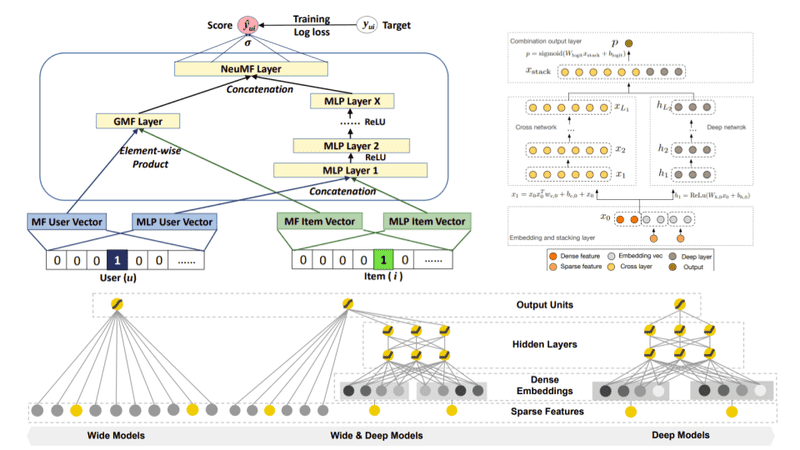
The dominant architecture for industrial-scale recommendation systems is now the Two-Tower neural network. Understanding it is the key to understanding why your feed behaves the way it does.
The Two-Tower model works in two stages. In the candidate generation stage, the system narrows millions of potential pieces of content down to hundreds of candidates that roughly match your user embedding. In the ranking stage, a more expensive model re-scores those candidates against your precise current state — including your session history, time of day, device, and behavioral recency. The final ranked list is what hits your feed.
Critically, both towers are retrained continuously. Your behavioral signals don’t just affect what you see now — they update the model weights used to generate your embedding for every future session.
Production recommendation systems at TikTok, YouTube, and Meta serve personalized ranked lists in under 100 milliseconds. This means the model is doing live inference — not just looking up pre-cached recommendations — at the moment your feed loads. The system also distinguishes between recommender system training (optimizing feed ranking) and generative AI training (building LLMs like Meta AI). Your behavioral data flows into both pipelines, but with different objectives. The recommender data is used to train the ranking model; aggregated behavioral patterns are also used to fine-tune conversational AI products.
The Cross-Platform Identity Graph
One aspect of algorithmic profiling that rarely gets adequate coverage: platforms don’t just know who you are on their app. They’ve built persistent identity graphs that link your activity across the entire advertising internet.
Here’s how it works. When you create an account on any major social platform, your email address, phone number, and device identifiers become anchor points in an identity graph. That graph is enriched through:
In April 2026, Biometric Update reported that Meta is tracking employee keystroke and mouse-movement data for behavioral AI model training — actively building its next commercial AI products on the richest possible behavioral dataset it can assemble. A German court confirmed in August 2025 that Meta’s AI training includes children’s data despite existing regulatory protections. A Dutch court ruled in October 2025 that Meta must provide more accessible non-algorithmic timeline options under the EU Digital Services Act. Meta indicated it would appeal.
What Data Each Platform Is Actually Collecting
Collects all public content — posts, photos, Reels, comments — for AI training. No opt-out available for US users. Interactions with Meta AI are used to customize ad targeting. The AI explicitly avoids using stated religious views or sexual orientation for ad targeting, but behavioral inference from engagement patterns is not similarly restricted. Meta’s off-Facebook activity tool lets you see third-party data linkage — it’s worth using.
The most aggressive signal collector among major platforms. In 2025, TikTok became the single most-scraped website on the internet for AI training data — a 321% jump. TikTok’s computer vision layer tags every video frame, independently of creator-applied labels. Beyond behavioral signals, TikTok’s updated 2025 privacy policy deepened concerns about cross-border data flows to ByteDance servers in China.
Since November 2025, Microsoft began receiving LinkedIn member data — including profile information, feed activity, and ad engagement — for personalized ad targeting and Azure AI development. LinkedIn is the only major English-language platform currently offering a meaningful opt-out for US users: Settings → Data Privacy → “Data for Generative AI Improvement.” Default is opt-in.
Behavioral signals from YouTube feed into Google’s broader user graph alongside Search, Maps, Gmail, and Chrome behavior. The recommendation system optimizes heavily for watch time and return visits. Watch percentage — how much of a video you actually finish — is the single most predictive signal for YouTube’s ranking model, which is why autoplay behavior so dramatically affects your recommendations.
The Filter Bubble — What the Research Actually Says
The “filter bubble” has become cultural shorthand. The reality is genuinely more nuanced than either alarmists or platform defenders suggest.
A 2025 systematic review published in Societies, synthesizing a decade of peer-reviewed research across 30 studies, found three consistent patterns. First, algorithmic systems do structurally amplify ideological homogeneity, reinforcing selective exposure. Second, users have partial awareness and some adaptive capacity — but that agency is severely constrained by opaque recommendation systems and uneven digital literacy. Third, echo chambers also serve as spaces for identity reinforcement and cultural belonging — meaning users sometimes actively seek them.
A 2025 PNAS study, running four experiments with nearly 9,000 participants, found that short-term manipulation of algorithmic recommendations to create filter bubbles had limited measurable effects on opinions. The researchers were careful to note they couldn’t rule out long-term exposure effects — but the study does complicate the simple narrative that your feed is actively radicalizing you in real time.
“The algorithm reinforces user preferences through a feedback loop, forming a closed filter bubble — leading to the marginalization of high-quality content and the narrowing of user perceptions.”
— ICIHS 2025 Symposium: Algorithmic Bias and Information DiversityWhat the evidence does support clearly: recommendation algorithms optimizing for engagement maximization have the unintended structural consequence of making information networks more polarized — by strengthening existing network clusters. This is a byproduct of the reward function, not a conspiracy. And the effect is most pronounced in users with lower digital literacy who are less aware of the system shaping their information environment.
Platform-by-Platform: The Full 2026 Breakdown
| Platform | Primary Ranking Signals | AI Sophistication | User Control (2026) | Opt-Out AI Training | GenAI Data Use |
|---|---|---|---|---|---|
| TikTok | Watch time, replays, CV analysis, audio, shares | Highest | For You reset; keyword blocking | No | High |
| Dwell time, saves, shares, early engagement velocity | Very High | “Your Algorithm” feature (global 2026) | No (US) | High | |
| YouTube | Watch time %, CTR, return visits, skip rate | Very High | “Not Interested”, topic controls | Limited | Medium |
| Professional relevance, dwell time, network signals | High | More transparent than most | Yes (opt-out) | Medium | |
| Meaningful interactions, relationship strength, relevance | High | No reset; Feeds tab workaround | No (US) | High | |
| Visual search, behavioral history, predictive inspiration | High | AI content filter controls (Dec 2025) | Partial | Medium |
The Business Model: What Your Attention Is Actually Worth
To understand why platforms are incentivized to build the systems they’ve built, you need to understand the economics. Average Revenue Per User (ARPU) — the annual commercial value platforms extract from each active user — makes the stakes vivid.
A heavy social media user spending 3+ hours daily in the US generates significantly more than average ARPU — closer to $200–$400 per year in advertising value across the ecosystem. The 141 minutes of daily average usage represents the commercial floor, not the ceiling. Every additional minute of engagement is incremental revenue with near-zero marginal cost. This is the economic engine behind every design decision in the feed.
Regulation Is Starting to Have Teeth
The EU’s Digital Services Act (DSA) requires platforms with more than 45 million users to allow non-personalized feed options for users across all 27 member states. The October 2025 Dutch court ruling against Meta — requiring more accessible non-algorithmic timeline options — signals enforcement is moving from symbolic to substantive.
The EU AI Act’s majority requirements, rolled out in phases since 2024, will be fully in force by August 2026. These include transparency obligations that directly affect recommendation systems — platforms must disclose the main parameters used to rank content and allow users to modify them.
If you’re in the EU, every major platform must offer a chronological feed option under the DSA. It’s typically buried in settings and not the default. Go find it. Using it means your feed stops looping on your own behavioral patterns — and you exercise a legal right that took years of advocacy to establish.
The Psychological Cost
The system doesn’t just learn what you enjoy. It learns what makes you feel bad in ways that still keep you scrolling. Research on negative news consumption has consistently shown that individuals have a negativity bias toward engaging with distressing content, even while reporting it makes them feel worse. Personalized recommendation systems amplify this bias because negative content generates more engagement signals — comments, reactions, shares born of outrage — than neutral or positive content. The algorithm has no preference for your mental state; it’s rewarded for the engagement.
A 2024 Pew Research Center survey found that half of U.S. adults feel more concerned than excited about AI’s growing presence in daily life. The honest question that the research literature is beginning to grapple with seriously: what happens to identity formation — particularly for younger users — when the information environment you inhabit is not the product of your curiosity, but of a commercial machine learning system’s optimization for your continued presence?
Pew Research Center (2025) found that teens who consume more than 3 hours of social media daily report significantly higher rates of anxiety and sleep disruption. The mechanism isn’t purely the content — it’s the combination of personalized negative-valence amplification, variable reward schedules (the “slot machine” scroll), and the displacement of unstructured offline time. The algorithm doesn’t know you have a test tomorrow. It just knows you’re still scrolling.
What You Can Actually Do: Platform-by-Platform Reset Guide
The same systems that learned from you can be retrained by you. It requires deliberate effort sustained over 2–3 weeks. Here are the exact steps, as of May 2026.
- 01 Reset your For You feed — This discards your behavioral history.
Profile → ⋮ → Settings & Privacy → Content Preferences → Refresh For You - 02 Be intentional for the first 48 hours — the algorithm retrains fast. Watch videos all the way through if you want more of that content. Skip quickly if you don’t. The first two days establish your new embedding.
- 03 Add keyword filters for topics you want to suppress.
Settings → Content Preferences → Filter Keywords
- 01 Check Instagram’s model of you — This is worth seeing.
Settings → Content Preferences → Your Algorithm
You’ll see what topics Instagram believes you’re interested in. Remove ones you don’t want. Add ones you do. - 02 Mute and hide aggressively — Every “Not Interested” tap on a post or ad sends a negative training signal. Do it consistently for two weeks. The model responds.
- 03 Switch to Following feed — The algorithm does not control what you see here.
Home → tap Instagram logo → switch to “Following”
- 01 Use “Not Interested” and “Don’t Recommend Channel” consistently — Long press any recommended video. Do this for 2–3 weeks and YouTube’s algorithm responds significantly. This is the most effective lever you have on YouTube.
- 02 Clear your watch history for a partial reset.
youtube.com/feed/history → Manage All Activity → Delete - 03 Watch videos you actively choose rather than what autoqueues. Search-driven viewing sends fundamentally different signals than algorithmically-surfaced autoplay.
- 01 Opt out of AI training — LinkedIn is currently the only major English-language platform that offers this.
Settings → Data Privacy → Data for Generative AI Improvement → Toggle OFF - 02 Control Microsoft data sharing — Since November 2025, Microsoft receives member data for Azure AI.
Settings → Data Privacy → Manage Your Data and Activity
- 01 Pin the Feeds tab — This gives you a chronological view of people you actually follow.
Settings → Tabs → Pin “Feeds” — Then use Feeds as your primary Facebook surface. Fewer algorithmic suggestions, fewer paid promotions. - 02 Review Off-Facebook Activity and disconnect data sources you’re uncomfortable with.
Settings → Your Facebook Information → Off-Facebook Activity
For users who want to see exactly how strong their behavioral feedback loop is. This is demanding but reveals something important about your digital habits.
- Day 1: Reset all feeds where possible (TikTok For You, YouTube history, Instagram topics). Log in on a fresh browser with no cookies for Facebook/YouTube.
- Days 2–4: Only engage with content you actively searched for. Zero passive scrolling. Use “Not Interested” on anything recommended that you wouldn’t have sought out.
- Day 5: Resume normal usage but with heightened intentionality. Notice what has changed in your recommendations.
- Day 7: Review what you’re being shown. Ask: does this feed reflect my actual intellectual interests — or my lowest-attention-state behavioral impulses?
Third-Party Tools Worth Knowing
Sunday Algorithm Audit Checklist
- What topics did I see most this week?
Does this list reflect my actual intellectual interests — or the topics I happened to be anxious or bored about? The algorithm amplifies your emotional state, not your best self.
- Did I discover any genuinely new ideas or perspectives?
Or did I primarily see variations on things I already knew and believed? Real learning requires exposure to ideas outside your behavioral cluster.
- How much of my screen time was active vs passive?
Active = searching for something specific, following up on a question. Passive = endless scroll. Passive time is the most algorithmically shaped time.
- Did I use any “Not Interested” controls?
If not, the algorithm received only positive signals from your session — which means it learned only from what kept you, not what you valued.
- How did my feed make me feel, on balance?
Consistently negative? Use that as a signal to actively reshape your content environment. The platform won’t do it for you — there’s no commercial incentive to.
The Bigger Picture: Your Behavior as Commercial AI Training Data
There’s a layer worth making fully explicit. It’s not just that your feed is trained on your behavior. Your behavior trains the underlying AI models these platforms sell, license, and use to build future commercial products.
As of September 2025, TikTok became the most-scraped website on the internet, with a 321% increase in traffic from AI training data collectors. Video platforms now represent 38% of all global scraping activity. The behavioral data you generate doesn’t stay in the feed recommendation engine — it flows into a broader AI training data economy.
That’s not inherently sinister, but it’s worth knowing. The app you open because you’re bored for three minutes is also a behavioral instrumentation layer contributing to some of the most commercially valuable AI training pipelines on the planet.
Future Outlook: 2026–2028
The Honest Trade-Off
None of this means you should delete everything. Social media has genuine utility — community, professional networking, entertainment, information access, global connection. The goal of this article is not fear; it’s informed awareness. Platforms are not your friends, but they’re not your enemies either. They’re commercial systems with incentive structures that don’t always align with yours. Personalization is genuinely useful — the issue is that the version of personalization deployed at scale optimizes for engagement, not wellbeing.
The ethical trade-off worth making explicit: you exchange behavioral data for access to free services, content discovery, and connection. That’s a reasonable trade that billions of people make every day. Understanding the exchange clearly is the precondition for making it deliberately — rather than having it made for you by default.
What This Means Going Forward
By the second half of 2026, the EU AI Act’s transparency requirements will be in full force. Platforms are already adjusting — partly because they have to, partly because user trust has become a competitive variable. Instagram’s “Your Algorithm” feature, Pinterest’s AI content controls, and TikTok’s For You reset option are meaningful additions that didn’t exist two years ago.
But legislation and corporate goodwill will only go so far. The economic incentives that built these systems haven’t changed. Attention is still the product, your behavioral data is still the raw material, and the model training loop is still running every time you open the app.
The most useful thing you can do — right now — is go check what Instagram’s algorithm thinks you’re interested in. It’s probably at least partially wrong. It’s also probably revealing something about which of your behavioral impulses have been getting amplified without your explicit consent.
Your feed isn’t showing you the world. It’s showing you a model of you, optimized for your continued presence. The question worth sitting with is whether you’d like to have some deliberate input into how that model is built.
- PNAS (2025): Filter Bubbles and YouTube Recommendation Experiments — Rosenfeld et al., University of Chicago. Four experiments, ~9,000 participants. Published 2025.
- Societies (2025): Systematic Review — Algorithmic Impact on Youth and Information Diversity — Comprehensive review of 30 peer-reviewed studies, 2015–2025.
- Decodo / PPC.Land (Sept 2025): TikTok Leads Data Collection Surge as AI Training Reshapes Scraping Landscape
- Al Jazeera (Nov 2025): Are Tech Companies Using Your Private Data to Train AI Models?
- Biometric Update (Apr 2026): Meta Tracks Employee Keystroke Data for Agentic AI Model Training
- Hootsuite (2026): How Social Media Algorithms Work — Updated Guide
- The National (Jan 2026): How to Train Your Algorithm in 2026 — And Why You Should
- DataReportal / Hootsuite Digital 2026 Global Overview Report — 141 minutes daily social media usage figure.
- Pew Research Center (2024): Public Sentiment on AI in Daily Life — 50% “more concerned than excited” finding.
- Meta Q4 2025 Earnings Release — North America ARPU figures.
- ICIHS 2025 Symposium Proceedings: Algorithmic Bias and Information Diversity — quoted passage.
AI in Education, 2025–2026: Is AI Enhancing or Replacing Education?
The LinkedIn DM That Converts Strangers to $5K Retainers: What Changed and What Actually Works Now
What Exactly Is Microwork? 15 Proven Techniques Most Experts Won’t Tell You