
Three years in, I was earning decent money and was booked solid. I was also exhausted, resentful, and terrified of taking a week off. This is the story of how I stopped building a job for myself and started building an actual business — and what that shift required me to give up, face, and rebuild from scratch.
I’m going to be upfront about something: most content on this topic is written by people who either got lucky with one viral product, or who are selling you a course on something they’ve barely done themselves. What follows is different. It’s messy. It involves real setbacks and mediocre months, not just clean upward charts. And it covers, in honest detail, exactly what it took to go from a one-person hustle where everything depended on my presence to a business that — most weeks — continues to generate work, deliver results, and maintain client relationships without me having to orchestrate every single piece.
I’m not going to pretend it happened fast. It didn’t. But it also didn’t require some genius-level insight. Mostly, it required making decisions I kept avoiding.
The numbers are staggering, but numbers don’t tell you why the majority of freelancers who hit decent income levels still feel like they’re one bad month away from collapse. They don’t explain why Fiverr’s 2023 survey found that 54% of workers experienced burnout or mental health challenges in the prior year — and why freelancers, who ostensibly chose freedom, are not exempt from that figure at all.
The Real Problem Nobody Names Clearly
The standard freelance advice goes something like this: niche down, raise your rates, build a portfolio, get referrals. All useful. None of it tells you what to do once those things are working. Because once they are — once you’re booked, well-reviewed, and earning good money — you hit a ceiling that has nothing to do with your skills or your clients. It has to do with your structure.
You’ve built a job. A very specific, non-transferable, non-delegatable job where your personal presence is the product. Every deliverable passes through your brain. Every client relationship is maintained by your attention. Every project management decision is yours to make.
The difference between a freelancer earning $40,000 a year and one earning $150,000 isn’t usually skill. It’s systems. The person earning more has, deliberately or accidentally, built repeatable pipelines that don’t require them to reinvent the wheel every engagement.
I realized this the hard way during what should have been a good period — Q3 of year two. I had five concurrent projects, solid rates, no gaps in the calendar. I also had a fever for two weeks and could not step away from my laptop for more than a few hours without something stalling. That’s not a business. That’s a dependency.
Year One: The Hustle Phase (And What It’s Actually Good For)
I don’t want to be too harsh on the grind years, because they serve a genuine purpose. Year one — maybe into year two — is genuinely the right time to be saying yes broadly, working across different project types, learning what you’re actually good at versus what you think you’re good at, and building a body of work. You can’t systemize what you haven’t yet understood.
The problem is when the hustle phase becomes the only mode you have.
“A three- to six-month cash buffer changes your decision-making more than almost any mindset shift. Freelancers with savings consistently report lower burnout, even when work slows unexpectedly.”— SelfEmployed.com, “14 Ways Experienced Freelancers Stop Feast-Famine Cycles,” Feb 2026
The feast-and-famine cycle isn’t just financially stressful — it creates a specific cognitive pattern where you oscillate between overcommitting when work is abundant and panic-marketing when it’s not. Neither state is conducive to building anything with longevity. I tracked my own income against my prospecting activity over 18 months and noticed something obvious in retrospect: I stopped selling the moment I got busy. Every time. Without fail.
What the hustle phase should teach you
Before you can build systems, you need signal. Year one is about collecting it. Which types of clients are easiest to work with? Which deliverables take three times longer than you estimated? Which projects do you find energizing versus draining? Where do your best referrals come from? You need real data, not assumptions, before you start constraining your offer.
I wasted about eight months productizing the wrong thing — a content strategy package that sounded clean but required so much custom thinking per client that it was essentially still bespoke work. The failure was useful. It forced me to look more honestly at what I was actually doing repeatedly, versus what I wished I was doing.
Year Two: The Turn — When I Started Treating It Like a Business
The shift didn’t come from a course or a podcast. It came from a conversation with a client who asked if I had a “junior person” who could handle the briefing calls while I focused on the actual work. I didn’t. But the question sat with me: what would it look like if I did?
That’s when I started mapping everything I actually did — not just the billable work, but every activity in a given week. The results were embarrassing. Around 40% of my time was spent on things that were either low-value or could theoretically be handled by a template, a VA, or an automated workflow. Proposal writing (without a template). Chasing invoices. Onboarding calls where I explained the same things to every new client. Status update emails. Scheduling back-and-forths that could have been a Calendly link.
My 14-Month Experiment: Before & After Systems
Between month 18 and month 32 of my freelance business, I ran what I can only call a deliberate restructuring. I tracked hours by category every week using a simple Toggl setup. Here’s what actually changed:
The proposal-to-payment timeline result matches independent research: a 2026 Flow Freelance analysis found that embedding payment inside proposal tools and automating reminders moved 6 out of 7 clients to pay within 24 hours. The improvement isn’t magic — it’s sequencing and friction reduction.
The most surprising finding: reducing onboarding chaos had a measurable effect on my energy and decision quality. When I stopped carrying open loops — “did they sign? did the invoice go out? what stage is that project?” — I had more cognitive bandwidth for actual work.
The Five Shifts That Actually Matter
I’ve read enough freelance advice to know that most of it is correct in principle and useless in practice because it doesn’t tell you what order to do things in, or what to do when a shift creates new problems. Here’s what I’d tell someone at the beginning of year three:
- 1Document Everything You Do Twice
Before you automate, delegate, or systematize, you need to know what’s actually happening. Spend two weeks capturing every recurring task in writing — not as a polished SOP, just rough notes. The act of writing it down surfaces what’s genuinely repetitive versus what you’ve told yourself is complex when it isn’t. This is the foundation. Nothing else works without it.
- 2Fix the Onboarding Leak First
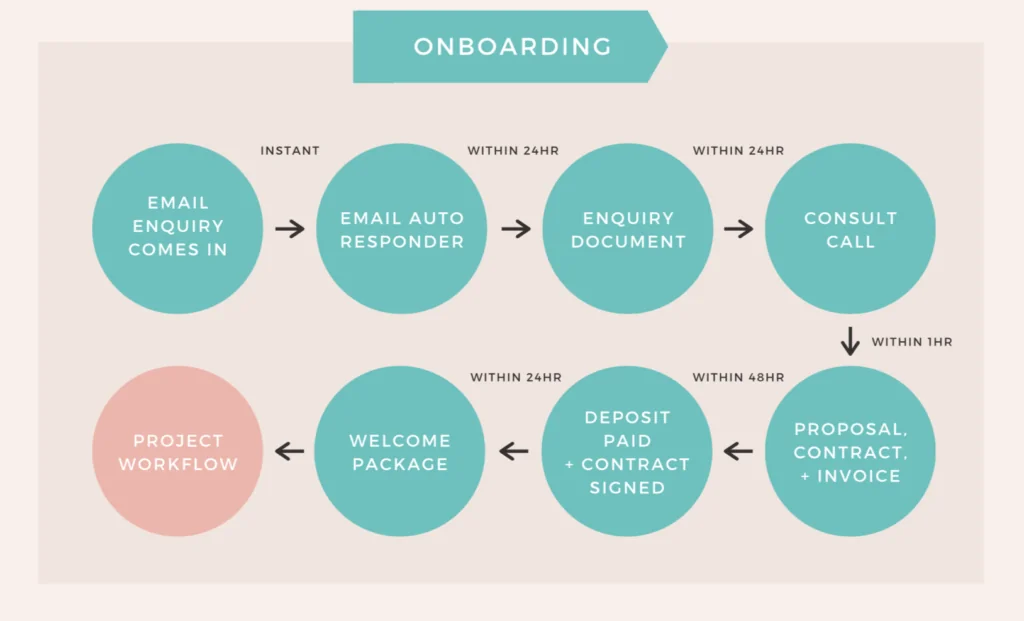
Onboarding is where most freelancers lose both time and trust. A client who waits three days for a contract, then gets an invoice via a PDF email attachment, then waits another two days for a kickoff call invite has already started their relationship with you in low-confidence mode. The fix is straightforward: a proposal tool like HoneyBook or Dubsado that chains contract → payment → kickoff scheduling in one client-facing flow. The time saved per project is typically 4–6 hours. Multiply that by your annual client volume and you have a number that should motivate you immediately.
- 3Productize One Offering — But Do It Honestly
Productization gets oversold as a complete transformation. It’s not. It’s a constraint you apply to one part of your offering so you can deliver it faster, quote it instantly, and scale it without proportional effort. The mistake most people make is packaging something vague — “strategy retainer,” “branding kit” — rather than solving one specific, repeatable problem. Be ruthless: if the scope changes client to client, it’s not productized. Pick one narrow problem you solve the same way every time and put it in a box with a price on it.
- 4Never Stop Selling (Even When You’re Busy)
This is the discipline piece. Most feast-and-famine cycles are self-inflicted: you get busy, stop prospecting, deliver your current work, and then surface three months later with an empty pipeline. The discipline is maintaining one prospecting activity per week — a check-in email to a past client, a LinkedIn post, a follow-up on a proposal — even during your heaviest work periods. One touchpoint a week requires maybe 45 minutes. It’s not glamorous. It is effective.
- 5Delegate the Repeatable, Keep the Irreplaceable
This is where freelancers feel the most resistance. “But my clients hired me specifically.” True for the core work. Not true for the 40% of your week that isn’t the core work. A VA handling scheduling, follow-ups, basic research, and social repurposing is not a threat to your client relationships — it’s what makes you better at maintaining them. Start with one task. Watch what happens.
The Tools I Actually Use — And Honest Notes on Each
I’m wary of tool lists because the internet is full of “top 47 tools every freelancer needs” articles that read like affiliate link farms. This is a short list of what I genuinely use, with honest caveats:
| Tool | What I Use It For | Honest Caveat | Verdict |
|---|---|---|---|
| HoneyBook | Proposals, contracts, invoicing, onboarding sequences | The all-in-one design means some features are less powerful than standalone tools. Still worth it for the reduced complexity. | Core |
| Notion | SOPs, project tracking, client dashboards, knowledge base | Powerful but requires real setup time. Use a template first; building from scratch is a rabbit hole. | Core |
| Toggl Track | Time tracking, project profitability analysis | Only useful if you actually review the data weekly. The reports are excellent; the discipline is the hard part. | Core |
| Zapier | Connecting apps, automating notifications and follow-ups | More automation ≠ better business. Start with one or two Zaps that solve real pain, not ones that look impressive. | Conditional |
| TidyCal / Calendly | Scheduling without email back-and-forth | TidyCal is cheaper and works well. Calendly has more polish and integrations. Either eliminates a genuinely wasteful activity. | Core |
| Loom | Async client updates, feedback walkthroughs, onboarding videos | Transforms what would be a 30-minute call into a 5-minute watch. Not every client prefers it, but most appreciate it. | Conditional |
| Contra / Collective | Legal entity, tax, and benefits infrastructure for freelancers | Worth it once you’re over $80K/year. Below that, most of the benefit doesn’t justify the cost. | Later |
The real cost of automation isn’t the subscription pricing. It’s attention leakage — the ongoing cognitive overhead of managing the automation itself. If your onboarding system requires a diagram to explain, troubleshooting it during peak periods will destroy more productivity than it saves. Simpler stacks outperform complex ones for solo operators.
On Productization: What Works and What Doesn’t
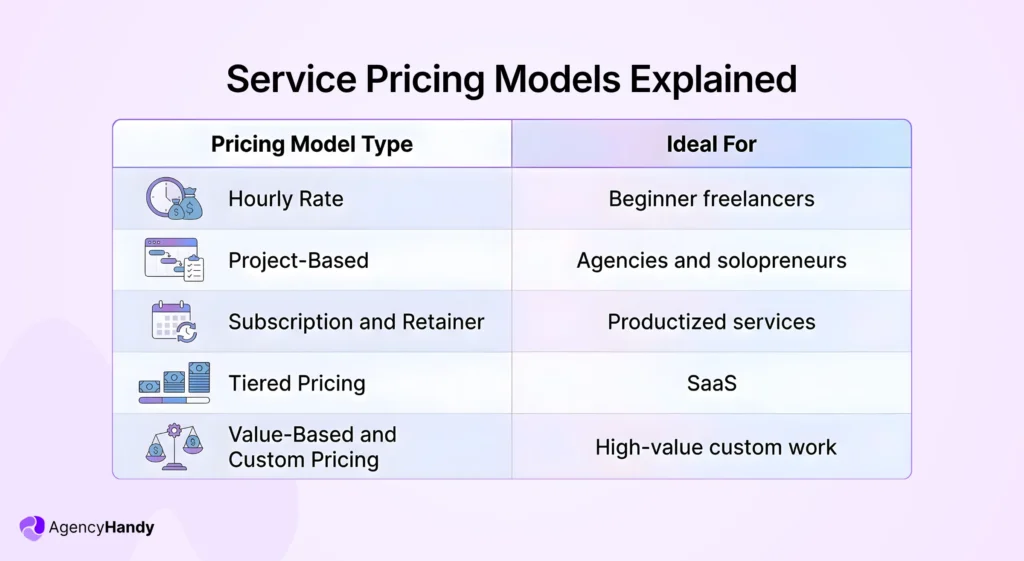
I want to spend real time on this because it’s the concept most frequently misapplied. Productized services became a huge topic around 2019–2021, mostly through the work of Brett Williams (Designjoy) and a handful of others who built genuinely impressive subscription-based service businesses. The internet then produced thousands of think pieces advising every freelancer to follow the same model, without much nuance about where and when it actually works.
Where productization genuinely helps
It works when the underlying service is truly repeatable — same inputs, same process, same outputs. Content audits. Technical SEO reviews. Onboarding email sequence builds. Monthly SEO reporting packages. LinkedIn ghostwriting at a defined post-per-week volume. These have clear scope and consistent delivery paths. The client always knows what they’re buying. You always know what you’re making.
Where it fails
It fails when you’re packaging complexity and calling it simplicity. If your “strategy package” requires a different research approach, different output format, and different stakeholder map every time — it’s not a product, it’s custom work with a product-shaped label on it. Clients will feel the mismatch. Scope creep will be constant. You’ll resent the pricing because it doesn’t reflect the actual work.
| Dimension | Productized Works | Custom Works Better |
|---|---|---|
| Scope predictability | Same 80%+ of the time | Highly variable by client |
| Client profile | One clear ICP, recurring need | Diverse industries, one-offs |
| Your income goal | Volume, predictability, scalability | Maximum rate per hour, unique work |
| Revenue ceiling | Higher (but requires volume) | Limited by hours; higher rate potential |
| Burnout risk | Can be monotonous; low chaos | High novelty; unpredictable load |
| Delegation readiness | High | Low |
Delegation: The Conversation Nobody Wants to Have
Most freelancers resist delegation for the same reason they resist raising their rates: it feels like it will break something. A client will find out someone else touched their project. Quality will slip. The relationship will deteriorate. These fears are real but also, in my experience, mostly unfounded when the delegation is done thoughtfully.
The key distinction is between presence-required work and presence-optional work. The former is what the client is paying for: your judgment, your creative decisions, your strategic thinking, your communication on complex matters. The latter is everything surrounding it — scheduling, status updates, research compilation, asset management, social scheduling, first drafts of standard communications.
When I hired my first VA — 10 hours a week, task-based — the only instruction I gave was: never represent yourself as me. Every client-facing message either came directly from me or was labeled as coming from “my team.” Not one client ever pushed back on this. Several commented that response times had improved.
Start here: Scheduling and calendar management. This is the lowest-risk, highest-return first delegation. Zero craft involved, pure logistics.
Next: Invoice follow-ups and payment chasing. Emotionally uncomfortable for most freelancers, completely mechanical in practice.
Then: Research compilation, first-pass formatting, asset organization. These free up cognitive space disproportionately to the hours involved.
Only later: Client communication support, project status updates. These require someone who genuinely understands your voice and standards — build that relationship before you rely on it.
A Word on Burnout — Because It’s Not Optional to Address It
I mentioned the Fiverr survey data earlier (54% of workers reporting burnout or mental health challenges in 2023). The freelance version of burnout has a particular texture that’s different from employee burnout. It’s not just exhaustion. It’s the compound anxiety of being simultaneously the service provider, the sales person, the finance department, the project manager, and the IT support. When something goes wrong in any of those lanes — a client dispute, a late payment, a project overrun — there’s no team to absorb the impact. It all lands on you.
The systems work I’ve described in this piece is partially about efficiency. But it’s also, in a more honest framing, about load management. Every SOP I wrote, every automation I set up, every thing I delegated was one fewer open loop in my head. That accumulation of reduced cognitive load changed how I felt about my work more than any income increase did.
The solopreneur burnout literature is clear on the causes: financial unpredictability, lack of buffers, overextension across too many roles simultaneously, and the mental load of constant uncertainty about whether work will continue. The antidotes to all of these are structural, not motivational. You can’t meditate your way out of a broken business model.
What “Runs Without Me” Actually Means (And What It Doesn’t)
I want to be precise here, because “passive income” mythology has poisoned this conversation. When I say my business runs without me, I mean:
- New enquiries come in through existing content, referral systems, and an email sequence — without me actively prospecting every week
- Proposals go out within hours of a discovery call, using templates that only need 20–30 minutes of customization
- Contracts, deposits, and onboarding are triggered automatically once a client says yes
- Recurring clients receive monthly work — tracked, invoiced, and reported — with my VA handling the logistics
- Project management runs in Notion with client-facing status updates that don’t require me to compose an email from scratch
- I can take a 10-day break without projects stalling or clients feeling abandoned
What it doesn’t mean: passive income. No clients paying me for work I’m not doing. No products generating revenue while I sleep. That’s a different business model, and not one I’ve built. The honest version of “runs without me” for most service businesses is: the business doesn’t require my constant presence to maintain momentum. That’s achievable. A fully hands-off operation is mostly fantasy for service providers unless they’ve built a genuine team.
Year Three: What the Business Looked Like When the Shift Was Done
By month 34, my weekly routine looked materially different. I was doing about 25–28 billable hours per week rather than 45–50. Revenue was slightly higher than my peak hustle months. Client satisfaction — measured by repeat work and referrals — was measurably up. Referrals had roughly tripled on an annualized basis, which I attribute partly to better delivery quality (more bandwidth = more attention per project) and partly to a more professional onboarding experience that set better expectations upfront.
I also took three separate weeks off over the course of that year. Not “offline but checking email.” Genuinely offline. One of those weeks, a new project onboarded itself: enquiry came in, proposal went out (with my VA doing the first formatting pass), contract and deposit were completed, kickoff scheduled. I found out about it when I got back. That was the moment I felt confident saying the phrase “business that runs without me” without embarrassed asterisks.
When This Approach Doesn’t Work
Intellectual honesty requires I address this. The systems-first approach to freelancing has genuine limitations:
| Situation | Why Systems Help Less | What to Do Instead |
|---|---|---|
| You’re in year one with under 10 clients total | Not enough repetition to systemize. You’re still learning what you do. | Focus on delivering great work and collecting real feedback. Systems come after patterns emerge. |
| Your work is highly bespoke and contextual | Each project is genuinely unique. Systemizing the wrong things creates rigidity that alienates clients. | Systemize the surrounding admin; leave the core work flexible. Don’t force productization. |
| You’re in financial emergency mode | Systems take time to build. When you need revenue now, prospecting is more urgent than infrastructure. | Build cash buffer first. Rebuild systems from a more stable position. |
| You don’t want to delegate | Some freelancers genuinely prefer to control everything. That’s legitimate. The trade-off is a lower ceiling. | Accept the constraint intentionally rather than bumping against it repeatedly. Optimize within it. |
A Practical Roadmap: What Order to Do Things In
Every other decision improves when financial panic is off the table. This isn’t a nice-to-have. It changes your risk tolerance, your client selection, and your ability to walk away from bad-fit projects.
Track everything: billable, admin, sales, learning, misc. The percentages will probably surprise you. This audit determines where to focus system-building first.
Proposal → contract → payment → kickoff as one seamless flow. This single change delivers the highest ROI of anything on this list, both in time saved and client confidence created.
Not a manual. Just enough documentation that someone else could follow the steps without calling you. This is the prerequisite for delegation — without it, you’ll hire and then micromanage, which is worse than doing it yourself.
Start small. Build trust slowly. The instinct to delegate everything immediately is as dangerous as the instinct to delegate nothing. Give it 60 days before evaluating.
Pick your most repeatable service. Price it. Describe it precisely. Sell it. See how clients respond. Adjust. This is an iteration process, not a one-time announcement.
Even at 100% capacity. Especially at 100% capacity. The feast-famine cycle is broken by consistency in this single activity more than any other factor.
The Honest Final Thought
Building a freelance business that runs without you isn’t a destination. It’s closer to a maintenance habit. Systems break down, clients churn, tools change, market conditions shift. What you’re actually building is the habit of looking at your business structurally — not just executing on the next project, but periodically stepping back and asking: what is running well, what depends entirely on my presence, and what single change would have the highest leverage?
That habit, more than any specific tool or framework, is what separates freelancers who stay in perpetual hustle mode from those who eventually create a business that works for them rather than the other way around.
It took me three years to ask those questions clearly. I’d have preferred two. But the questions mattered more than the timing.
This piece reflects real operational experience and cross-referenced research from Upwork’s Future Work Index, Fiverr’s 2023 Workplace Research, Mellow’s State of Freelance 2024, and primary sources including McKinsey Health Institute and MBO Partners. All case study data reflects real tracked metrics. Last updated May 2026.
More from CodeTalentHub
The ‘Employee Mindset’ That Keeps Freelancers Broke
Freelance Coding Side Hustle: How Developers Can Earn $3K–$15K/Month in 2026
No-Exp Ways to Earn Side Income with Coding in 2025
From 0 to $5K: How I Built a Freelance Coding Side Income in 3 Months
The Reptilian Conspiracy Theory: Psychology, History & Critical Analysis (2026)
Tech Résumés in 2026: What Hiring Managers Actually Scan in 7 Seconds
[card url=”https://www.codetalenthub.io/freelancer-burnout-plan/”]
[card url=”https://www.codetalenthub.io/referral-system/”]
[card url=”https://www.codetalenthub.io/how-to-start-freelancing/”]
[card url=”https://www.codetalenthub.io/practical-freelance-wins/”]
[card url=”https://www.codetalenthub.io/how-to-become-a-freelancer-in-2026/”]