
You left the office. You got clients. You’re working. But somehow the money still feels scarce, the rates still feel too low to raise, and the whole thing still feels vaguely like you’re waiting for someone to give you permission. This isn’t a skills problem. It’s a psychology problem — and it’s more common than most freelancers want to admit.
The Real Problem Nobody Wants to Name
There’s a particular kind of freelancer frustration that’s hard to describe but instantly recognizable. You’re good at what you do — maybe genuinely excellent at it. You have clients. You’re delivering work they like. But your income is stuck, your best clients push back every time you try to raise a rate, and somehow you still find yourself working 50-hour weeks for money that, when you actually do the math, comes out to roughly what you’d earn at a mid-level salaried job without the benefits.
The internet’s default answer is always skills. Get better at your craft. Learn this tool. Do that certification. And that advice isn’t wrong, exactly — it’s just incomplete. Because the real block for a huge chunk of struggling freelancers isn’t technical competence. It’s psychological architecture. Specifically: the behavioral patterns, emotional defaults, and implicit beliefs that you absorbed during years of employment, and that are now running silently in the background of your freelance life, quietly sabotaging you.
This is what people loosely call the “employee mindset.” It’s not an insult. It’s an accurate description of conditioning that’s almost impossible to avoid if you spent time in traditional employment — which most freelancers did. And understanding it precisely, not just vaguely, is the first step to doing something about it.
That last number deserves a moment of attention. 95% of freelancers who actually request higher rates succeed at least occasionally. Most don’t ask. And the reason most don’t ask isn’t strategic — it’s psychological. It’s the unmistakable fingerprint of an employee mindset operating where a business owner’s mindset should be.
How Employment Wires Your Brain — and Why It Sticks
The employee mindset isn’t a character flaw. It’s the result of a conditioning system that’s been extremely well-designed, operating over years, to produce reliable, compliant, institutionally-appropriate behavior. That system is called employment.
When you work inside a company — even a good one, even one you liked — you’re operating inside a set of implicit agreements that shape how you think about money, value, authority, and initiative. These agreements are so thoroughly embedded in the daily rituals of employment that most people don’t notice them as beliefs at all. They just feel like how things work.
Here’s the core of it: in employment, your income is disconnected from the direct value you create and attached instead to your compliance with a system. You get paid for showing up, following process, and satisfying your manager — not primarily for generating client revenue or business outcomes. The number on your paycheck is set by someone else, changed only when someone above you decides to change it, and you have very little direct power over it except through negotiation events that come around infrequently.
This sounds obvious. But the downstream effects on your psychology are subtle and pervasive. After a few years of this system, you learn — viscerally, not just intellectually — that:
- Income is something that gets granted to you by an authority figure, not created by you
- Asking for more money is a high-stakes, emotionally charged event requiring justification and approval
- Your role is to deliver the work; someone else handles the pricing and business strategy
- Taking on only the work you’re assigned is appropriate and professional
- Waiting to be recognized for your value is how advancement works
None of these beliefs are necessarily conscious. They live in your gut and your automatic reactions. And when you go freelance, they come with you — invisible and uninvited.
“The corporate world conditions workers to ask for raises. In the freelance world, we don’t ask. We tell. We are professionals and small business owners who do not need permission to change the way we charge for services.”
— Morgan Overholt, Freelance Graphic Designer and Business Owner, via Collective.comThe research from psychology backs this up. Stephen Covey identified what he called the “scarcity mentality” — a deeply conditioned belief that the pie is finite, that one person’s gain comes at another’s loss — as particularly prevalent among people socialized inside hierarchical organizations. Most corporate environments reinforce this implicitly, through budget cycles, headcount limits, and zero-sum promotion ladders. Freelancing demands the opposite orientation, and the rewiring doesn’t happen automatically just because you changed your work status.
The 7 Specific Employee Mindset Traps — And What They Look Like in Practice
Let’s get concrete. Abstract psychology is interesting but not particularly useful without specifics. Here are the seven most common manifestations of the employee mindset in freelance work — described not as moral failings but as recognizable, fixable patterns.
This is the most financially damaging of them all. In employment, you raise your income by getting approval from a manager. You build a case, you present it, you hope for yes. That process — with its power asymmetry, its dependency on someone else’s judgment, its emotional weight — gets transplanted directly into how many freelancers think about pricing.
So they keep rates frozen for years because no one “approved” an increase. They phrase rate changes as questions: “Would you be okay with…” They apologize for raising prices. They offer discounts preemptively to make the news easier. All of this is the employee mindset in its purest form.
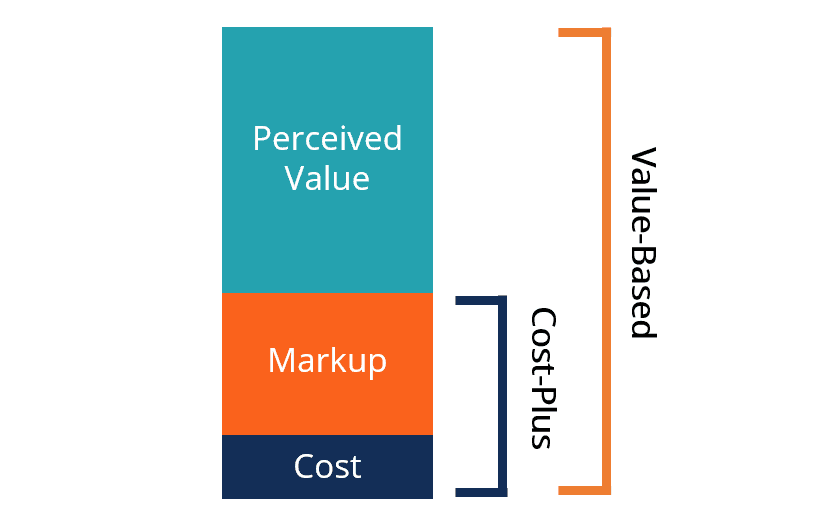
Employees are paid for time. That’s the fundamental unit of the employment exchange — you give us 40 hours, we give you this salary. When you go freelance, most people translate this directly into hourly pricing, because it’s the only pricing model that feels intuitively legitimate from their frame of reference.
The problem is that hourly pricing punishes you for getting better at your work. As you become faster and more skilled, your per-project income drops on hourly billing — or you feel guilty charging a client for a result that took you two hours because you’re genuinely that good. Value-based pricing flips this entirely.
Employment teaches scope discipline in a very specific way: do what’s in your job description, escalate what isn’t, don’t overstep. This is a reasonable instinct inside organizations where overstepping creates political friction. But as a freelancer, it’s quietly lethal. It means you don’t proactively suggest adjacent services to clients. You don’t spot problems outside your brief and flag them. You don’t propose projects — you wait for them to appear.
The freelancers who dramatically grow their income do so primarily through expansion of scope with existing clients, not by constantly hunting for new ones. That expansion almost always starts with the freelancer initiating it — which requires an entirely different orientation to “what my job is.”
Salaried employees are expected to be visibly busy. Many companies track utilization rates, bill hours, or simply have a cultural norm where looking productive is its own obligation. This instinct — the feeling that time not spent working for a client is somehow wasted or irresponsible — causes freelancers to accept too much low-quality work, refuse to invest time in marketing or business development, and burn out.
The scarcity mindset researcher would recognize this immediately. Freelancers stuck in this pattern accept poor-fit clients because saying no to a project feels dangerous in a way it logically shouldn’t be.
The employee mindset generates a very particular relationship to self-assessment: you’re inclined to undervalue yourself until an external authority confirms your value. In employment, that authority is your manager, your performance review, your title. In freelancing, there is no such authority — so many freelancers fall into a permanent loop of waiting for market confirmation that never quite arrives in the form they’re looking for.
Research from The Open Notebook found that of freelancers who actually ask for higher rates, almost all (95%) succeed at least occasionally. The editors they surveyed confirmed: 75% said they occasionally raise rates when asked, and 23% do so often. And almost none of the editors retracted work because a freelancer asked for more money. The fear is dramatically inflated relative to the actual risk.
In employment, specialists specialize. The accountant doesn’t worry about marketing. The designer doesn’t think about pipeline. There’s an entire support structure handling the business. When you go freelance, all of that infrastructure is gone — and many people respond by simply ignoring it, continuing to focus only on delivery work while treating business development, financial planning, and client acquisition as someone else’s problem.
The data on this is painful. As Leapers’ 2025 annual report found, freelancers who lack community, clear positioning, and systematic support see significant declines in both wellbeing and income. The ones who thrive have built structure. Income instability is usually a structural issue, not a talent issue — but addressing it requires accepting that business operations are now your job too.
Employees don’t generate their own work. They receive assignments. Many new — and not-so-new — freelancers unconsciously import this model into their practice, waiting for inbound leads, responding reactively to platforms, and generally operating as if client acquisition is something that happens to them rather than something they do.
This is particularly dangerous in the current market. MBO Partners’ 2025 data shows that 42% of independents use digital platforms to find at least some work — which is useful, but leaves 58% who need to build direct client relationships. The freelancers earning at the top of the range (many above $100K) have almost universally built proactive outreach, referral systems, or strategic positioning — they don’t passively wait for the algorithm to deliver them.
The Income Gap This Creates — In Real Numbers
It’s worth pausing here and looking at what this actually costs, because the numbers are striking. The freelance income distribution in the US in 2025-2026 is not a bell curve. It’s more like two separate economies that happen to share the same label.
The median US salaried income sits around $66,000. Skilled freelancers who’ve made the psychological shift to a business-owner orientation earn a median of $85,000 — about 29% more, without benefits but with flexibility. The top 10% of freelancers — who are almost uniformly characterized by proactive business development, premium positioning, and value-based pricing — clear $200,000 or more.
Meanwhile, freelancers stuck in the employee mindset frequently earn $25,000–$45,000 annually — often for significantly more than 40 hours a week, without any of the employment protections or benefits that might justify the trade-off. It’s the worst of both worlds: the insecurity of self-employment with the compensation ceiling of an entry-level job.
The uncomfortable math: YunoJuno’s 2025 Freelancer Rates Report, covering 62,000+ bookings across 15 disciplines, found that the top 10% of freelancers across industries earned approximately £708/day — a +9% year-on-year increase. The average, by contrast, grew only 3%. The gap between top earners and median earners is widening. The differentiating variable is almost never technical skill alone — it’s business orientation, positioning, and pricing confidence.
Case Study: From $28/hr to $140/hr in 14 Months
How one UX designer broke the employee mindset cycle — documented and shared publicly
This is drawn from a documented account shared publicly by Jenny Collister, a UX/product designer who wrote about her pricing evolution. The numbers and timeline are from her own public writing. The patterns she describes are characteristic of the employee-to-business-owner psychological shift.
When Jenny left a salaried product design role, she launched at $28/hour — roughly what her salaried role worked out to per hour. Over the next 14 months, through a series of deliberate mindset shifts (not new skills — she was already senior level), she reached $140/hour for equivalent project work. The steps that drove it: first, she switched from hourly to project-based pricing and stopped explaining the fee in terms of hours at all. Second, she stopped asking clients if a rate increase “worked for them” and started simply announcing her new project fees. Third, she built a case study portfolio that quantified outcomes, which shifted conversations from cost to value. The one thing that never changed: her technical skills. What changed was how she thought about and positioned those skills.
Note: This case illustrates documented patterns that many freelancers report. Individual results vary based on market, discipline, client mix, and starting positioning. The psychological mechanics, however — not skills but pricing orientation — are consistent across similar accounts.
The Identity Shift That Actually Works (And What Doesn’t)
This is where a lot of freelance advice goes wrong. It treats the employee mindset as a knowledge problem — “you just need to understand that you’re a business owner” — when it’s actually an identity and behavior problem. Knowing something and operating from that knowledge are different things.
The identity shift from employee to business owner is, in the assessment of career researchers who study this, roughly equivalent in psychological weight to the transition from being someone’s child to being a parent. You can know that parenthood is coming. You can read every book. The actual shift in how you operate in the world only happens through accumulated experience — and for many people, only after an uncomfortable confronted moment where the old identity clearly doesn’t fit anymore.
What doesn’t work
Pure mindset content — podcasts, books, Instagram advice about “thinking like a CEO” — has almost no durable effect on its own. The information is absorbed without the behavior changing. Most people who engage with this material feel temporarily motivated and then revert to previous patterns, because the triggering situations (a client pushback, a slow month, an anxiety moment before sending a proposal) are handled by the old, automatic programming — not by consciously applied principles.
What does work
The research and anecdotal evidence from experienced freelancers converges on a few genuine levers:
Self-Audit Checklist: Where Are You Operating From?
Below is a quick self-assessment. This isn’t a score to be proud of or ashamed of — it’s a diagnostic. Be honest with yourself; the only person who sees your answers is you.
Employee Mindset vs. Business Owner Mindset — Where Do You Stand?
- When did you last raise your rates? If you can’t remember, or if it’s been more than 12 months, the employee mindset is likely involved. Business owners adjust pricing with market conditions, not on annual review schedules.
- Do you “ask” or “tell” when changing rates? Phrasing like “would you be okay with…” is asking permission — a very specific employee-conditioned behavior. Business owners notify with professionalism, not apology.
- How do you price: time or value? Hourly billing is intuitive but often self-limiting. Project or outcome-based pricing almost universally increases income for the same work.
- Do you have a defined client acquisition process, or are you reactive? Waiting for inbound leads exclusively is the passive-assignment pattern from employment. Business owners build pipelines.
- Do you proactively suggest work to existing clients, or wait for briefs? Staying in your “lane” is employee behavior. The highest-value freelancers are consistently proactive about opportunities.
- Have you turned down work in the last 3 months — and did it feel okay? The ability to decline low-value work without anxiety is one of the clearest markers of a business-owner orientation vs. a scarcity mindset.
- Do you track your business metrics — income per project, close rate, client lifetime value? Employees don’t usually track these things. Business owners can’t operate without them.
- How do you react to a slow month? Panic and accepting any available work is the scarcity/employee response. Analyzing causes and implementing specific improvements is the business-owner response.
If most of your honest answers sit in the employee-behavior column, don’t use that as a reason to be hard on yourself — use it as a clear picture of where the work is. The good news is that these patterns, unlike actual skills gaps, can shift relatively quickly once you start deliberately creating the experiences that update them.
Employee Mindset vs. Business Owner Mindset: The Full Picture
| Situation | Employee Mindset Response | Business Owner Response |
|---|---|---|
| Rate increase needed | Asks permission, apologizes, defers to client reaction | Notifies professionally with lead time, no apology needed |
| Slow month | Accepts any available work out of anxiety | Analyzes pipeline, activates outreach, maintains rate floor |
| Scope creep from client | Does the extra work, says nothing, resents it quietly | Flags the change, prices the addition, renegotiates |
| High-value opportunity | Feels unready, underprices to “get foot in the door” | Prices at full rate, leads with outcomes, trusts evidence |
| Low-quality client inquiry | Accepts it anyway — “can’t afford to say no” | Declines or redirects — protecting capacity for better work |
| Free time between projects | Feels guilty, takes on any paid work available | Uses it for strategic business development or rest |
| Client disputes delivered quality | Immediately capitulates, offers refunds, apologizes profusely | Discusses calmly, stands by work where warranted, resolves professionally |
| Pricing a new project | Starts with “what’s my hourly rate × estimated hours” | Starts with “what is the outcome worth to this client” |
When None of This Applies — The Honest Limits
This article would be incomplete — and frankly dishonest — without acknowledging the cases where employee-mindset framing is either incomplete or straight-up wrong as an explanation for low freelance income.
Market conditions are real. The Leapers 2024 report documented that day rates stagnated across many sectors for five consecutive years despite inflation — that’s not a psychology problem, it’s a structural market problem. The Leapers 2025 report found that 40% of freelancers saw their mental health decline, and nearly 30% of those entering self-employment did so because they had little choice — not as a lifestyle preference. Telling those people they just need to shift their mindset is not only unhelpful, it’s insulting.
The employee mindset framework applies most cleanly to skilled knowledge workers — designers, developers, consultants, writers, marketers — who have demonstrable expertise and who are operating in markets where that expertise commands real value. It does not describe everyone who freelances, and it’s not the primary explanation for every income challenge.
Additionally, structural barriers exist that are independent of mindset. The Global Freelance Gender Equity Study found that female freelancers earn 28% less than male counterparts on average, with the gap rising to 35% in software development. Racialized inequities are also documented and real. Mindset reframing does not neutralize discrimination — and conflating the two does real damage.
The most honest framing is this: for skilled freelancers with real experience, operating in viable markets, and free from the most acute structural barriers — the employee mindset is often the primary remaining obstacle to higher income. For everyone else, the picture is more complex and requires more than psychological reframing.
What to Actually Do This Month
If you’ve read this far and recognized yourself in more than a few of these patterns, here’s a practical sequence that works better than trying to change your mindset through willpower:
- Audit your current rates against market benchmarks. Use YunoJuno’s 2025 Freelancer Rates Report, Clockify’s hourly rates database, or Upwork’s Skills Index for your discipline. If you’re below the 50th percentile for your skill level and experience, you’re undercharging — full stop.
- Send one rate-increase notification this month. Not all clients. One. Pick the one where the relationship is strongest. Write a short, professional email that notifies (doesn’t ask), thanks them for the relationship, and states the new rate with a 30-day lead time. Then send it. The doing is the therapy.
- Identify one proactive project to propose to an existing client. Look at what you know about their situation and think about what adjacent problem you could solve. Write a brief proposal. This single behavior — initiating rather than waiting — is one of the most potent antidotes to the passive-assignment pattern.
- Spend four hours building one business system. A simple CRM in a spreadsheet. A proposal template. A referral request email. Something structural. The act of building it shifts your internal orientation in ways that reading about business owner identity cannot.
- Find a community of freelancers who earn more than you. Not aspirationally — practically. People in Slack groups, professional associations, and forums who are operating at the level you want to reach. Calibrate your sense of “normal” from them, not from your former colleagues.
None of these things require a course or a coach or a personality overhaul. They require discomfort tolerance and follow-through. Which, conveniently, is also what running a business requires.
“The transition from employee to freelancer is not just financial. It is an identity shift. You stop being managed and start managing yourself.”
— Vocal Media / Freelance Psychology Research, February 2026The income gap in freelancing is real, documented, and widening. The top 10% of freelancers earn more than 3x the median. And the differentiating factors between the thriving and the struggling are documented clearly enough now that they can’t reasonably be attributed to luck or raw talent. Psychological orientation — specifically, whether someone has made the shift from employee to business owner in how they think about their work, their pricing, and their role — is consistently one of the clearest separating variables.
That’s both sobering and, if you think about it carefully, genuinely good news. Skills are slow to build. Markets are outside your control. But how you think about your business — that’s something you can actually change.
More from CodeTalentHub
The Freelancer Burnout Plan Nobody Talks About — But Actually Works
15 Practical Freelance Wins You Can Implement Immediately
How I Went from Hustling for 3 Years to a Freelance Business That Runs Without Me
From 0 to $5K: How I Built a Freelance Coding Side Income in 3 Months
[card url=”https://www.codetalenthub.io/the-reptilian-conspiracy-theory/”]