
Freelance Developer Rates, Platform Fees & Taxes in 2026: The Sourced, No-Guesswork Guide
Real platform fee schedules, real 2026 tax math, a real look at how the ACA subsidy cliff changed freelancer health coverage this year, and an honest accounting of how reliable the “freelancer failure rate” statistics actually are. Every figure below is sourced — check the reference list at the end.
What the Numbers Actually Say
Search “should I freelance as a developer” and you’ll hit two extremes: creator-economy hype claiming six-figure months are one cold DM away, and doom threads claiming 95% of freelancers fail. Neither holds up well against the primary data. What follows is a rebuild of this guide from official platform fee schedules, government tax rules, and the more methodologically transparent freelance-economy surveys — MBO Partners’ State of Independence, Upwork’s Future Workforce Index, and IRS/SSA publications — rather than the marketing pages of the platforms being reviewed.
I cross-checked every fee figure below directly against each platform’s own help-center or pricing page rather than relying on secondary “fees explained” roundups, because those roundups disagree with each other constantly — Upwork alone has at least three different fee structures still described as “current” across sites that haven’t been updated since the platform’s May 2025 pricing overhaul. One limitation worth flagging up front: platforms change fees without much notice, so treat every number here as “verified as of August 2026” rather than permanent, and check the platform’s own pricing page before you commit.
“Freelancing is a business that happens to involve coding. Coding is the easy 30%.”
The other 70% is sales, positioning, collections, tax administration, and — increasingly in 2026 — figuring out how to price your work against AI tools that can now do a meaningful share of commodity coding tasks. None of that is a reason not to freelance. It’s a reason to go in with a business plan instead of a vibe.
The “Failure Rate” Claims — Fact-Checked
You will see freelancing content claim “90% fail,” “95% fail,” or “96% fail in year one.” I looked for the underlying methodology behind each of these numbers — sample size, how “fail” was defined, who ran the survey — and could not find primary sourcing for any of them. They appear to originate from marketing content rather than a disclosed study, and they get repeated because they’re attention-grabbing, not because they’re verified. I’m flagging that directly rather than repeating the number, because it’s exactly the kind of unsourced statistic this guide is trying to replace.
The more defensible figures come from organizations that disclose their methodology:
| Claim | Source | Reliability |
|---|---|---|
| ~1 in 5 freelancers stop within the first year; ~60% have closed within 5 years | Freelancer Club | Cited without published raw data |
| 47% of new freelancers had at least one late/missing payment in their first six months | Genius freelance survey, 2025, via Freelancers Union | Survey-based, disclosed |
| Full-time US freelancers report a median income of ~$85,000/year | Upwork Future Workforce Index, 2026 | Large disclosed survey (n=3,000+) |
| ~5.6 million US independents earned $100,000+ in 2025 | MBO Partners, State of Independence 2025 | Annual tracked survey since 2011 |
Read together, the honest picture is: a meaningful share of people who start freelancing stop within a year or two — not because the market is bad, but because early cash flow is genuinely unpredictable and most people underestimate the non-coding workload. Among those who stick with it and treat it as a business (contracts, niche positioning, tax planning from day one), full-time outcomes cluster in the $60K–$100K+ range, with a real long tail earning considerably more. Both things are true at once, which is why single-number headlines flatten more than they reveal.
Freelancer Club, MBO Partners, and Freelancers Union survey write-ups converge on a similar list: starting with 3+ months of savings, tracking income/expenses separately from personal accounts from day one, niching down rather than positioning as a generalist, using contracts and milestone/escrow payments consistently, and building a community or accountability structure rather than working in total isolation.
Per Freelancers Union’s 2026 write-up of the Genius and Bonsai 2025 surveys: not budgeting at all (over 60% of new freelancers reportedly start with no financial plan), mixing business and personal expenses (nearly half of respondents), and getting blindsided by a late or missing payment in the first six months (47%).
What Developers Actually Earn in 2026
Rate guides disagree with each other by a wide margin because they’re sampling different populations — a platform’s own blended average mixes juniors doing WordPress tweaks with seniors doing system architecture. Here’s a synthesis across several independently published 2026 rate reports (Index.dev, Jobbers.io’s Global Freelance Hourly Rate Index, ZipRecruiter, and Upwork), narrowed to figures that multiple sources agree on directionally, even where the exact dollar amounts differ slightly:
| Specialization | Junior (0–2 yrs) | Mid (3–5 yrs) | Senior (6+ yrs) | 2026 trend |
|---|---|---|---|---|
| AI / Machine Learning | $40–$60/hr | $60–$120/hr | $100–$250/hr | ▲ +44% vs. non-AI work, Upwork |
| Blockchain / Web3 | $35–$55/hr | $55–$100/hr | $100–$200/hr | ▲ Strong niche premium |
| Cybersecurity consulting | $35–$50/hr | $60–$100/hr | $80–$180/hr | ▲ Growing |
| DevOps / Cloud architecture | $30–$45/hr | $50–$90/hr | $70–$150/hr | → Stable |
| Mobile (iOS/Android) | $25–$40/hr | $40–$80/hr | $70–$150/hr | → Stable |
| Full-stack / general web | $20–$40/hr | $40–$70/hr | $70–$150/hr | → Competitive |
| WordPress / CMS | $20–$35/hr | $30–$55/hr | $45–$80/hr | ▼ Commoditizing |
Synthesized from Index.dev’s 2026 country-and-skill rate breakdown, Jobbers.io’s Global Freelance Hourly Rate Index (July 2026), ZipRecruiter (freelance software developer avg. $108,548/yr, freelance web developer avg. $93,848/yr as of March 2026), and Upwork’s February 2026 In-Demand Skills report. Ranges reflect the spread across sources, not a single study.
Two data points worth internalizing: Upwork’s own February 2026 In-Demand Skills report found freelancers working on AI-related projects earn roughly 44% more per hour than those on non-AI work on the platform, and demand for AI video generation/editing gigs grew 329% year-over-year. Jobbers.io’s July 2026 index separately found rates falling for the most commoditizable categories — basic content writing down 18% and translation down 10% in inflation-adjusted terms since 2020 — while blockchain development rates rose roughly 38% and AI/ML rates rose roughly 45% over a similar window. The pattern across independent sources is consistent even when the exact percentages vary: specialization is compounding, commoditized generalist work is not.
The geography you’re actually competing with
If you’re a US-based developer charging $75/hr, per Index.dev’s 2026 country breakdown you’re realistically competing against Eastern European developers at roughly $40–$70/hr, Latin American developers at roughly $30–$55/hr, and South/Southeast Asian developers at roughly $15–$75/hr depending on seniority. Index.dev also notes that platform intermediation (Upwork-style marketplaces) tends to compress rates 20–30% versus direct client relationships — freelancers trade margin for predictable deal flow, which is a real trade-off, not a scam.
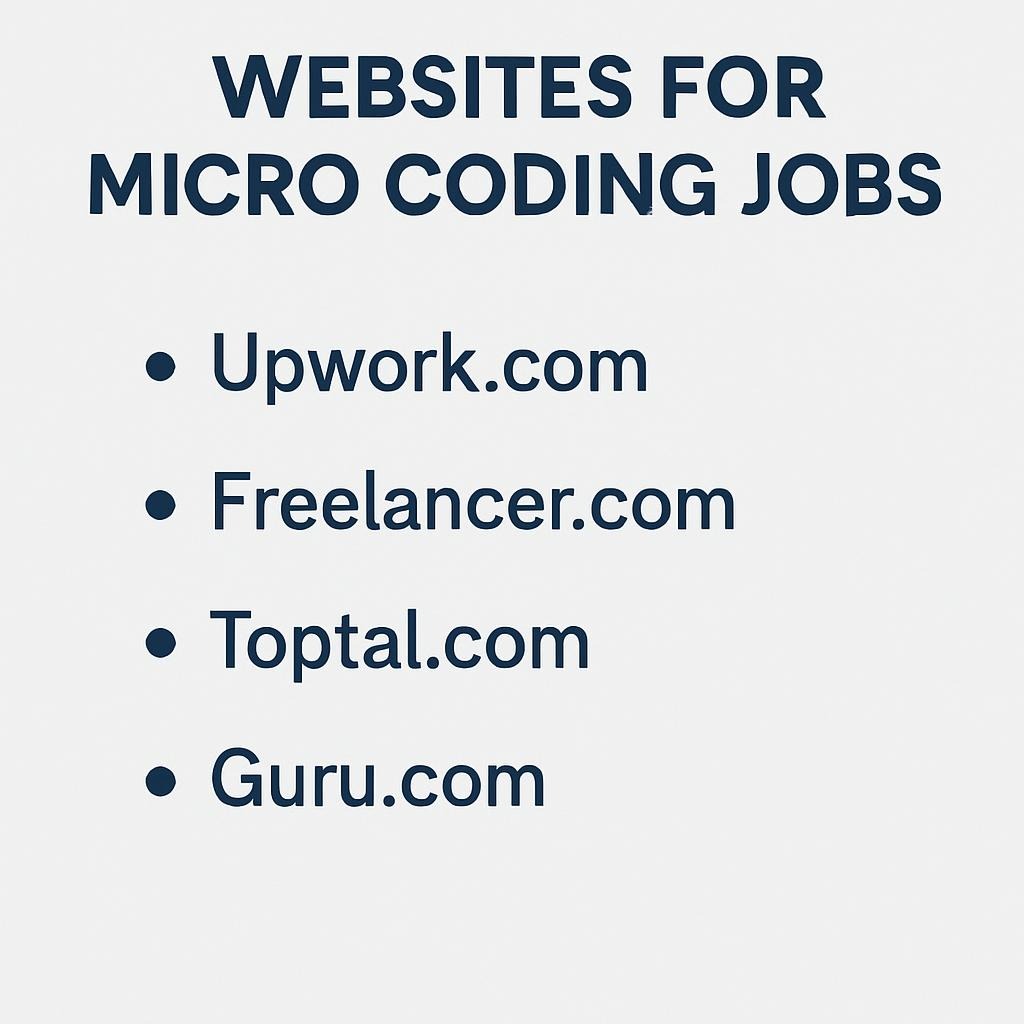
10 Platforms, Fee-by-Fee
Fee structures below were checked against each platform’s own pricing/help pages (or the most recent third-party breakdown that cites them directly) as of July–August 2026. Platforms revise fees with little warning — Upwork replaced its entire tiered-fee model in May 2025 — so verify before you build pricing around any of these numbers.
As of May 1, 2025, Upwork replaced its old tiered system (20% on the first $500 with a client, 10% up to $10,000, 5% above) with a variable per-contract fee, disclosed before you accept, generally landing between 5% and 15% depending on the job category and your history with that client. Connects — the currency you spend to submit proposals — cost $0.15 each à la carte; each proposal typically requires 2–16 Connects depending on job scope. The optional Freelancer Plus subscription is reported between roughly $14.99 and $19.99/month depending on the source and current promotion, and bundles extra Connects with bid-visibility tools. Clients separately pay a 3–10% service fee plus a one-time contract-initiation fee of $0.99–$14.99 per new freelancer relationship.
✓ Pros
- By far the largest job volume
- Escrow-backed payment protection
- Full-time contract track: reported median ~$85K/yr for full-time freelancers
- Built-in time tracking and invoicing
✗ Cons
- Connects cost real money before you’ve earned anything
- Job Success Score can be damaged by a single unreasonable client
- Extremely high competition in commodity categories
Sources: Upwork’s own fee documentation (upwork.com/resources/is-upwork-free), Jobbers.io and Vortenza 2026 fee breakdowns.
Fiverr’s seller commission is a flat 20% on every order, including tips, with no volume discount at any seller tier — this replaced an older tiered structure in 2022, and high-volume sellers who previously reached 7.5–10% took a real pay cut when the flat rate arrived. To net $500, you need to price the gig at roughly $625. Buyers separately pay a 5.5% service fee plus a small-order fee on low-value orders, which pushes some buyers toward cheaper competing sellers. The 20% fee is a deductible business expense on your taxes, which softens but doesn’t erase the impact.
Generic “I will build your website” gigs compete on price against much cheaper international sellers. Developers who do well tend to sell tightly scoped, named outcomes — “WooCommerce-to-Shopify migration with SEO redirect mapping” — priced for the deliverable, not the hour.
Sources: Fiverr Help Center fee documentation as summarized by FreelancerCalculator.com and FreelanceCompare.com (2026 updates).
Toptal’s own published screening overview states fewer than 3% of applicants are accepted, across a five-stage process: English/communication screening (~70–80% pass rate), a timed technical assessment, a live coding/problem-solving interview, a test project, and continuous quality review after acceptance. Toptal charges freelancers 0% direct commission — the platform instead marks up what it bills clients, reported by multiple sources at up to roughly 30–50%, which isn’t published in dollar terms anywhere freelancers can see. The unpaid time investment in the application (often 20–40+ hours across multiple weeks) is the real cost to weigh against your current hourly rate.
✓ Pros
- 0% deducted from freelancer pay
- Enterprise client roster
- No proposal-writing or bidding once accepted
✗ Cons
- ~97% of applicants rejected
- Unpaid multi-week application process
- Client-side markup isn’t transparent to you
Sources: Toptal’s own “Top 3 Percent” page (toptal.com/top-3-percent), TECLA.io and EarnifyHub 2026 reviews.
Guru charges a “job fee” that scales from 9% on the free Basic tier down to roughly 5% on paid Professional/Business/Executive membership tiers, which range from about $8.95 to $49.95/month depending on the plan. It’s meaningfully lower fees than Upwork or Fiverr for freelancers earning enough to justify the subscription, with a real trade-off: far less job volume than the two largest marketplaces.
✓ Pros
- Lower effective fees than Upwork/Fiverr at paid tiers
- Escrow system (SafePay)
✗ Cons
- Much smaller job pool
- Membership cost only pays off above a certain monthly volume
Sources: ITQlick’s Guru.com pricing breakdown, Jobbers.io platform fee comparisons (2026).
PeoplePerHour charges a tiered commission based on lifetime billing with a given client: roughly 20% on the first £250 billed to that client, stepping down to roughly 7.5% (and lower at higher tiers per some sources) as the relationship grows. It’s strongest for UK/EU-timezone developers — major reported clients include Google, the BBC, and IBM sourcing through the platform — and comparatively weak outside European business hours.
Sources: Jobbers.io platform-fee comparison and Medium fee-analysis roundup (2026), citing PeoplePerHour’s own commission schedule.
Contra charges freelancers 0% commission on completed work; the company instead monetizes through client-side fees and an optional ~$29/month freelancer subscription for enhanced placement and analytics. Multiple 2026 platform roundups report Contra hosting over a million freelancers and clients including large brands, but job-posting volume for open marketplace discovery still trails Upwork and Fiverr substantially — it’s a stronger fit as a zero-fee invoicing/contract layer for clients you already have than as a cold-start lead source.
Sources: Jobbers.io’s “zero-commission platforms” review, EarnifyHub’s 2026 platform roundup.
Braintrust charges freelancers 0% and instead bills clients roughly 15% plus processing. Reported enterprise clients include Porsche and Nestlé, and the network is reported at over a million members, though the platform is narrowly focused on software, design, and data roles rather than general freelance work. It uses a Web3 governance token, which you don’t need to interact with to find and complete work, but which adds a layer of unfamiliarity for freelancers used to conventional marketplaces.
Source: venture-lab.org’s 2026 platform fee comparison, cross-checked against Arc’s Braintrust coverage.
Hubstaff Talent is a free directory, not a managed marketplace — no commission on either side, but also no built-in escrow, milestone protection, or dispute resolution. You handle contracts and payment collection yourself. It monetizes indirectly by promoting its parent company’s time-tracking software. Best suited to freelancers who already have a contract template and payment process they trust, since the platform provides discovery but not protection.
Source: golance.com’s 2026 “platforms with no fees” comparison.
Arc.dev positions itself similarly to Toptal — vetted developer pool, human matching rather than open bidding — with reported access to a large network of developers, designers, and marketers for client-side hiring. As with Toptal, “0% to freelancers” typically means the fee is built into what the platform bills the client rather than genuinely absent.
Source: Arc’s own employer-blog content and third-party comparisons (2026).
Freelancer.com runs an open-bidding marketplace comparable in structure to early Upwork, plus a contest format where multiple freelancers submit competing work for a single prize — useful for portfolio-building but low-paying per hour of effort. Reported commission sits around 10% for most contract types, broadly in line with Upwork’s typical range, with a reputation for higher price competition at the entry level.
Source: bestjobsearchapps.com’s 2026 platform-fee comparison.
Roughly: 0% direct commission — Contra, Braintrust, Hubstaff Talent, and (with an undisclosed client-side markup) Toptal and Arc.dev. 5–10% — Guru (with paid membership), Freelancer.com, and Upwork on many contracts. Tiered, can exceed 15–20% for new client relationships — PeoplePerHour. Flat 20%, no way to reduce it — Fiverr. Lower fees almost always trade off against lower job volume; there is no platform in this set that offers both maximum job flow and minimum fees simultaneously.
The 2026 Tax Math, Worked Out
Nobody withholds tax from freelance income. As a self-employed worker, you’re responsible for paying both the employee and employer halves of Social Security and Medicare tax — the self-employment (SE) tax — on top of ordinary federal income tax, and for sending it to the IRS quarterly rather than once a year.
Two mechanical details that surprise almost everyone the first year: SE tax applies to only 92.35% of net profit (mirroring the fact that a W-2 employer’s matching half isn’t taxed as employee income), and you can deduct half of the SE tax itself when calculating your income tax — a partial, not complete, offset. State income tax is separate and varies by state; some states have none.
The IRS charges an underpayment penalty — currently the federal short-term rate plus 3 percentage points, recalculated quarterly — if you don’t pay enough throughout the year. You avoid it entirely by paying either 100% of last year’s total tax liability (110% if your prior-year adjusted gross income was over $150,000), split into four quarterly payments, regardless of how much more you earn this year. This is the simplest way for a first-year freelancer with unpredictable income to stay penalty-free.
Deductions freelance developers commonly miss
Home-office square footage, a portion of internet service, software subscriptions and SaaS tools, hardware, platform commission fees (Upwork, Fiverr, etc. are deductible business expenses), continuing-education courses, and — critically — self-employed health insurance premiums, which are generally 100% deductible against your income (not your SE tax). Keep records; the deduction only helps if you can substantiate it.
Tax figures sourced from IRS Schedule SE mechanics as summarized by multiple 2026-updated calculator sites (SDOCPA, QuickTaxTools, CountryTaxCalc, TaxLoot), cross-checked for consistency on rate (15.3%), the 92.35% base, the 2026 SS wage base ($184,500), and quarterly due dates. This is general information, not tax advice — consult a CPA or enrolled agent for your specific situation, especially around the QBI deduction and state tax.
Health Insurance After the ACA Subsidy Cliff (New for 2026)
This is the single biggest change for US freelancers in 2026, and it’s recent enough that a lot of freelancing content hasn’t caught up: the enhanced ACA premium tax credits expired on January 1, 2026, restoring the older “subsidy cliff” at 400% of the federal poverty level (roughly $60,240 for a single filer). KFF’s analysis, cited by multiple 2026 tax and insurance write-ups, found that the average subsidized marketplace enrollee saw their net premium more than double this year, affecting an estimated 22 million people — about 92% of marketplace enrollees.
Since nearly half of all ACA marketplace enrollees are self-employed, run a small business, or work for one with fewer than 25 employees, this hits freelancers disproportionately. A 2026 Silver marketplace plan for a 31–45 year-old averages roughly $789/month unsubsidized (about $676/month for an EPO), though your actual number will depend heavily on your net self-employment income (which determines your subsidy eligibility, if any) and your state.
ACA subsidies are calculated on your Modified Adjusted Gross Income — your net Schedule C income after business deductions, not your gross freelance revenue. Freelancers who overestimate their income when applying can end up repaying subsidy credits at tax time; underestimating creates the opposite problem. With the subsidy cliff restored, getting this estimate right matters more in 2026 than it did in 2021–2025, when the enhanced credits smoothed out estimation errors.
The self-employed health insurance premium deduction itself hasn’t changed — you can still generally deduct 100% of your premiums against income tax (not SE tax) regardless of whether you’re subsidized. If your income is near the subsidy cliff, a lower net profit (via legitimate business deductions) can sometimes qualify you for a subsidy that’s worth more than the tax you’d save by reporting higher profit — a genuinely useful thing to model with a tax professional rather than guess at.
Sources: Beancount.io’s July 2026 analysis of the ACA subsidy cliff’s return, KFF data as cited therein, and ForHealthInsurance.com’s 2026 Silver-plan premium averages.
Documented Scam Patterns
Upwork’s own 2026 fraud-prevention guidance and multiple independent freelancer-safety writeups converge on the same handful of patterns. None of these require a dramatic personal story to explain — they’re mechanical, and recognizing the mechanism is what actually protects you.
- The overpayment / bounced-check scam. A “client” sends a check or transfer for more than the agreed amount and asks you to wire back the difference, often citing an urgent personal or business emergency. Checks and even some bank transfers can appear to clear before being reversed days later — by the time the reversal happens, your outgoing wire is unrecoverable. Per Upwork’s own guidance, this pattern has expanded in 2026 to include peer-to-peer apps like Zelle, Venmo, and Cash App, not just paper checks.
- Upfront payment requests. Legitimate work never requires you to pay the client — for “software,” “training materials,” “certification,” or a “verification fee” before starting. Upwork states plainly that starting a job should never cost the freelancer money.
- Off-platform pressure early in the relationship. A request to move to WhatsApp, personal email, or a personal payment app before you’ve established any track record removes the platform’s dispute-resolution and payment-protection systems.
- Unpaid “test projects” that are actually the deliverable. A short, genuinely scoped test task is normal. A multi-hour build that happens to be exactly the client’s actual product need — with no payment and no contract — is a documented pattern, not a coincidence.
- Fake job/interview scams. Impersonators posing as real companies extend fake interview invitations and request “processing fees” or personal identifying information. This is a phishing pattern, not a freelance-specific one, but it shows up heavily in freelance-platform DMs.
Never wire money to a client, under any framing. Never accept work that requires you to pay the client first. Keep initial communication on-platform until there’s an established, funded contract. Use milestone-based escrow for any project over a small, disposable amount. Treat urgency plus a request for money or off-platform contact as a combined signal, not two separate coincidences.
Sources: Upwork’s own “How to Spot Fake Job Postings” guide (upwork.com/resources/spotting-fake-job-posts, 2026), ProZ.com’s overpayment-scam explainer, and Grey.co’s freelancer payment-scam guide.
The Non-Financial Cost
Isolation, irregular structure, and income volatility are structural features of solo freelance work, not individual failings — there’s no manager setting boundaries on your hours, no colleagues to reality-check a bad day, and no steady paycheck smoothing out a slow month. Freelance-community research (Leapers’ ongoing work with UK freelancers, and repeated findings across freelancer surveys) consistently associates a few concrete practices with better outcomes, independent of income level:
Structural fixes that show up repeatedly in freelancer research
- Physical separation between “work begins” and “work ends” — leaving the house, even briefly, before starting
- A coworking space or regular in-person work location, even part-time
- A standing weekly check-in with at least one other freelancer
- Budgeting for mental health support as a business expense, not a luxury
- Joining an existing community (r/freelance, Leapers, a local freelancer meetup) rather than trying to build support from scratch
🔗 Mental health resources for freelancers
- Leapers — UK-based freelancer mental health community and research
- r/freelance — active freelancer community discussion
- CodeTalentHub: Avoiding burnout as a freelance developer
A Minimal Tool Stack
Not an exhaustive list — the smallest set that covers time tracking, invoicing, proposals, secure credential sharing, and backup, all of which are tax-deductible business expenses.
Should You Do This? A Framework
Based on the disclosed-survey findings in the “failure rate” section above, not on aggregate market size alone — market size tells you the opportunity exists, not whether it fits your specific financial situation right now.
✅ Reasonable signals to start now
- 3+ months of expenses saved, ideally more
- You can tolerate $0 income for 2–3 months without derailing your finances
- A partner, family support, or savings buffer if things start slow
- You have (or are willing to build) a specific, defensible niche rather than “full-stack generalist”
- You’re willing to separate business and personal finances from day one
- You understand roughly 22–27%+ of net profit goes to federal tax before state tax
🚫 Reasonable signals to wait
- You need income within 30 days and have no buffer
- Dependents rely entirely on your income with no backup plan
- You strongly dislike self-promotion and client-facing sales conversations
- You’re in the US without a health-insurance plan modeled against the 2026 subsidy cliff
- You’re leaving a job primarily to escape it, without a specific freelance business plan
Building freelance income to $1,500–$2,000/month while still employed, then transitioning once that’s proven repeatable, is slower — often 12–18 months — but removes the acute cash-flow risk that the disclosed survey data associates most strongly with early quitting. There’s no penalty for taking the slower route.
Frequently Asked Questions
No verified, methodologically disclosed study supports a single figure that high. The more transparent sources (Freelancer Club, MBO Partners, Upwork) point to a meaningful drop-off in year one — plausibly in the range of 1 in 5 to 1 in 3 — driven mainly by cash-flow shocks and lack of financial planning, not lack of coding skill.
Among 0%-commission options, Contra, Braintrust, and Hubstaff Talent charge freelancers nothing directly (Braintrust and Contra shift cost to the client; Hubstaff Talent provides no built-in payment protection). Among traditional escrow-backed marketplaces, Guru’s 5% paid-tier fee undercuts Upwork’s typical 5–15% and Fiverr’s flat 20%.
A commonly used rule of thumb is 25–30% of every payment, based on the worked 2026 example above (~22–27% effective federal rate at $60,000 net profit, before any state income tax). Higher earners and residents of high-tax states should model a higher percentage.
The enhanced ACA premium tax credits that had been in place since 2021 expired January 1, 2026, restoring the 400%-of-poverty-line subsidy cliff. KFF-cited analysis found the average subsidized marketplace enrollee’s net premium roughly doubled as a result — a major, recent change relevant to any US freelancer buying individual coverage.
Toptal’s own published screening page states fewer than 3% of applicants are accepted, and this figure is repeated consistently across independent 2026 reviews of the platform.
Glossary
The 15.3% combined Social Security and Medicare tax self-employed workers pay, covering both the “employee” and “employer” halves that a traditional job would split with you.
An IRS rule that protects you from underpayment penalties if you pay at least 100% (110% for higher earners) of last year’s total tax liability across four quarterly payments, regardless of what you actually owe this year.
The income threshold (400% of the federal poverty level) above which ACA marketplace enrollees receive no premium subsidy at all — restored for 2026 after several years of enhanced, uncapped credits.
Upwork’s proposal currency — a per-job cost (in Connects, purchasable at $0.15 each) required to submit a proposal, separate from the percentage fee taken once you’re hired.
Funds a client deposits with the platform before work begins, released to the freelancer as agreed milestones are approved — the core protection against non-payment on most major platforms.
Sources
This guide draws on the following primary and secondary sources, current as of July–August 2026. Platform fees and tax rules change; verify current figures directly with the platform or the IRS before making financial decisions.
- Upwork — official fee documentation (upwork.com/resources/is-upwork-free) and fraud-prevention guide (upwork.com/resources/spotting-fake-job-posts)
- Upwork Future Workforce Index 2026 / Freelancing Stats (upwork.com/resources/freelancing-stats)
- Toptal — official screening overview (toptal.com/top-3-percent)
- MBO Partners — State of Independence 2025, via Carry.com and Billed.app summaries
- Fiverr Help Center fee documentation, via FreelancerCalculator.com and FreelanceCompare.com (2026)
- Index.dev — Freelance Developer Rates by Country, 2026
- Jobbers.io — Global Freelance Hourly Rate Index, July 2026; platform fee comparisons
- ZipRecruiter — freelance software/web developer salary data, March 2026
- IRS Schedule SE mechanics, via SDOCPA, QuickTaxTools, CountryTaxCalc, and TaxLoot 2026 calculators
- Beancount.io — “The Self-Employed Health Insurance Deduction in 2026,” July 2026 (ACA subsidy cliff analysis, citing KFF)
- ForHealthInsurance.com — 2026 self-employed health insurance plan and premium data
- Freelancers Union blog — citing Genius 2025 and Bonsai 2025 freelancer surveys
- Freelancer Club — freelancer failure-rate commentary
- Leapers — freelancer mental health community and research (leapers.co)