


Freelance Platforms · Updated August 2026
The Real Map of Specialized
Freelance Platforms
General marketplaces got diluted, so specialists built narrower ones. This guide maps the actual terrain — by industry, vetting model, and fee structure — and is honest about which numbers are solid and which are marketing.
Market research firms currently size the global freelance-platforms market anywhere from about $7.3 billion to $9.9 billion for 2026, depending on methodology — more on that spread below. What all of them agree on is the direction: double-digit annual growth, driven by AI-assisted matching and a widening split between commodity gig work and credentialed specialist work. That split is the actual story, and it’s what the rest of this guide is organized around.
- Upwork replaced its flat 10% freelancer fee with a variable 0–15% rate set per contract (May 2025) — the single biggest math change for anyone pricing work there.
- LinkedIn ProFinder no longer exists as a product. It was folded into LinkedIn Services Marketplace back in 2021; if you see “ProFinder” in a 2026 comparison article, that’s a sign the piece wasn’t re-checked.
- Malt acquired COMATCH, the leading DACH-region consulting marketplace, consolidating European freelance-consulting supply under one roof.
- Scale AI’s Outlier has faced multiple 2025 lawsuits and a reported Department of Labor inquiry over contractor misclassification and wage/payment disputes — relevant context if you’re weighing AI training-data work, covered in full below.
“Which Platform?” Is the Wrong First Question
Most comparison articles open with a table: Upwork, Fiverr, Toptal, fees side by side, star ratings, “best for beginners.” That format assumes every freelance platform is the same product at a different price point. It isn’t.
A platform like Expert360 (management and strategy consulting) isn’t competing with Upwork the way a steakhouse competes with a food truck. It’s a different transaction. The buyer there isn’t price-shopping — she’s risk-managing a five- or six-figure engagement and needs evidence of sector experience and verifiable references before a conversation even starts.
The useful question is: where does my type of client already go to solve this problem? Platform choice follows from that, not the other way around.
Global Freelance Platform Market Size, 2026 Estimates by Analyst Firm
Six independent 2026 estimates range from $7.3B to $9.9B — a reminder that “the market is worth $X” claims you see quoted as a single number are usually one analyst’s methodology, not a settled fact. All firms agree on 14–19% CAGR through the early 2030s. Worth noting too: these firms don’t all define “freelance platform” the same way — several roll in adjacent contingent-workforce management software and staffing-tech tools that most readers wouldn’t think of as a freelance marketplace, which inflates the headline number relative to what you’d count if you were only tallying sites like the ones covered in this guide. Treat the range as directional, not as a precise market boundary.
Tech & Software Engineering: The Crowded Premium Tier
This category has the most platforms, the most money, and the widest gap between “independently vetted” and “self-described top talent.” Three distinct tiers operate here, and conflating them costs money on both sides of a hire.
Elite, application-based vetting
Toptal has publicly and consistently described its acceptance rate as under 3% of applicants, via a multi-stage process — language and personality screening, live technical interviews, timed problem-solving, and a paid trial project. Clients don’t see a freelancer-side fee; Toptal builds its margin into the client rate instead, which several third-party writeups estimate at a meaningful markup over what the freelancer is paid, though Toptal doesn’t publish the exact figure. Treat any specific markup percentage you see quoted as an estimate, not Toptal’s disclosed number.
Gun.io takes a more manual approach — engineers doing live technical interviews rather than automated challenges — and skews toward U.S.-based talent and clients, which matters if timezone or compliance requirements are in play. Confirm current placement fees and typical timelines directly on gun.io, since these are the kind of terms platforms revise without a press release.
Community-owned / zero-commission tier
Braintrust runs a token-based model in which freelancers keep their full billed rate and clients instead pay a fee, distributed in BTRST tokens to the network rather than to a corporate owner. It’s tech- and design-focused with a genuinely large enterprise client roster. The open question for anyone evaluating it isn’t the model’s novelty — it’s token price volatility, which is real and worth pricing in before treating token distributions as equivalent to cash.
Other zero-commission options
Braintrust isn’t the only no-freelancer-fee platform worth knowing about. Contra charges freelancers 0% commission across tech, design, and marketing work, monetizing instead through client-side tools and its “Independent” client plan. Hubstaff Talent is a free, browsable directory rather than a managed marketplace — no fees in either direction, but also no vetting, escrow, or dispute resolution, so it functions more like a lead source than a full platform. If zero-commission matters to you, it’s worth evaluating these alongside Braintrust rather than treating token-based Braintrust as the only alternative to a percentage cut.
Lighter-touch curated marketplaces
Arc.dev sits between Upwork’s open market and Toptal’s heavy vetting — a curated, assessment-screened pool with AI-assisted matching, generally cited in the $60–$150/hour band for client-facing rates. It’s a reasonable mid-market option for startups that want more signal than an open marketplace but don’t need (or can’t clear) Toptal’s bar.
Design & Creative: Portfolio Gravity vs. Active Bidding
Design freelancing splits on one axis: do you want inbound interest generated by visible work, or do you want to actively bid? These require different weekly habits, and the platforms built for each work differently.
Dribbble is the clearest portfolio-gravity case — recruiters and creative directors browse it looking for talent, so a strong, current portfolio generates inbound interest without pitching. The trade-off is equally clear: a thin or dated portfolio is close to invisible there, regardless of paid-tier access.
99designs runs on a contest model. For a designer with a strong, recognizable visual style and a handful of reusable concepts, a contest can be lower-effort than writing proposals. It structurally disadvantages designers without a distinct style, since clients are choosing from finished concepts, not pitches.
Working Not Working is invite-only with a well-known roster of large brand clients; it’s free to freelancers, with companies paying to post. Its talent base skews U.S., English-language, and advertising/brand-leaning rather than product design.
For creatives based in the EU, Malt is the dominant platform in France and expanding across Germany and Spain, and it’s genuinely useful for the local invoicing and tax-compliance overhead it removes — worth the somewhat higher fee if you’re navigating EU contractor rules solo otherwise. It’s also worth knowing that Malt acquired COMATCH, previously the leading standalone consulting marketplace in the DACH region, back in 2022 — so if you’re a European consultant who remembers COMATCH as a separate destination, that supply has since consolidated into Malt.
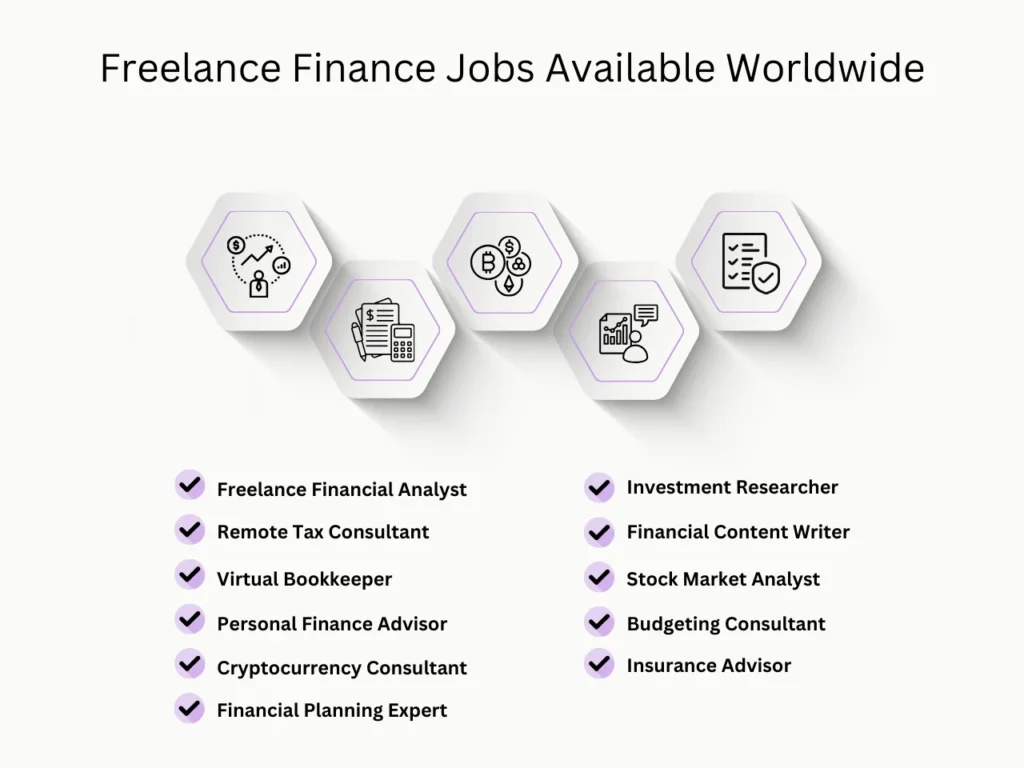
Business Consulting & Finance: The Credential-Gated Tier
This is where the wrong platform choice is most expensive. A developer who picks poorly loses a percentage of one rate. A consultant who picks poorly can lose access to the entire engagement tier — enterprise buyers here often won’t consider a profile without recognizable institutional credentials.
Catalant is built for project-based consulting with large enterprises and is heavily weighted toward alumni of major strategy firms and former operating executives. It matches based on stated project scope rather than open bidding, which makes it a strong ROI use of profile time if you already have the pedigree it screens for — and a difficult entry point if you don’t.
Expert360 runs a comparable model with particular strength in Australia and the broader APAC region, verifying credentials as both a filter and a trust signal to clients.
For CFA charterholders and other credentialed finance professionals, Toptal’s finance practice is a genuinely underused path — competition there tends to be lighter than on the engineering side simply because fewer finance professionals think of themselves as “freelancers” in the first place.
This category also reads U.S./Europe-heavy by default, which undersells what’s happening in APAC. Expert360 remains the strongest name for Australian and broader APAC enterprise consulting, but it’s not the only route: Singapore- and Hong Kong-based clients increasingly source finance and strategy consultants through Toptal’s and Catalant’s own APAC expansion, and regional platforms like Freelancer.com (originally Australian) still carry meaningful volume across Southeast Asia for business and finance work, even though its brand recognition skews toward tech and design.
| Platform | Primary Niche | Entry Filter | Typical Project Scale |
|---|---|---|---|
| Catalant | Strategic consulting | Institutional pedigree | Larger enterprise engagements |
| Expert360 | Management & finance consulting, APAC-strong | Credential verified | Mid-market to enterprise |
| Toptal Finance | Financial modeling, fractional CFO | Toptal-level vetting | SMB to enterprise |
| Upwork (Business category) | General business consulting | Open marketplace | Small to mid-size |
| LinkedIn Services Marketplace | Broad professional services | Profile-based | Varies widely; free but has limited traction for larger engagements |
Legal & Healthcare: Where Licensing Slows Everything Down
Professional licensing and malpractice exposure make these two fields structurally harder to platform-ize than the rest of this guide — which also means the platforms that do exist are less crowded and often less understood by the professionals they’d serve.
Legal
Axiom is the best-known name in legal project outsourcing, placing experienced attorneys — often with large-firm backgrounds — into contract engagements with corporations and law firms. Its model is closer to employer-of-record than pure freelancing: Axiom employs the attorneys and carries the malpractice and benefits arrangement, which sidesteps a lot of the professional-ethics friction that stops attorneys from freelancing independently.
Lawclerk and Hire an Esquire run closer to a true marketplace for attorneys — project-based work like document review, research memos, and brief drafting, generally at lower rates and with a client base skewed toward solo practitioners and smaller firms rather than large corporations.
Healthcare
Direct clinical freelancing is constrained by licensure, but adjacent categories are genuinely underserved by dedicated platforms: medical writing, regulatory affairs (FDA/EMA submissions), pharmacovigilance, and clinical documentation. Most of this work still flows through Upwork’s health vertical or direct outreach to pharma, biotech, and CRO clients rather than through a specialized marketplace — a real gap in the ecosystem rather than a sign the demand doesn’t exist.
Writing & Content: Where AI Compression Is Visible
The content freelance market has split more sharply than any other category here. Commodity content — generic SEO posts, product blurbs — has taken a real hit from generative AI; this shows up consistently in lower bids for entry-level content work across major platforms. What’s holding up, and in places growing, is writing that requires genuine subject-matter accountability: cybersecurity technical writing, regulatory documentation, financial commentary that needs a compliance review behind it.
Contently runs a curated network connecting vetted writers with brands that have real content budgets, and doesn’t charge freelancers directly. Scripted suits writers who want steadier mid-tier volume with a managed client relationship rather than direct business development. For technical writing specifically — API docs, architecture guides — dedicated technical-writing job boards and communities tend to surface more relevant, better-vetted work than general marketplaces, where technical writing gigs are easy to post but hard to screen for.
AI Training Data Work: A Real Category That Gets Bundled Wrong
This deserves its own section because “AI training data work” keeps getting lumped in with “AI freelancing” in a way that obscures what it actually is. This is not AI engineering. The people hired here are frequently non-technical domain experts: physicians, attorneys, scientists, financial analysts, brought in to evaluate and rank model outputs, annotate data, and stress-test reasoning in their field.
Three platforms anchor most of the demand, and they work differently enough to be worth separating out. Scale AI’s Outlier is the largest and most aggressively marketed, hiring broadly across domains through an open, self-serve queue — and, as covered below, the one currently facing the most public scrutiny over its labor practices. Invisible Technologies runs a more managed, agency-like model: rather than an open task queue, it staffs longer-running engagements for enterprise AI clients directly, which tends to mean steadier assignments but less visibility for contributors into how tasks and pay get allocated. DataAnnotation.tech operates a broader, lower-barrier queue closer to Outlier’s open-access approach, with a smaller enterprise roster and far less brand visibility — a reasonable second option to have if Outlier’s account-suspension and payment complaints (below) make you want to spread the risk.
The trajectory worth understanding: as models improve, generic annotation tasks for non-specialists tend to shrink, while tasks that need genuine expert judgment — medical or legal reasoning evaluation, for instance — become scarcer to staff and more valuable. If you’re a licensed domain expert, this can be a legitimate income supplement in 2026; the thing to actually check before you start is the platform’s NDA and IP-assignment language, since some ask contributors to sign over rights broadly enough to cover professional expertise you’d otherwise want to retain control over.
What Freelancers Actually Keep: Fee Structures in 2026
Upwork’s fee model changed meaningfully in 2025: it replaced its old tiered structure (20% on the first $500 billed to a client, then 10%, then 5% as lifetime billing grew) with a variable 0–15% service fee set per contract at the time a proposal is submitted, and locked for that client relationship. Most freelancers report landing near the middle of that range rather than at either edge. That’s a real, verifiable change — and a good example of why fee tables need a “last checked” date rather than being treated as permanent.
The “0% to freelancers” platforms aren’t free — the cost is loaded onto the client side instead, and it can come back to you as downward pressure on the rate a client is willing to negotiate, since they’re pricing in the platform’s cut whether or not they see it itemized. Worth knowing when you set your number, not a reason to avoid those platforms.
A Practical Filter for Choosing Where to Be
Most platform-selection mistakes happen one level too abstract. “Toptal or Upwork?” isn’t the real question — “can I actually pass Toptal’s vetting?” is prior to that, and “do my clients even go looking there?” is prior to that. Here’s the order that actually matters.
Platform Selection, in Order
A Fortune 500 CFO hiring a financial modeler isn’t browsing Fiverr. Map the client, not just your skill set.
Apply to the tier you can realistically clear now. You can move up once you have the track record.
Calculate it in real dollars at your billing level, not as an abstract percentage, then weigh it against client quality.
Inbound/portfolio models need front-loaded creative work. Bidding models need ongoing proposal effort. Managed models trade rate control for less business development. None is universally better.
Account suspensions, algorithm changes, and platform-specific slowdowns are real. Maintaining an active presence on two or three complementary platforms is a reasonable hedge.
Questions That Actually Come Up
Can you freelance on multiple platforms at once?
Yes, and most established freelancers do — commonly two to four. The real constraint is response time and reputation upkeep on each one, so it’s worth concentrating effort on whichever platform holds your highest-value relationships and letting the others run at reduced engagement.
Does failing Toptal’s vetting hurt you elsewhere?
No — the outcome isn’t shared externally or shown on a public profile. A rejection is useful diagnostic information about where your gaps are, not a public mark against you.
Are there platforms built for non-English-speaking freelancers?
Malt for France, Germany, and Spain; Workana across Latin America; Lancers in Japan. Regional platforms often handle local invoicing and tax compliance that global platforms don’t, which is worth factoring into a true cost comparison.
Why Most People Don’t Switch — Even When They Should
The platform where you already have reviews and a client relationship or two has real gravity. Switching means starting at zero visibility somewhere new while the old one still occasionally pays. That’s not irrational — but it’s also how people stay in the wrong market for a few years longer than necessary.
The switch doesn’t have to be all-or-nothing. Build the new profile while the current one keeps running. Start a vetting process before you need the income from it. The platforms with real barriers to entry — Toptal, Catalant — also have real lead times, and none of that clock starts until you start it.