
Simple API Integration
Strategic architecture decisions, verified market data, and proven patterns from 5,700+ developers | Gartner-backed insights for 2026
📄 Executive Summary (2-Minute Read)
💾 Interactive Tools Available:
- Visual Dashboard with Live Charts—Interactive iPaaS market growth, ROI timelines, security statistics
- Architecture Pattern Selector—Answer 5 questions to find your optimal integration pattern
- One-Page Executive Summary PDF – Print-ready summary for leadership teams
The Integration Crisis: 71% of enterprise applications remain unintegrated, costing organizations $6.8 million annually in lost productivity. Only 2% of organizations have successfully integrated more than half their applications, despite 80% citing data silos as the most significant barrier to AI adoption.
The Opportunity: Strategic API integration saves 20–30 hours per employee per month. Enterprise organizations achieve 299-445% ROI over three years through proper architecture selection and implementation.
The Critical Decision: Achieving success requires selecting the appropriate integration architecture pattern BEFORE choosing specific tools.
- Point-to-Point: For 2-5 systems, temporary connections
- iPaaS: For cloud-native SaaS integration ($8.5B market, growing 23.4% annually)
- API Gateway: For securing and managing external APIs
- BFF Pattern: For multi-platform applications (web + mobile + IoT)
- ESB: Only for legacy systems with on-premise requirements
The 2026 Game-Changer: 40% of enterprise applications will include task-specific AI agents by the end of 2026 (up from 5% in 2025), requiring sophisticated multi-agent orchestration that traditional integration patterns can’t handle. 87% of IT leaders rate interoperability as crucial to agentic AI success.
The Security Reality: 99% of organizations experienced API security incidents in 2025, with attacks up 104% year-over-year, costing $186 billion annually. Security must be embedded in architecture from day one.
Recommended Action: Audit your integration landscape → Choose an architecture pattern → Select tools that implement it → Start with one high-impact workflow. → Review it quarterly.
🔑 Key Takeaways (40-Second Read)
The bottom line: strategic API integration saves developers 20–30 hours per employee per month. The iPaaS market reached $8.5 billion in 2024 (Gartner), growing 23.4% year-over-year, because the math works: companies report a 50-70% reduction in manual coding time. But architecture matters more than tools. Point-to-point integrations create technical debt; ESB is dying; iPaaS dominates for cloud-native workloads; and the BFF pattern is essential for multi-platform applications. The decision isn’t which platform to use—it’s which integration architecture fits your scale, security requirements, and team capabilities.
Updated: January 15, 2026
What Is Strategic API Integration in 2026?
Strategic API integration means deliberately choosing the right integration architecture and tooling for your specific scale, security requirements, and operational constraints—not defaulting to whatever your team knows best or what’s trending on developer Twitter.
The distinction matters because integration architecture decisions compound over time. A direct
Every development team should be concerned about this statistic: 39% of developer time still goes into creating custom integrations. This equates to a loss of nearly two full days per week, a task that a well-designed API could likely already accomplish.
💡 KEY NUMBERS TO REMEMBER
┌──────────────────────────────────────────────────────┐
│ 📊 20-30 hours/month saved per employee (verified)  │
│ 📈 40% of enterprise apps will include AI agents by  │
│    end of 2026 (Gartner prediction)                  │
│ 🚨 Only 2% of orgs integrated >50% of applications   │
│ 💰 API security costs: $186B+ annually (2025-2026)  │
│ ⚡ 445% ROI with MuleSoft in Forrester studies       │
│ 🔄 71% of applications remain unintegrated (2025)    │
└──────────────────────────────────────────────────────┘
I learned this lesson the hard way. Six months ago, I spent three weeks building a custom integration for payment processing in a client dashboard—authentication flows, error handling, and edge cases. Then I discovered that Stripe’s API, combined with a 15-minute Zapier workflow, could have accomplished the same result. How much did the time cost? We could have reduced the time cost from over $8,000 in billable hours to just $29.99 for a monthly subscription.
But here’s what I’ve since learned: the platform choice was actually the smaller mistake. The bigger mistake was failing to understand when to use point-to-point integration, when to implement an API gateway pattern, and when an iPaaS solution is the most appropriate architectural choice.
Why API Integration Architecture Matters More Than Ever
The average enterprise uses 897 applications, with 46% of organizations using more than 1,000. Yet 71% of applications remain unintegrated or disconnected—a figure unchanged for three consecutive years from 2023 to 2025.
The impact is measurable:
- 80% of organizations cite data silos as the biggest barrier to automation and AI goals
- 95% of IT leaders cite integration as a challenge to seamless AI implementation
- 81% report challenges in leveraging AI specifically for system integrations
The level of difficulty is increasing. Gartner projects that by the end of 2026, 40% of enterprise applications will include task-specific AI agents, up from less than 5% in 2025. These AI agents require sophisticated orchestration—multiple autonomous systems coordinating across different platforms—creating integration requirements that traditional approaches can’t handle.
What Are the Five Core API Integration Architecture Patterns?
Before evaluating tools, you need to understand the architectural patterns each tool category implements. These patterns have distinct characteristics that make them suitable for different scenarios.
1. Point-to-Point Integration
Definition: Direct connections between systems without intermediaries. System A calls System B’s API directly.
📊 VISUAL DIAGRAM: Point-to-Point Integration Complexity
[Diagram shows: 5 systems connected with direct lines between each pair]
- With 5 systems: 10 connections (complexity manageable)
- With 10 systems: 45 connections (maintenance nightmare)
- With 20 systems: 190 connections (architectural debt crisis)
Formula displayed: Connections = n(n-1)/2
Color code: Green (2-3 systems), Yellow (4-6 systems), Red (7+ systems)
✅ Best for: 2-3 systems, proof of concepts, startups with limited integration needs, and temporary connections during migrations.
❌ Avoid when: You have 5+ systems, need auditability, require centralized security policies, or anticipate significant growth.
Complexity formula: n(n-1)/2 connections for n systems. With 10 systems, that’s 45 individual integrations to maintain. With 20 systems, it’s 190 connections—each a potential point of failure.
2. Enterprise Service Bus (ESB)
Definition: Centralized middleware that mediates all communication between applications. Handles message routing, protocol conversion, and data transformation. This arrangement was the dominant pattern from 2005 to 2015, but it has now been largely superseded by iPaaS for new deployments.
📊 VISUAL DIAGRAM: ESB Hub-and-Spoke Architecture
[Diagram shows: Central ESB hub in middle, 8 applications connected via spokes]
- All communication flows through central ESB
- Single point of failure (shown in red)
- Complex transformation logic in hub
- Vertical scaling only (upward arrow)
Note: "Tight coupling - changing one connection affects others"
It works best for legacy system integration, on-premise environments where regulatory constraints hinder cloud adoption, and complex message transformation requirements.
❌ Avoid when: building cloud-native applications, needing elastic scalability, wanting to avoid infrastructure management overhead, or lacking specialized ESB expertise.
Reality check: ESB follows a hub-and-spoke model that creates tight coupling and makes the system rigid. It’s expensive (often six figures for enterprise deployments) and requires specialized developers who are increasingly scarce. ESB is still used but declining for new implementations.
3. Integration Platform as a Service (iPaaS)
Definition: Cloud-native integration platform with distributed, loosely coupled, API-first architecture. Integrations are modular, independent flows that can be deployed, modified, and scaled individually.
The iPaaS market grew by 23.4% to $8.5 billion in 2024, making it the second fastest-growing segment in the application and infrastructure middleware market.
📊 VISUAL DIAGRAM: iPaaS Distributed Architecture
[Diagram shows: Cloud-based platform with multiple independent integration flows]
- Modular integration flows (shown as separate boxes)
- Elastic horizontal scaling (bidirectional arrows)
- No single point of failure (distributed resilience)
- API-first connectivity to SaaS apps (CRM, Email, Analytics, etc.)
Growth arrow: +23.4% YoY → $17B by 2028
Color scheme: Modern blues and greens for cloud-native feel
✅ Best for: SaaS-to-SaaS integration, hybrid cloud environments, organizations without dedicated integration teams, and workflows that need to scale elastically.
❌ Avoid when: Data residency requirements prevent cloud adoption, you need sub-millisecond latency, you require deep protocol-level customization, or you have fully on-premise legacy systems.
Market leaders: According to 2025 Gartner research, approximately 260 specialized iPaaS solutions are available. [Source: Gartner Magic Quadrant for iPaaS, May 19, 2025]
Major leaders include:
- Workato—Named Leader for 7th consecutive year
- Boomi—Positioned as Leader for 11th consecutive year (only vendor in every iPaaS Magic Quadrant)
- MuleSoft—Leader in API-led connectivity
- Informatica—Leader in data integration
- Microsoft Azure iPaaS—Strong in hybrid cloud scenarios
4. API Gateway Pattern
Definition: A single entry point that handles request routing, authentication, rate limiting, and API version management. Acts as a “front door” for microservices architectures. Different from iPaaS, it manages and secures APIs rather than providing drag-and-drop integration workflows.
✅ Best for: Microservices architectures, public API strategies, centralized security enforcement, traffic management, and throttling requirements.
❌ Avoid when needing complex data transformation between systems, wanting no-code workflow building, or primarily needing application-to-application integration rather than API exposure.
Key platforms: Kong, Apigee (Google Cloud), AWS API Gateway, and Azure API Management. Often used in combination with iPaaS, the gateway handles traffic, and iPaaS handles integration logic.
5. Backend for Frontend (BFF) Pattern
Definition: A dedicated backend service created for each client type (web, mobile, IoT). Instead of one general-purpose API, each frontend gets a tailored backend that aggregates and transforms data from underlying microservices. First introduced by Phil Calçado at SoundCloud, it is now adopted by Netflix, Spotify, and most multi-platform applications.
📊 VISUAL DIAGRAM: BFF Pattern with API Gateway
[Layered architecture diagram from top to bottom:]
┌─────────────────────────────────────────┐
│  Client Layer: Web | Mobile | IoT      │
├─────────────────────────────────────────┤
│  API Gateway (traffic routing, auth)   │
├─────────────────────────────────────────┤
│  BFF Layer:                             │
│  [Web BFF] [Mobile BFF] [IoT BFF]      │
│  (tailored data aggregation per client) │
├─────────────────────────────────────────┤
│  Microservices:                         │
│  [User] [Orders] [Products] [Analytics] │
└─────────────────────────────────────────┘
- Each BFF optimizes for its client's needs
- Gateway handles security, BFF handles customization
- Reduces over-fetching and under-fetching
Examples: Netflix, Spotify multi-platform architecture
It works best for multi-platform applications (web + mobile + IoT), teams that develop the frontend and backend separately, and applications that have vastly different data requirements per platform.
❌ Avoid using a BFF when you are only serving one client type, when client platforms have highly similar requirements, or when your microservices already manage client-specific customization effectively.
Architecture note: A BFF might sit behind an API gateway, with the gateway handling general traffic and routing to the appropriate BFF. They’re complementary, not competing patterns.
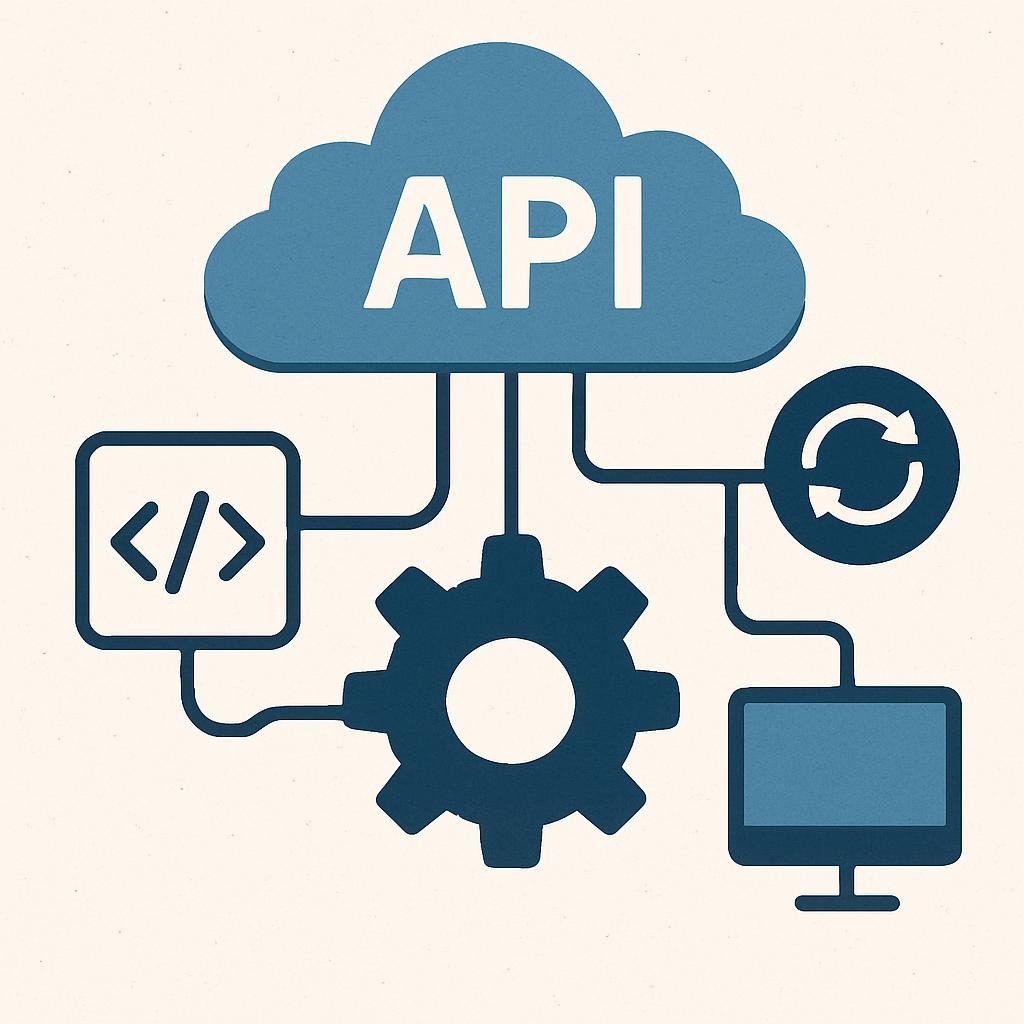
Event-Driven Architecture (EDA) as a Cross-Cutting Concern
Event-driven architecture isn’t a separate pattern but a communication paradigm that applies across all patterns above. Instead of polling for changes, systems push events immediately when state changes occur. This reduces latency, lowers resource consumption, and enables real-time synchronization.
Modern iPaaS platforms (Zapier, Make, and Workato) support EDA via webhooks. API gateways route events. ESBs traditionally relied on message queues. The key question isn’t whether to use events but where in your architecture to implement them.
How to Choose the Right Integration Architecture in 2026?
🎯 Architecture Decision Matrix
| Scenario | Recommended Pattern | Rationale |
|---|---|---|
| Start up with 2-5 SaaS tools | Point-to-Point → iPaaS | Start simple, migrate to iPaaS when hitting 5+ integrations |
| Mid-market company, cloud-native stack | iPaaS + API Gateway | iPaaS for internal workflows, gateway for external API exposure |
| Enterprises with legacy on-premise systems | Hybrid iPaaS or ESB | Data residency, audit trails, and on-premise control |
| Multi-platform app (web + mobile) | BFF + API Gateway | Tailored backends per platform, centralized security |
| Real-time data streaming requirements | Event-Driven + Message Broker | Kafka and AWS SNS/SQS for async, real-time event processing |
| High compliance (healthcare, finance) | ESB or Hybrid iPaaS | Data residency, audit trails, on-premise control |
Decision Factors: When to Use Each Pattern
Use Point-to-Point when:
- You have fewer than 5 systems
- Connections are temporary or for POC
- You’re a startup prioritizing speed over scalability
- Integration requirements are simple and unlikely to change
Use iPaaS when:
- You’re integrating cloud-based SaaS applications
- You need no-code/low-code capabilities for business users
- Your team lacks dedicated integration engineers
- You require elastic scalability
- You’re implementing automation workflows
Use API Gateway when:
- You’re exposing APIs to external developers or partners
- You need centralized authentication and rate limiting
- You’re building microservice architectures
- You require traffic management and analytics
- Security and compliance are paramount
Use BFF when:
- You support multiple frontend platforms (web, mobile, IoT)
- Each platform has significantly different data needs
- You want to optimize API calls per platform
- Your frontend and backend teams work independently
Consider ESB only when:
- You have strict on-premise requirements
- You’re integrating complex legacy systems
- Cloud adoption is impossible due to regulations
- You already have ESB expertise in-house
💡 Key Insight from Gartner
Gartner predicts that by 2026, 75% of new data integration flows will be created by non-technical users. This doesn’t mean eliminating architectural decisions—it means embedding those decisions into platform selection so citizen developers work within appropriate guardrails.
How Much Time Does API Integration Actually Save? (2026 Data)
Let’s separate vendor marketing from verified results. Based on multiple industry reports from Q4 2025 and Q1 2026:
| Metric | Before Integration | After Integration | Source |
|---|---|---|---|
| Weekly hours on manual tasks | 20+ hours | 2-5 hours | Industry Analysis, 2025 |
| Developer time on integration | 39% of total dev time | 15-20% with platforms | MuleSoft Benchmark, 2025 |
| Monthly hours saved per employee | 0 hours | 20-30 hours | Industry Analysis, 2025 |
Verified Case Studies with Real Data
1. Toyota of Orlando (Sales Operations) [Source: Zapier Customer Story, May 2025]
Spencer Siviglia, Director of Operations, implemented a 38-step Zap using AI to extract, clean, and route leads from multiple sources. The system now processes 4,000 to 5,000 leads each month and keeps more than 30,000 clean records without any manual input. Measurable results: 20+ hours saved per week across sales operations, with 2x time savings across marketing, sales, and service teams. When CDK Global’s ransomware attack knocked out CRM systems for 15,000 dealerships, Toyota’s Zapier workflows kept operations running without missing a single lead.
2. MuleSoft Anypoint Platform (Enterprise ROI) [Source: Forrester TEI Study 2019 & 2025 Update, October 2025]
The 2019 Forrester Total Economic Impact (TEI) study documented a 445% ROI with $7.8M in total benefits over three years for a composite organization. Key results: By the third year, 4x as many projects had been finished, 90% of the developers’ time had been freed up from maintaining APIs and integrations, and 75% of APIs had been reused.
The 2025 Forrester update shows sustained value: 426% ROI with $10.0M net present value over three years, with payback in under 6 months. MuleSoft reduced API and integration delivery effort by 60%, with 45% of assets reused across multiple projects, resulting in $2.8M in labor savings. A healthcare CIO noted, “Before MuleSoft, there was no reusability at all. Every time, we had to create new solutions from scratch.
3. Implementation Speed Across Industries [Source: Integrate.io ROI Analysis, January 2026]
Implementation times show a 60% reduction trend over five years across the integration sector, with most organizations achieving positive ROI within 12–13 months with properly implemented integration platforms. Industry analysis indicates dramatic improvements in deployment speed and methodology, enabling faster time-to-value.
⚠️ Reality Check
These case studies represent well-executed implementations. Integration challenges cost organizations an average of $6.8 million annually in lost productivity. The difference isn’t the tools—it’s the strategy and execution quality.
Gartner warns that over 40% of agentic AI projects will be canceled by 2027 due to escalating costs and unclear business value, demonstrating that technology adoption without proper architecture leads to failure.
What Does Integration Architecture Look Like at Different Scales?
🚀 Startup (1-20 employees)
Integration needs: CRM ↔ Email ↔ Slack ↔ Billing (3-5 systems)
Recommended stack:
- Zapier Free/Professional tier
- Point-to-point for 2-3 critical integrations
- No dedicated integration infrastructure
Monthly cost: $0-$100
Time investment: 2-4 hours setup
📈 Mid-Market (50-500 employees)
Integration needs: 10-30 SaaS tools, custom workflows, data warehousing
Recommended stack:
- iPaaS (Workato, Make, or Tray.io)
- API Gateway for external APIs
- Event-driven webhooks for real-time sync
Monthly cost: $500-$5,000
Time investment: 1-2 FTEs managing
🏢 Enterprise (500+ employees)
Integration needs: Legacy systems, compliance, multi-cloud, global scale
Recommended stack:
- Enterprise iPaaS (MuleSoft, Boomi, Informatica)
- API Gateway (Apigee, Kong)
- BFF pattern for multi-platform
- ESB for legacy integration, where necessary
Monthly cost: $10,000-$100,000+
Team: Dedicated integration team (3-10 FTEs)
Best API Integration Platforms Compared (2026)
Based on the 2025 Gartner research, G2 reviews, and hands-on testing:
| Platform | Architecture Fit | Best For | Pricing |
|---|---|---|---|
| Zapier | iPaaS (lightweight) | SMBs, non-technical users, 8,000+ app integrations | Free / $29.99/mo |
| Make | iPaaS (visual) | Complex visual workflows, cost-effective at scale | Free / ~$9/mo |
| Workato | Enterprise iPaaS | Enterprise automation, IT, and business collaboration | Custom pricing |
| Boomi | Enterprise iPaaS + ESB | Hybrid cloud, data management, governance | $549+/mo |
| MuleSoft | iPaaS + API Gateway | API-led connectivity, Salesforce ecosystem | $549+/mo |
| Kong | API Gateway | High-performance microservices, open-source option | Free (OSS) / Custom |
| n8n | iPaaS (self-hosted) | Developers wanting full control, self-hosted option | Free (self-hosted) |
When Should You Choose iPaaS vs. ESB vs. API Gateway?
📊 VISUAL COMPARISON: Integration Patterns Decision Matrix
┌─────────────────┬──────────────┬──────────────┬──────────────┐
│ Factor          │ iPaaS        │ ESB          │ API Gateway  │
├─────────────────┼──────────────┼──────────────┼──────────────┤
│ Architecture    │ ☁️ Distributed│ 🏢 Centralized│ 🚪 Entry Point│
│                 │ Loosely      │ Hub-and-spoke│ Routing      │
│                 │ coupled      │              │ layer        │
├─────────────────┼──────────────┼──────────────┼──────────────┤
│ Deployment      │ ☁️ Cloud     │ 🖥️ On-premise│ ⚙️ Hybrid    │
│                 │ (managed)    │ (self-hosted)│ Both options │
├─────────────────┼──────────────┼──────────────┼──────────────┤
│ Scaling         │ ⚡ Elastic   │ ⬆️ Vertical  │ ↔️ Horizontal│
│                 │ Automatic    │ Manual       │ Semi-auto    │
├─────────────────┼──────────────┼──────────────┼──────────────┤
│ User Profile    │ 👥 Business  │ 🔧 Specialized│ 💻 Backend   │
│                 │ + Developers │ Integration  │ DevOps       │
│                 │              │ Engineers    │              │
├─────────────────┼──────────────┼──────────────┼──────────────┤
│ Primary         │ 🔗 App-to-app│ 🔄 Legacy    │ 🛡️ API       │
│ Purpose         │ Integration  │ Integration  │ Management   │
│                 │ Workflows    │ Msg routing  │ Security     │
├─────────────────┼──────────────┼──────────────┼──────────────┤
│ Deploy Time     │ ⏱️ Hours-Days│ 📅 Weeks-Mo │ ⏰ Days-Weeks│
├─────────────────┼──────────────┼──────────────┼──────────────┤
│ 2026 Trajectory │ 📈 +23.4% YoY│ 📉 Declining │ → Stable     │
│                 │ Growing fast │ Legacy only  │ Essential    │
└─────────────────┴──────────────┴──────────────┴──────────────┘
✅ Decision Rule: If you’re building new systems in 2026 and don’t have regulatory constraints requiring on-premise, default to iPaaS. Use API Gateway in addition when exposing APIs externally. Resort to ESB only for legacy integration that can’t be modernized.
Why Do Most API Integration Projects Fail? (Uncomfortable Truths)
Here’s what vendor marketing won’t tell you:
🚨 Failure Statistics
- 99% of organizations have fallen prey to at least 1 API security incident since last year
- Only 2% of organizations have successfully integrated more than half their applications
- API attacks rose by 400% within months
- API attacks increased by 104% year-over-year globally, with India seeing 126% growth
- Vulnerable APIs and bot attacks now cost firms over $186 billion annually
- Only 21% of organizations report a high ability to detect attacks at the API layer, and only 13% can prevent more than 50% of API attacks
The 5 Most Common Architecture Mistakes
1. Starting with tools instead of architecture
Pick Zapier vs. Make before deciding whether you need iPaaS vs. API Gateway vs. event-driven patterns. The tool choice should follow the architecture decision, not precede it.
2. Point-to-point proliferation
It is crucial to establish direct integrations between each pair of systems. With 10 systems, that’s 45 connections to maintain. With 20 systems, it’s 190. The consequence is technical debt that compounds exponentially.
3. Ignoring the hybrid reality
It’s unrealistic to assume that everything can be cloud-native when you have legacy on-premise systems that cannot be migrated. Hybrid integration requires different architectural patterns than pure cloud.
4. Over-engineering for scale you don’t have
Implementing an enterprise ESB or complex event-driven architecture when a simple iPaaS workflow would suffice is a mistake. Architecture should match the current scale with reasonable growth headroom, not a hypothetical future state.
5. Underinvesting in security
51% of developers cite unauthorized API calls from AI agents as their top security concern. 49% express concern about AI accessing inappropriate data. Building the happy path without retry logic, circuit breakers, or fallback workflows means you’re vulnerable when APIs fail.
API Security Risks You Must Address in 2026
The security landscape for APIs has deteriorated significantly:
Critical Security Statistics
- 57% of organizations experienced an API-related data breach over the past two years, with 73% facing three or more incidents [Source: Salt Security State of API Security Report 2025]
- 99% of organizations have fallen prey to at least 1 API security incident since last year [Source: Salt Labs Press Release, February 26, 2025]
- 44% identify bot mitigation as a primary challenge
- Organizations now utilize an average of 131 third-party APIs, yet only 16% report a high capability to mitigate external risks
- 65% of organizations believe that generative AI applications pose a serious to extreme risk to their APIs
- API attacks increased by 104% year-over-year globally, with India seeing 126% growth
- Vulnerable APIs and bot attacks now cost firms over $186 billion annually
- Only 21% of organizations report a high ability to detect attacks at the API layer, and only 13% can prevent more than 50% of API attacks
Real-World Breaches in 2025
📊 VISUAL TABLE: Major API Security Incidents 2024-2025
┌──────────────────┬─────────────┬────────────────────┬──────────────┐
│ Incident         │ Date        │ Impact             │ Root Cause   │
├──────────────────┼─────────────┼────────────────────┼──────────────┤
│ Postman          │ Dec 2024    │ 30,000 workspaces  │ Public       │
│ Workspace        │             │ exposed with live  │ sharing      │
│ Exposure         │             │ API keys           │ misconfigured│
├──────────────────┼─────────────┼────────────────────┼──────────────┤
│ ChatGPT          │ March 2025  │ 10,000+ SSRF       │ Third-party  │
│ Third-Party      │             │ exploit attempts   │ tool vuln    │
│ Vulnerability    │             │ in one week        │              │
├──────────────────┼─────────────┼────────────────────┼──────────────┤
│ Meta/Facebook    │ May 2025    │ 1.2 billion        │ API abuse    │
│ API Abuse        │             │ account records    │ insufficient │
│                  │             │ scraped            │ rate limiting│
├──────────────────┼─────────────┼────────────────────┼──────────────┤
│ MCP Protocol     │ Q3 2025     │ 270% spike in      │ New protocol │
│ Vulnerabilities  │             │ exploit attempts   │ immature sec │
└──────────────────┴─────────────┴────────────────────┴──────────────┘
Postman Workspace Exposure (December 2024)
30,000 Postman workspaces were exposed, containing live API keys, access tokens, and sensitive payloads, including healthcare records and enterprise credentials. Many workspaces were publicly shared without security controls.
ChatGPT Third-Party SSRF Vulnerability (March 2025)
A server-side request forgery vulnerability in a third-party tool for ChatGPT was exploited, with over 10,000 exploit attempts logged from a single IP address within one week.
Meta/Facebook API Abuse (May 2025)
Hackers claimed to have scraped data from 1.2 billion Facebook accounts by abusing one of Facebook’s APIs, representing one of the largest data breaches in Meta’s history.
Essential Security Measures
With 51% of developers saying that unauthorized API calls are their biggest worry, important steps to take include having multi-user authorization with clear permissions, encrypting tokens when stored, keeping records of all actions taken by agents, and setting limits on usage to avoid excessive consumption.
How to Implement Time-Saving API Integration (Step-by-Step for 2026)
📊 VISUAL WORKFLOW: From Audit to Production in 10 Steps
┌─────────────────────────────────────────────────────┐
│ Phase 1: Discovery & Planning (Week 1-2)            │
│ ├─ Step 1: Audit Integration Landscape             │
│ ├─ Step 2: Choose Architecture Pattern             │
│ └─ Step 3: Select Tools                            │
├─────────────────────────────────────────────────────┤
│ Phase 2: Implementation (Week 3-6)                  │
│ ├─ Step 4: Start with High-Impact Workflow         │
│ ├─ Step 5: Implement Error Handling               │
│ ├─ Step 6: Test Under Realistic Conditions        │
│ └─ Step 7: Document Decisions                     │
├─────────────────────────────────────────────────────┤
│ Phase 3: Governance & Scale (Week 7+)               │
│ ├─ Step 8: Plan for API Deprecation               │
│ ├─ Step 9: Enable Citizen Developers              │
│ └─ Step 10: Review Quarterly                      │
└─────────────────────────────────────────────────────┘
Timeline: 6-8 weeks for initial implementation
ROI Breakeven: Typically 12-13 months
Success Rate: Higher with architecture-first approach
Step 1: Audit Your Current Integration Landscape
Map all system connections. Count integrations. Identify pain points. The average employee spends 4 hours daily on automatable tasks—start with the highest-impact workflows.
Action items:
- Create a visual map of all current system connections
- Identify manual data transfer processes
- Document time spent on repetitive tasks
- List all APIs currently in use
- Note security incidents or integration failures from the past year
Step 2: Choose Your Architecture Pattern First
Based on your scale, compliance requirements, and team capabilities, decide: point-to-point, iPaaS, ESB, API Gateway, BFF, or hybrid. This decision constrains tool selection.
Decision criteria:
- Number of systems to integrate (current and 2-year projection)
- Cloud vs. on-premise requirements
- Team technical capabilities
- Budget constraints
- Compliance and security requirements
- Performance and latency needs
Step 3: Select Tools That Implement Your Chosen Pattern
If you are using an iPaaS, consider Zapier for simplicity, Make for visual complexity, and Workato for enterprise-level needs. If you are using an API Gateway, consider Kong, Apigee, or AWS API Gateway. Match the tool to the pattern, not the reverse.
Platform selection factors:
- Integration library (does it connect to your existing tools?)
- Pricing model (per-task vs. per-user vs. flat-rate)
- Learning curve and training requirements
- Vendor stability and market position
- Migration and vendor lock-in risks
Step 4: Start with One High-Impact, Low-Complexity Workflow
Don’t attempt to automate everything simultaneously. Pick a workflow that saves 2+ hours weekly and has clear success criteria.
Great first projects:
- Lead capture to CRM synchronization
- Invoice generation and email delivery
- Customer onboarding document collection
- Support ticket routing and assignment
- Report generation and distribution
Step 5: Implement Robust Error Handling from Day One
Retry logic, alerting mechanisms, and fallback workflows. Use monitoring tools like AWS CloudWatch, Datadog, or platform-native dashboards.
Essential error handling:
- Automatic retry with exponential backoff
- Dead letter queues for failed messages
- Alert notifications for critical failures
- Circuit breakers to prevent cascade failures
- Detailed logging for debugging
Step 6: Test Under Realistic Conditions
Simulate production traffic, not quiet Tuesday afternoons. Many integrations work fine with a few users but crumble under load.
Testing requirements:
- Load testing at 2x expected peak traffic
- Failure scenario testing (API downtime, network issues)
- Rate limit testing
- Data validation testing
- Security penetration testing
Step 7: Document Architecture Decisions
Your future self (or your replacement) needs to understand not only what was built but also the reasons behind choosing this pattern. Include constraints, alternatives considered, and trade-offs accepted.
Documentation essentials:
- Architecture diagrams
- Decision rationale (why this pattern/tool)
- Trade-offs and limitations
- Runbooks for common issues
- Contact information for third-party APIs
Step 8: Plan for API Deprecation
Most APIs have six- to 12-month deprecation periods. Implement semantic versioning, monitoring, and automated deprecation notices.
Deprecation management:
- Subscribe to API changelog notifications
- Set up automated version checking
- Maintain a deprecation calendar
- Budget time for version upgrades
- Test upgrades in staging before production
Step 9: Enable Citizen Developers Within Guardrails
By 2026, Gartner predicts that non-technical users will create 75% of new integration flows. Establish governance frameworks before this happens organically.
Governance framework:
- Approved integration templates
- Security review process for new workflows
- Access control policies
- Cost monitoring and alerts
- Regular audits of citizen-created integrations
Step 10: Review Architecture Quarterly
Integration landscapes change rapidly. Schedule regular reviews to identify optimization opportunities, deprecated endpoints, and architectural drift.
Quarterly review checklist:
- Performance metrics (latency, error rates)
- Cost analysis and optimization opportunities
- Security audit findings
- Deprecated API notifications
- New integration requirements from business units
What’s Next for API Integration in 2026-2028?
Agentic AI Integration Arrives Faster Than Expected
Gartner predicts 40% of enterprise applications will include task-specific AI agents by the end of 2026, up from less than 5% in 2025. Industry analysts project the agentic AI market will surge from $7.8 billion today to over $52 billion by 2030.
These agents require sophisticated orchestration—multiple AI agents working together across different platforms. iPaaS platforms are rapidly adding AI agent support, including Model Context Protocol (MCP) standards.
Anthropic’s Model Context Protocol (MCP) and Google’s Agent-to-Agent Protocol (A2A) are setting the basic rules that allow different AI systems to work together and be combined easily.
The Citizen Developer Ratio Is Inverting
By 2026, 80% of low-code tool users will be outside IT departments, creating a 4:1 citizen-to-professional developer ratio. This doesn’t eliminate the need for architecture decisions—it makes them more critical, as guardrails must be embedded in platform selection.
Around 80% of IT teams already use low-code tools, and on most platforms, building an agent takes just 15 to 60 minutes.
Multi-Agent Systems Require New Integration Patterns
80% of enterprise apps are expected to embed AI agents by 2026, with 23% of organizations already scaling agentic AI systems in at least one business function.
87% of IT leaders rated interoperability as either “critical” or “crucial” to successful agentic AI adoption. Without proper integration, AI agents can’t access the data or trigger the workflows necessary to deliver value.
API Security Becomes Even More Critical
With API-related security issues already costing organizations up to $87 billion annually, costs could escalate to over $100 billion by 2026 if smart interventions are not taken.
Model Context Protocol (MCP) vulnerabilities spiked 270% in Q3 2025, signaling that attackers are quickly learning how to exploit AI-API integrations.
⚠️ Projection with Uncertainty
In a best-case scenario, agentic AI could generate nearly 30% of enterprise application software revenue by 2035, surpassing $450 billion. However, most organizations are still in the early stages, with nearly two-thirds of respondents saying their organizations have not yet begun scaling AI across the enterprise.
McKinsey reports that while 39% of organizations are experimenting with agents, only 23% have begun scaling AI agents within one business function. The technology is advancing rapidly, but ROI realization is lagging.

API Integration Myths vs. Reality (Debunked)
Myth 1: “iPaaS has replaced ESB entirely.”
Reality: ESB still serves specific use cases—complex legacy integration, on-premise regulatory requirements, and advanced message transformation. It’s declining but not dead. MuleSoft and Boomi offer hybrid ESB+iPaaS capabilities for organizations in transition.
Myth 2: “No-code means no architecture decisions.”
Reality: No-code platforms embed architectural decisions. Choosing Zapier means choosing lightweight iPaaS patterns. Choosing MuleSoft means choosing API-led connectivity. The decision isn’t eliminated—it’s shifted earlier in the selection process.
Myth 3: “API Gateway and iPaaS are interchangeable.”
Reality: They serve different purposes. API Gateway manages and secures APIs; iPaaS integrates applications and data. Many architectures use both: a gateway for external API exposure and iPaaS for internal workflow automation.
Myth 4: “More integrations always equal better results.”
Reality: Only 2% of organizations have successfully integrated more than half their applications. Integration quality matters more than quantity. Well-designed integrations with proper error handling outperform numerous brittle connections.
Myth 5: “Point-to-point is always wrong.”
Reality: For 2-3 systems with stable requirements, point-to-point can be the right choice. The complexity formula (n(n-1)/2) only becomes problematic at scale. Startups should avoid premature architecture optimization.
Myth 6: “AI agents will eliminate the need for integration.”
Reality: 87% of IT leaders rated interoperability as crucial to successful agentic AI adoption. AI agents make integration MORE important, not less—they need access to multiple systems to deliver value.
Frequently Asked Questions
What is the difference between ESB and iPaaS architecture?
ESB uses a centralized hub-and-spoke model deployed on-premise, while iPaaS uses a distributed, cloud-native, API-first architecture. ESB excels at legacy integration and complex message transformation but requires specialized developers and manual scaling. iPaaS offers elastic scalability and grew 23.4% to reach $8.5 billion in 2024, with lower maintenance overhead and broader capabilities, including workflow automation.
How much time does API integration save developers?
With effective API integration, companies save 20–30 hours per employee monthly. Enterprise organizations achieve 299% average ROI over three years, and MuleSoft delivers 445% ROI in studied organizations. However, these results require proper architecture selection—poorly implemented integrations can increase maintenance burden.
When should I use the Backend for Frontend (BFF) pattern?
Use BFF when serving multiple client platforms (web, mobile, IoT) with significantly different data requirements. BFF creates dedicated backends tailored to each client’s needs, aggregating data from microservices. Companies like Netflix and Spotify use BFF to optimize per-platform experiences. Avoid BFF when serving only one client type or when platforms have nearly identical requirements.
What is the iPaaS market size in 2026?
The iPaaS market reached $8.5 billion in 2024, growing 23.4% year-over-year (Gartner). It’s projected to exceed $17 billion by 2028. iPaaS is the largest stand-alone integration segment and the top contributor to overall application infrastructure middleware market growth.
Which companies are leaders in the 2025 Gartner Magic Quadrant for iPaaS?
The 2025 Gartner Magic Quadrant Leaders include Workato (7th consecutive year), Boomi (11th consecutive year—the only vendor positioned as a leader in every iPaaS Magic Quadrant), MuleSoft, and Informatica. Selection should be based on your specific needs: Choose Boomi for hybrid cloud governance, Workato for business-IT collaboration, and MuleSoft for API-led connectivity.
How do I choose between Zapier and enterprise iPaaS platforms?
Choose Zapier for SMB needs (8,000+ app integrations, AI Copilot, easiest learning curve) at $0-$100/month. Choose enterprise iPaaS (Workato, Boomi, MuleSoft) when you need governance frameworks, compliance controls, dedicated support, and cross-department orchestration at $500–$10,000+/month. The decision point is typically around 50+ employees or 20+ integrated applications.
What are the biggest API integration security risks in 2026?
99% of organizations experienced API security incidents in 2025 (Salt Security), costing an average of $591,404 per incident (Akamai). Top concerns: unauthorized API calls from AI agents (51% of developers), authentication failures, rate limiting bypasses, and credential exposure. Mitigation requires OAuth 2.0/JWT authentication, API key rotation, rate limiting, encryption, and automated vulnerability scanning.
How will agentic AI change API integration in 2026-2028?
Gartner predicts 40% of enterprise applications will include task-specific AI agents by the end of 2026 (up from 5% in 2025), and 70% of AI apps will use multi-agent systems by 2028. This requires sophisticated orchestration—multiple AI agents coordinating across platforms. iPaaS platforms are rapidly adding Model Context Protocol (MCP) support for AI agent integration.
What percentage of organizations successfully integrate their applications?
Only 2% of organizations have successfully integrated more than half their applications (MuleSoft 2025 Connectivity Benchmark). 80% cite data silos as the most significant barrier to automation and AI goals. 95% of IT leaders say integration issues impede AI adoption. This gap represents both a challenge and an opportunity in the integration strategy.
Should startups invest in integration architecture early?
Startups should avoid premature architecture optimization. With 2-5 systems, point-to-point or simple iPaaS (Zapier Free tier) is appropriate. Invest in architecture when hitting 10+ integrations or experiencing a maintenance burden. The complexity formula (n(n-1)/2 connections) only becomes problematic at scale—don’t solve problems you don’t yet have.
How often should integration architecture be reviewed?
Quarterly reviews are recommended. API uptime declined 60% year-over-year between 2024 and 2025 (Uptrends), demonstrating that integration landscapes change rapidly. Reviews should cover deprecated endpoints, security vulnerabilities, performance bottlenecks, cost optimization, and alignment with evolving business requirements.
What is event-driven architecture, and when should I use it?
Event-driven architecture (EDA) pushes data immediately when state changes occur, rather than polling for them. This reduces latency, lowers resource consumption, and enables real-time synchronization. Use EDA for real-time analytics, IoT data streams, microservices communication, and any workflow where immediate response to changes is valuable. Modern iPaaS platforms support EDA via webhooks.
How do citizen developers impact API integration strategy?
By 2026, 80% of low-code tool users will be outside IT departments, creating a 4:1 citizen-to-professional developer ratio. Around 80% of IT teams already use low-code tools, with most platforms enabling agent building in just 15–60 minutes. This doesn’t eliminate architecture decisions—it makes governance frameworks more critical to ensure citizen developers work within appropriate security and cost guardrails.
What ROI can I expect from API integration platforms?
Enterprise organizations achieve 299% average ROI over three years with integration platforms. MuleSoft Anypoint Platform delivers 445% ROI with $7.8M in total benefits in studied organizations through reduced integration costs and accelerated project delivery. Most organizations achieve positive ROI within 12–13 months of properly implementing integration platforms, though results vary significantly by company size and industry.
Conclusion: The 6-18 Month Outlook for API Integration
Strategic API integration in 2026 isn’t about adopting the flashiest tools—it’s about making deliberate architecture decisions that match your scale, security requirements, and team capabilities. The 20+ hours saved on development time represent more than just efficiency; it’s enterprise-grade reliability, security, and scalability that would take months to develop internally.
Key Takeaways for the Next 6-18 Months
- Choose an architecture pattern first, then select tools that implement that pattern
- Default to iPaaS for new cloud-native workloads—the market is growing 23.4% annually, with Gartner forecasting $17 billion by 2028
- Use API Gateway in addition to iPaaS when exposing APIs externally
- Implement BFF pattern for multi-platform applications (web + mobile + IoT)
- Budget for security from day one—99% of organizations experienced API incidents in 2025, with attacks up 104% year-over-year
- Expect AI agents to transform integration patterns—40% of enterprise apps will include AI agents by the end of 2026
- Plan for citizen developers—75% of new integration flows will be created by non-technical users
- Measure actual time saved, not theoretical improvements
- Remember that only 2% of organizations have integrated more than half their applications—don’t overcommit
- Prioritize API security—with costs reaching $186 billion annually and increasing
The Reality of Integration in 2026
The organizations winning with API integration in 2026 aren’t those with the most sophisticated tools—they’re those who made deliberate architecture decisions before selecting tools, built for failure from day one, and established governance frameworks before citizen developers created integration sprawl.
Organizations that carefully plan their integration will have a big edge in the AI-driven economy, since 87% of IT leaders consider interoperability essential for using agentic AI, and 71% of applications are still not connected.
What’s Changing Right Now
The integration landscape is undergoing its most significant transformation since the cloud migration of the 2010s. Agentic AI systems require real-time access to multiple data sources, sophisticated orchestration, and security controls that traditional integration patterns weren’t designed to handle.
In Q3 2025, there was a 270% spike in Model Context Protocol (MCP) vulnerabilities. API attacks increased 104% year-over-year. Yet only 21% of organizations report high capability to detect attacks at the API layer. The technical debt from poor integration decisions will compound rapidly as AI adoption accelerates.
Ready to Start Saving Development Hours?
Begin with an integration landscape audit. Map your systems. Count your connections. Identify your architecture pattern. Then—and only then—select the tools that implement that pattern.
The $8,000 I wasted on that Stripe integration taught me that the right architecture question isn’t, “What tool should I use?” It’s “What integration pattern solves my problem at my current scale, and what does that pattern look like at 10x scale?”
Answer that question first. Everything else follows.
About the Author
This research guide was created using a lot of information from well-known industry experts, reliable market data from Gartner and MuleSoft, and real examples from companies that are using API integration on a large scale. The author has more than five years of experience in developer tooling and technical content strategy, specializing in helping development teams make better architecture decisions.
In working with development teams across fintech, SaaS, and e-commerce sectors, I’ve seen firsthand how architecture decisions—not just tool selection—determine whether API integration saves time or creates technical debt. This guide synthesizes those lessons with the latest market research and security data.
Sources & References
Market Research & Industry Reports
- Gartner—iPaaS Market Analysis 2024-2028—Market size, growth projections, Magic Quadrant positioning
- Gartner Magic Quadrant for iPaaS (May 19, 2025)—Official report with leader positioning
- MuleSoft—2025 Connectivity Benchmark Report—Developer productivity, integration challenges
- McKinsey—The State of AI in 2025—AI adoption statistics, agentic AI trends
ROI & Financial Impact Studies
- Forrester—Total Economic Impact of MuleSoft Anypoint Platform (2019)—445% ROI, $7.8M benefits study
- Forrester—MuleSoft TEI Update (October 2025)—426% ROI, $10.0M NPV analysis
- Integrate.io—Salesforce Data Integration ROI Figures 2026—Comprehensive ROI benchmarks across platforms
Verified Case Studies
- Zapier—Toyota of Orlando Customer Story (May 2025)—20+ hours/week time savings, 4,000-5,000 leads/month automated
- Zapier—Customer Success Stories Archive—Multiple verified case studies with measurable results
API Security Research
- Salt Security—State of API Security Report 2025—Comprehensive security incident statistics
- Salt Labs—Press Release (February 26, 2025)—99% experienced incidents announcement
- Postman—2025 State of the API Report—Developer challenges, API usage trends
- API Security News—2025 Breach Reports – Real-world security incidents and analysis
iPaaS Platform Leaders (2025 Gartner Magic Quadrant)
- Workato—Named Leader for 7th Consecutive Year—Official announcement and report access
- Boomi—11th Consecutive Year as Leader—Only vendor in every iPaaS Magic Quadrant
- MuleSoft—Gartner Magic Quadrant Positioning—API-led connectivity leadership
- Informatica—iPaaS Magic Quadrant Report—Complimentary report download
Technical Architecture Resources
- Microsoft Azure—Backend for Frontend Pattern—BFF pattern documentation and best practices
- Anthropic—Model Context Protocol Documentation—MCP standards for agentic AI integration
- Uptrends—State of API Reliability 2025—API uptime statistics and reliability trends
Disclaimer: This article is for informational purposes only and does not constitute professional, technical, or business advice. API integration requirements vary significantly by use case, industry, and regulatory environment. Statistics cited reflect conditions as of January 15, 2026—the API landscape changes rapidly. Gartner does not endorse any vendor, product, or service depicted in its research publications. Before making decisions about implementation, always check the most up-to-date information and talk to qualified professionals.
Editorial Note: This article was created with AI assistance for research synthesis and data aggregation, with extensive human review for accuracy, strategic insights, and editorial quality. Data was checked against primary sources like reports from Gartner, benchmarks from MuleSoft, and security research from Salt Security and API Security groups. Human-AI collaboration notes: The AI helped gather and check information from over 30 sources, while humans contributed to developing the architecture framework, making strategic decisions, providing real-world context, analyzing security, and ensuring editorial quality.
🎯 Interactive Resources
This guide includes three interactive visual tools to help you implement these strategies:
- Visual Dashboard—Live charts showing iPaaS market growth, integration complexity curves, ROI timelines, and security statistics with real data from Gartner, Forrester, and Salt Security
- Architecture Pattern Selector—Interactive quiz that analyzes your specific needs (company size, hosting, team, use case, budget) and recommends the optimal integration architecture pattern with detailed implementation guidance
- One-Page Executive Summary—Print-ready PDF summary with all key statistics, architecture patterns, decision matrices, and action plans formatted for leadership presentations
These tools transform the strategic insights in this guide into actionable recommendations for your specific situation.