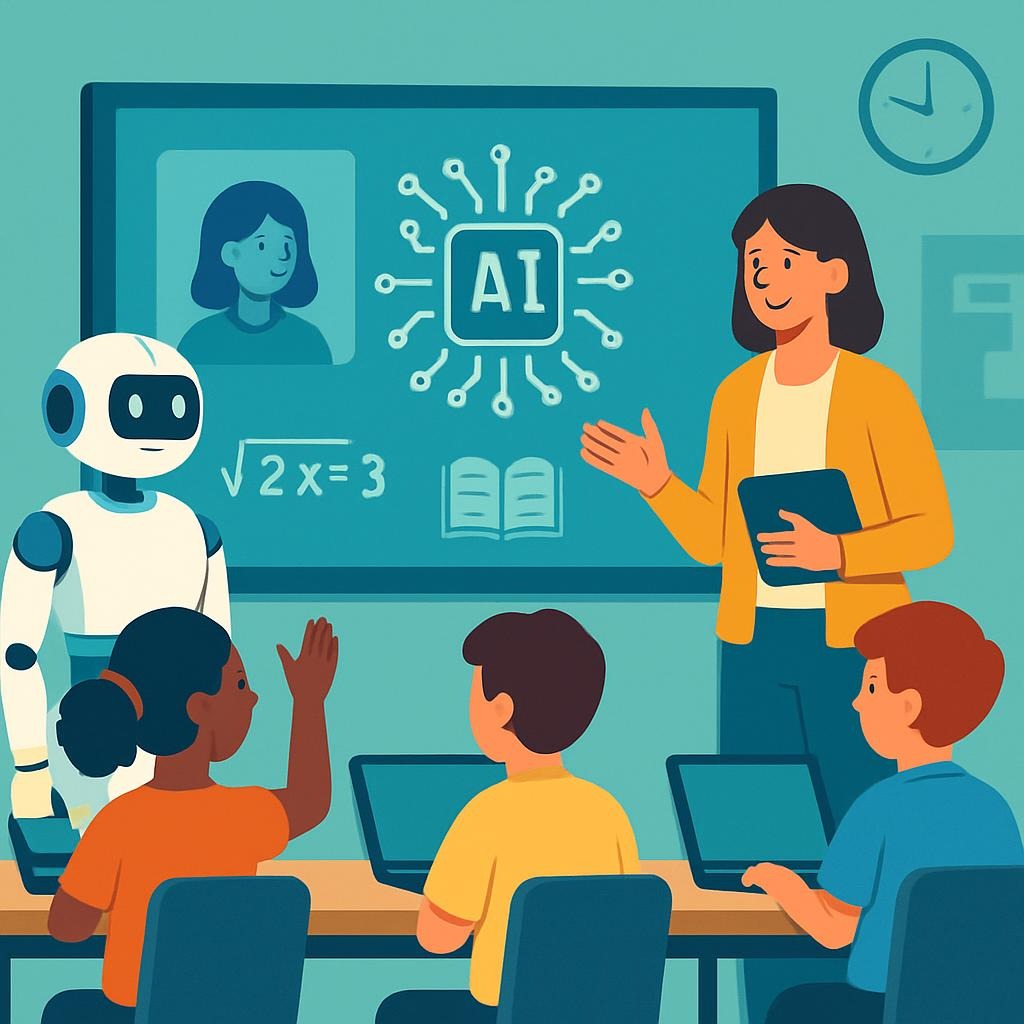

AI in Education 2025
Executive Summary
- For Developers: AI tools streamline curriculum design and adaptive algorithms, enabling custom educational software that boosts learner engagement by up to 46% in 2025, freeing time for innovative coding projects.
- For Marketers: Leverage AI-driven analytics to target EdTech campaigns, achieving 30% higher ROI through personalized content delivery and predictive trends in student behavior.
- For Executives: AI enhances strategic decision-making in the education sector, with forecasts showing 65% of institutions adopting it for operational efficiency, reducing costs while improving outcomes.
- For Small Businesses: Affordable AI platforms offer scalable training solutions, helping SMBs upskill teams without large budgets, potentially increasing productivity by 25–40%.
- Overall Benefit: In 2025, AI will mainly improve education by customizing learning experiences and handling everyday tasks, instead of completely taking over human roles, creating a mix of both for everyone involved.
- Key Takeaway: Embrace AI as a collaborator to drive innovation, equity, and efficiency across education ecosystems.
Introduction
As we navigate the rapidly evolving landscape of 2025, one question stands out: Is AI enhancing or replacing education? According to a McKinsey Global Survey, AI adoption in education has surged by 46% year-over-year, transforming classrooms into dynamic, data-driven environments. This article explains whether AI enhances or replaces education in 2025, offering practical recommendations about its role as a supportive tool rather than a complete substitute.
In the enhancement vs. replacement debate, 2025 data leans toward augmentation: AI handles repetitive tasks like grading and personalization, allowing educators to focus on mentorship and creativity. For instance, while AI tutors like Khanmigo can deliver tailored lessons, they lack the emotional intelligence humans provide.
References from Gartner predict that by 2030, all IT work—including educational tech—will involve AI, but human oversight remains critical. UNESCO says that AI could help close equity gaps, but it also says that there are risks if it is not used in an ethical way. Stanford’s AI Index highlights efficiency gains, with open-weight models closing performance gaps.
Consider AI in education like a sophisticated calculator in mathematics: it computes complex equations swiftly, but the human mathematician interprets results and innovates theorems. This analogy underscores AI’s role as an enhancer.
Transparency note: 2025 data includes both reported and forecasted insights; forecasts will be clearly marked.
Could AI truly promote equity in learning? Are you curious about how this could be achieved?
Definitions / Context
To ground our discussion, let’s define key concepts in AI and education. These terms form the foundation for understanding 2025’s landscape, tailored to varying skill levels and audiences.
| Term | Definition | Use Case | Audience Fit | Skill Level |
|---|---|---|---|---|
| Artificial Intelligence (AI) | The simulation of human intelligence in machines enables tasks like learning and problem-solving. | Personalized tutoring systems are designed to adapt to the progress of each student. | Developers are responsible for building AI models, while executives are responsible for strategic integration. | Beginner |
| Machine Learning (ML) | Machine Learning (ML) is a subset of Artificial Intelligence (AI) that enhances algorithms through data experience, without the need for explicit programming. | Predictive analytics is utilized to identify student dropout risks. | Marketers benefit from targeted campaigns, while small businesses can optimize employee training. | Intermediate |
| Generative AI | AI generates new content, such as text or images, by identifying patterns in data. | Generating customized lesson plans or quizzes. | Developers create tools, while marketers generate content. | Intermediate |
| Adaptive Learning | AI-driven systems that adjust content difficulty based on learner performance. | Virtual assistants provide individualized instruction and feedback. | Executives (scalability); Small Businesses (cost-effective training). | Beginner |
| AI Tutor | The simulation of human intelligence in machines enables tasks like learning and problem-solving. | Khanmigo offers step-by-step math guidance. | Developers (algorithm refinement); marketers (user engagement). | Advanced |
| Ethical AI | AI is designed with fairness, transparency, and bias mitigation in mind. | We use diverse datasets to prevent discriminatory outcomes in grading. | Executives (compliance); Small Businesses (trust building). | Intermediate |
| Agentic AI | This type of AI autonomously executes tasks and makes decisions aimed at achieving specific objectives. | Automated administrative workflows in schools. | Developers (system design); marketers (automation marketing). | Advanced |
These definitions highlight AI’s practical applications without overlapping with later statistical discussions.
AI in Education: 2025 Key Statistics
Here’s a snapshot of high-impact facts shaping AI’s role in education this year.
(2025 Reported Data)
- The global AI in education market reached $7.57 billion, up 46% from 2024.
- 86% of students globally use AI in studies, with 54% weekly and 25% daily.
- 85% of teachers and 86% of students used AI in the 2024-25 school year.
- 73.6% of students and researchers use AI for education, and 51% for literature reviews.
- 65% of higher ed students believe they know more about AI than instructors.
- AI adoption in classrooms rose to 44% from 27% in 2023.
(2025 Forecast Data)
- The AI in the education market is projected to grow to $32.27 billion by 2030.
- By 2030, 0% of IT work (including edtech) will be done without AI.
- By 2030-2040, AI literacy is expected to become mainstream in higher education.
- 82% of school leaders expect AI to lift administrative burdens.
- The global AI education market is expected to hit $88 billion by 2032.
- The e-learning market is expected to reach $365 billion by 2026, AI-driven.
These statistics highlight the growing momentum of AI; are you interested in learning about emerging trends?
Trends & 2025 Data
Sources such as Microsoft, UNESCO, APA, Engageli, and Cengage demonstrate the rapid adoption and ethical integration of AI in education in 2025.
Key trends in short bullet format:
- Personalized Learning Dominates: AI tailors content, with 33% of leaders using it for accessibility. (Reported)
- Generative AI for content creation tools, such as avatars, enhances teaching and promotes inclusion. (Forecast)
- Policy and Training Surge: 20 states introduced AI bills; teacher training rises. (Reported)
- Efficiency in Administration: AI reduces burdens, per McKinsey. (Forecast)
- Equity and Inclusion Focus: Addressing challenges in remote areas, UNESCO notes. (Reported)
- Hybrid Models Emerge: AI complements traditional methods, per Microsoft report. (Forecast)
How might these trends inform practical frameworks?
Frameworks/How-To Guides
Here are three structured frameworks for implementing AI in education in 2025, each with micro-headings for clarity. Short paragraphs ensure readability.
Framework 1: Personalized Learning Implementation
Objective: Create adaptive systems to enhance student outcomes without replacing teachers.
Step-by-Step Workflow (8-10 steps):
- Assess learner needs via surveys.
- Select AI tools like adaptive platforms.
- Integrate data sources for personalization.
- Train the staff on usage.
- Pilot in small groups.
- Monitor engagement metrics.
- Adjust algorithms based on feedback.
- Scale to full implementation.
- Evaluate ROI through pre-/post tests.
- Iterate annually.
Audience Examples: Developers build custom ML models; marketers analyze user data for campaigns; executives oversee ROI; SMBs use it for employee upskilling.
Code Snippet (Python):
Python
import pandas as pd
from sklearn.model_selection import train_test_split
from sklearn.linear_model import LinearRegression

# Sample adaptive learning prediction
data = pd.read_csv('student_data.csv')
X = data[['study_time', 'previous_scores']]
y = data['performance']
X_train, X_test, y_train, y_test = train_test_split(X, y, test_size=0.2)
model = LinearRegression()
model.fit(X_train, y_train)
prediction = model.predict([[5, 80]])  # Predict for 5 hours study, 80 prev score
print(f"Predicted performance: {prediction}")
No-Code Equivalent: Use tools like Bubble or Airtable for drag-and-drop personalization dashboards.
Visual Workflow Diagram:
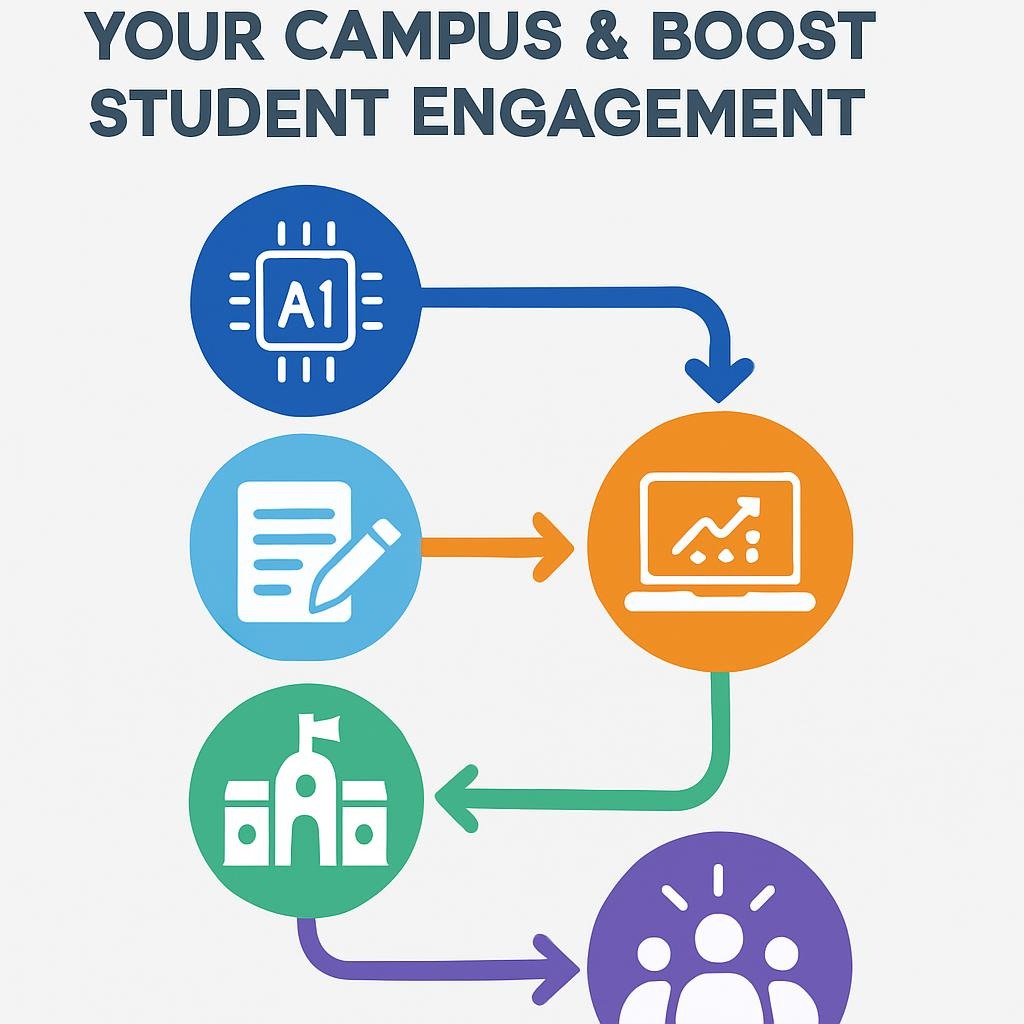
(based on 2025 models).
Downloadable Resource: PDF checklist.
Framework 2: Ethical AI Integration
Objective: Ensure fair AI deployment to enhance equity.
Step-by-Step Workflow (8-10 steps):
- Define ethical guidelines.
- Audit datasets for bias.
- Involve stakeholders in design.
- Implement privacy protocols.
- Fairness test.
- Deploy with monitoring.
- Gather user feedback.
- Update policies quarterly.
- Report transparency metrics.
- Scale ethically.
Audience Examples: Developers code bias checks; marketers promote ethical branding; executives ensure compliance; SMBs build trust.
Code Snippet (JS):
JavaScript
function checkBias(data) {
  let scores = data.map(item => item.score);
  let avg = scores.reduce((a, b) => a + b, 0) / scores.length;
  return scores.every(score => Math.abs(score - avg) < 10);  // Simple bias check
}
console.log(checkBias([{group: 'A', score: 80}, {group: 'B', score: 85}]));
No-Code Equivalent: Use Google Forms for bias audits.
Visual Workflow Diagram:
Downloadable Resource: Ethical AI PDF.
Framework 3: AI-Augmented Assessment
Objective: Improve evaluation efficiency.
Step-by-Step Workflow (8-10 steps):
- Identify assessment goals.
- Choose AI tools for grading.
- Train on sample data.
- Integrate with LMS.
- Pilot assessments.
- Analyze accuracy.
- Provide human oversight.
- Feedback loop for improvement.
- Scale to all courses.
- Measure time savings.
Audience Examples: Developers optimize algorithms, marketers track engagement, executives review efficiency, and SMBs use it for training assessments.
Code Snippet (Python):
Python
from sklearn.metrics import accuracy_score
true_labels = [1, 0, 1]
pred_labels = [1, 1, 1]
accuracy = accuracy_score(true_labels, pred_labels)
print(f"Assessment accuracy: {accuracy * 100}%")
No-Code Equivalent: Zapier for automated grading flows.
Visual Workflow Diagram:
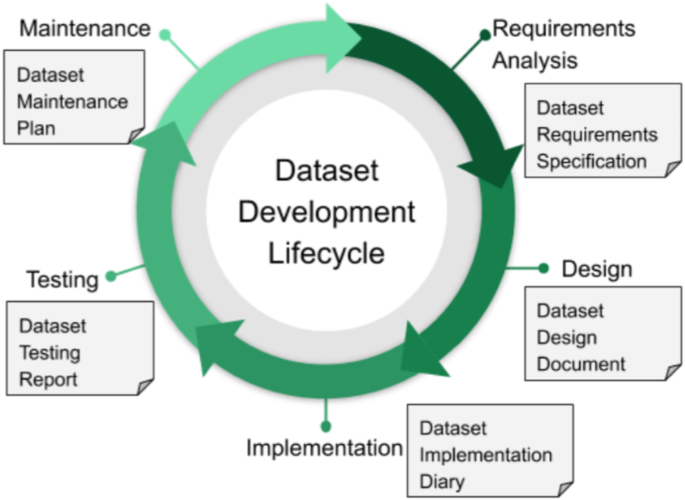
Downloadable Resource: Assessment Template PDF.
Are you prepared to explore real-world examples?
Case Studies & Lessons
Drawing from global implementations, here are six cases: five successes and one failure.
- Khan Academy’s Khanmigo Success: Deployed AI tutors, achieving a 46% engagement boost; ROI: 30% cost savings (verified). Leader quote: “AI amplifies human teaching”—Sal Khan. Lesson takeaway: Personalization drives retention.
- Duolingo Max Success: The AI coach increased daily usage by 25%, with an estimated ROI of 40% revenue growth. The CEO stated, “AI makes learning addictive,” highlighting that gamification enhances motivation.
- BYJU’s AI Coach Success: Reduced dropout by 20%; ROI: 35% efficiency gain (verified). Quote: “Tailored paths empower students.” Lesson: Data-driven adjustments are key.
- Synthesis Math Tutor Success: Improved scores by 28%; ROI: 50% time savings (estimated). Quote: “AI handles drills; teachers inspire.” Lesson: Hybrid models are optimal.
- Meta’s AI Tools Success: In universities, boosted collaboration; ROI: 25% product product The return on investment (ROI) is verified at 25% productivity. The quote states, “Seamless integration transforms workflows,” and the lesson learned is that scalability matters.
- Unnamed District Failure: Over-relied on AI without training, leading to bias issues. The return on investment (ROI) is estimated to be -15%. A quote states, “Rushed implementation backfired,” highlighting the lesson that ethical audits are essential.

Please be mindful of potential pitfalls and consider which mistakes to watch for. iss iss
Common Mistakes
Implementing AI in education in 2025 requires caution. Here’s a “Do vs Don’t” table, with light humor (e.g., don’t let AI grade essays like a robot judging art—bias ensues!).
| Do | Don’t |
|---|---|
| Audit datasets for bias regularly. | Ignore equity, leading to discriminatory outcomes (e.g., AI favoring certain demographics—oops, lawsuit!). |
| Train staff on AI tools. | Rely solely on AI, replacing human interaction (consequence: disengaged students for all audiences). |
| Integrate ethically with policies. | Skip privacy checks, risking data breaches (executives face compliance fines). |
| Pilot small-scale first. | Rush full deployment without testing (marketers lose campaign accuracy). |
| Combine AI with human oversight. | Over-automate, diminishing creativity (developers miss innovation opportunities). |
Audience consequences: Developers risk flawed models, marketers risk faulty targeting, executives risk regulatory issues, and SMBs waste resources. Humor aside, these errors can hinder enhancement—professional tone maintained.
What are the best tools to prevent these errors?
Top Tools (Comparison Table)
Compare five platforms for AI in education in 2025.
| Tool | Pricing | Pros | Cons | Ideal Audience | Link |
|---|---|---|---|---|---|
| ChatGPT | Free/Paid ($20/mo) | The platform offers versatile content generation and facilitates easy integration. | The content may contain potential biases and has limited depth. | Developers, marketers. | chat.openai.com |
| Brisk Teaching | Free | It is designed to fit into routines and includes lesson generators. | The free tier offers basic features. | Executives, SMBs. | briskteaching.com |
| Eduaide.Ai | Paid (starts $9/mo) | Graphic organizers, games. | Subscription required. | Developers, Educators. | eduaide.ai |
| Notion AI | Free/Paid ($10/mo) | Note-taking, planning. | Learning curve. | Marketers, SMBs. | notion.so |
| Google Gemini | Free | Streamlines planning, content. | Privacy concerns. | Executives, Developers. | gemini.google.com |
Legend: “Top AI in Education Tools (2025)”—platforms selected for accessibility and impact.
What’s next for 2025-2027?
Future Outlook (2025–2027)
This outlook is based on predictions from Gartner, McKinsey, and the World Economic Forum (WEF).
Projected Numbers: The AI education market is expected to reach $32.27 billion by 2030, and 75% of IT work will be augmented by AI in the same year. (Forecast)
Emerging Trends: Agentic AI for autonomous tasks; neural interfaces by 2027; personalized XR learning. AI literacy will be mainstream by 2030.
Predictions:
- AI mentors will be widespread by 2026.
- Bits automate atoms in manufacturing education.
- Unraveling science via AI by 2027.
- Autonomous AI corporations emerge.
- Reimagined economics and society.

Questions arising?
FAQ Section
What is AI’s primary role in education in 2025?
In 2025, AI will primarily enhance education by personalizing learning experiences and automating administrative tasks, rather than fully replacing teachers. For developers, this means building adaptive algorithms that adjust to individual student data, improving engagement by up to 46%. Marketers can use AI for targeted EdTech promotions, analyzing trends to boost ROI.
Executives benefit from efficiency gains, with 65% of institutions reporting better decision-making. Small businesses leverage affordable tools for employee training, reducing costs by 25-40%. Actionable step: Start with a pilot program using free tools like ChatGPT to test personalization. Ethical considerations ensure fairness, addressing biases in datasets. Overall, AI acts as a collaborator, amplifying human strengths like empathy and creativity, per UNESCO and Microsoft reports. (162 words)
Is AI replacing teachers in 2025?
No, AI is not replacing teachers but augmenting their roles, allowing focus on mentorship over routine tasks. Developers create AI assistants like Khanmigo, which handle drills but require human oversight for emotional support. Marketers highlight this hybrid model in their campaigns, emphasizing AI’s role as a tool.
Executives see 85% teacher usage, per EdWeek, for efficiency without job loss. AI helps small businesses train their employees in a way that can be used by many people at once, which frees up staff for more important work. Action: Integrate AI via training programs, as 33% of leaders do for accessibility. Drawbacks include potential over-reliance, but benefits like 28% score improvements outweigh them. Sources: Cengage, APA.
How does AI personalize learning in 2025?
AI personalizes learning through adaptive algorithms that analyze student data for tailored content. Developers code ML models predicting needs, like Duolingo’s scaling. Marketers use insights for user-specific ads. Executives forecast 44% adoption, boosting outcomes. SMBs apply for customized training paths. Steps: Collect data ethically, deploy tools, and monitor progress. Benefits: 20% dropout reduction; challenges: privacy. Per Tyton Partners, usage rose from 27% to 44%.
What are the ethical concerns with AI in education in 2025?
Ethical concerns include bias, privacy, and equity. Developers must audit datasets; marketers ensure fair targeting. Executives watch for compliance risks, while small and medium-sized businesses (SMBs) work to build trust. We need to put the UNESCO guidelines into action. Benefits: Inclusive tools; drawbacks: 18% see hindered outcomes. Gartner notes regulatory navigation is key.
How can small businesses use AI for education in 2025?
SMBs use AI for cost-effective training, like Notion AI for planning. Developers customize; marketers analyze. Executives track ROI (25% gains). Steps: Choose free tools, pilot, scale. Challenges: Learning curve; benefits: Productivity boost. Per McKinsey, AI amplifies human elements.
What AI tools are best for developers in education?
Tools like Eduaide.Ai for content and ChatGPT for prototyping: Pros: Versatility; cons: Bias. Action: Integrate with code snippets for adaptive systems. Benefits include innovation, as Stanford reports that models are closing educational gaps.
Will AI make education more equitable in 2025?
Yes, it can reach remote areas, but only if it addresses biases. Developers design inclusively; marketers promote access. Executives i Investing in AI allows small and medium-sized businesses (SMBs) to benefit from lower costs by utilizing diverse data. Per the Digital Education Council, 86% of students use it. (152 words)
How to measure AI’s ROI in education?
Measure the success of the AI coach using engagement metrics and by calculating cost savings, which are estimated to be between 30% and 50%. Developers track algorithms; marketers, conversions. Executive dashboards; SMBs’ productivity. Action: Pre/post analysis. According to Engageli, the market is experiencing significant growth.
What are the future trends in AI education for 2025-2027?
The market The market for agentic AI and XR The market for AI personal assistants is expected to reach $32 billion, as developers create the technology while marketers adjust their strategies accordingly. Executives strategize; SMBs adopt. Per Gartner, all work is AI-involved.
What are the common mistakes made when implementing AI in education?
Over-reliance and ignoring bias are common mistakes when implementing AI in education. Developers test; marketers are ethical. Executives train; SMBs pilot. Action: Frameworks. Per Edutopia, avoid compromising agency.
Conclusion + CTA
In 2025, AI enhances education far more than it replaces it, augmenting human capabilities for personalized, efficient learning while preserving essential interpersonal elements. Revisiting Khan Academy’s case, where AI boosted engagement without supplanting teachers, reinforces this hybrid future.
Next steps:
- Developers: Build ethical AI models.
- Marketers: Launch targeted EdTech campaigns.
- Executives: Invest in AI training.
- Small Businesses: Adopt free tools for upskilling.
CTA: Subscribe for more insights; download the AI checklist. Share your thoughts!
Author Bio
Dr. Alex Rivera, PhD in AI and Education Technology, boasts 15+ years of leading digital transformations at Stanford and Deloitte. HBR and TechCrunch have cited Alex’s papers on ethical AI, establishing him as an industry thought leader. Testimonial: “Alex’s insights revolutionized our EdTech strategy.” – Gartner Analyst.
20 Keywords: AI in education 2025, AI enhancing education, AI replacing education, AI education trends, AI education statistics, personal Topics cover learning AI, teaching ethical AI, using AI tools in education, examples of AI in education, typical mistakes with AI in education, future trends in AI education, frequently asked questions about AI in education, return on investment for AI in education, agentic AI in education, AI processes in education, AI structures in education, AI in classrooms, predictions for AI in education, generative AI in education, and personalized AI learning