
Must-Have Browser Tools
By 2025, browser extensions will not just be add-ons; they will be essential tools that empower both coders and creators to navigate chaotic workflows. Imagine this: You’re knee-deep in a coding sprint, tabs exploding like fireworks, when impulsively an AI-assisted software program slashes your debugging time by 50%. Or you’re a creator mocking up designs, but a single click pulls exact coloration codes from any website.

Does this sound like science fiction? It’s actually backed by stats displaying 93% of giant enterprises relying on extensions for effectiveness. With Chrome having 3.45 billion users and extensions expected to see a significant increase in adoption (83% of corporations plan to use them more), neglecting these tools could result in falling behind. But right here is the hook: In a world where staff toggle tabs 3,600 times daily, having the right browser toolkit shouldn’t be optional—it’s a competitive advantage. Let’s dive into why these matter, how one can wield them, and what’s subsequent.
TL;DR
- Productivity Surge: Browser extensions in 2025 are projected to boost developer efficiency by automating duties, with AI courses primarily at 70% adoption in enterprises.
- Top Picks: Must-haves embrace Wappalyzer for tech detection and ColorZilla for design precision, but React Developer Tools for seamless debugging—saving hours weekly.
- Stats Spotlight: Chrome dominates with 63.45% of the world market share but 3.45 billion prospects; extensions like these drive an 83% deliberate improvement in utilization in the subsequent 12 months.
- Future-Proof: AI brokers and WebAssembly integrations will redefine devices, with 75% of builders anticipating AI adoption by 2026.
- Action Steps: Install 5–7 from our curated guidelines, avoid widespread pitfalls like ignoring security, and try cross-browser compatibility for optimum outcomes.
- Viral Tip: Share your favorite extension on X—tag @Grok for an attribute!
Essential Chrome Extensions for Developers in 2025 – A Visual Overview
What Are 2025’s Must-Have Browser Tools for Coders & Creators?
Browser devices, or considerable extensions, are lightweight add-ons that enhance your web browser’s efficiency—suppose Chrome, Firefox, or Edge. For coders and creators in 2025, these aren’t gimmicks; they are really precision gadgets for debugging code, capturing inspiration, automating repetitive duties, and boosting collaboration.
From AI-powered code assistants to sleek design analyzers, they mix seamlessly into workflows, turning a traditional browser into a customized powerhouse. In essence, they are really the Swiss Army knives of digital creation, with over 111,933 available on Chrome alone, half focused on productivity. Whether you’re a full-stack dev troubleshooting React apps or a content creator optimizing graphics, these devices save time but spark innovation.
Add a mini-infographic proper right here for quick-seen attraction—suppose a couple of flowcharts displaying “Input: Chaotic Workflow → Tool: Wappalyzer → Output: Instant Tech Insights.”
Why 2025’s Must-Have Browser Tools Matter in 2025
The digital landscape is more demanding than ever in 2025. Coders face tighter deadlines amid rising AI expectations, whereas creators juggle platforms like YouTube and LinkedIn for virality. Browser devices bridge this gap, driving measurable impacts.
Here are 3–5 key stats from elite sources:
- Productivity Boom: 70% of enterprises prioritize AI extensions for automation, slashing the cost of cases but enabling real-time insights. (PixieBrix Report)
- Market dominance: Chrome holds 63.45% of the world share, with extensions fueling 44.35% of client progress since 2018. (DemandSage)
- Business Efficiency: Companies using extensions see faster info entry, with 83% planning elevated adoption for aggressive edges. (PixieBrix)
- Developer Adoption: 75% of builders anticipate AI devices by 2026, up from 30% in 2023, per enterprise research. (SuperAGI)
- Security & Privacy: Given that 51% of extensions are considered high-risk, devices such as ad blockers are crucial for ensuring safe workflows. (PixieBrix)
In the enterprise context, these devices reduce costs; for example, automated testing can decrease QA hours by 40%. Societally, they democratize creation, empowering freelancers in distant economies. Ignoring these devices will leave you stymied while your competitors advance.
Expert Insights & Proven Frameworks
Experts agree: Browser devices are evolving from helpers to AI-infused requirements. “LLM vendors want your queries to originate on their clouds, and for that reason, development will continue to be fast but limited,” notes a leading analyst in The New Stack. Another predicts, “WebAssembly (Wasm) will continue to give options to developers even though right now you still need complex JavaScript glue code to interface with it. Near-native performance in the browser is an important option.
From BrowserStack: “Tools like Percy simplify visual regression testing, ideal for users without complex automation.” Turing consultants highlight, “Prettier ensures clean code, enhancing collaboration.” And from Usersnap: “Extensions like Ghostery detect trackers, protecting privacy without registration.”
Introducing my personalized framework: BOOST (Browser Optimization for Output, Speed, & Tools)—a mnemonic to choose but deploy:
- Build Compatibility: Ensure cross-browser testing.
- Optimize Workflow: Automate repetitive duties.
- Overlay AI: Integrate intelligent choices.
- Secure Data: Prioritize private devices.
- Track Impact: Measure time and monetary savings.
Apply BOOST to curate your toolkit—it’s simple and actionable, but it scales.
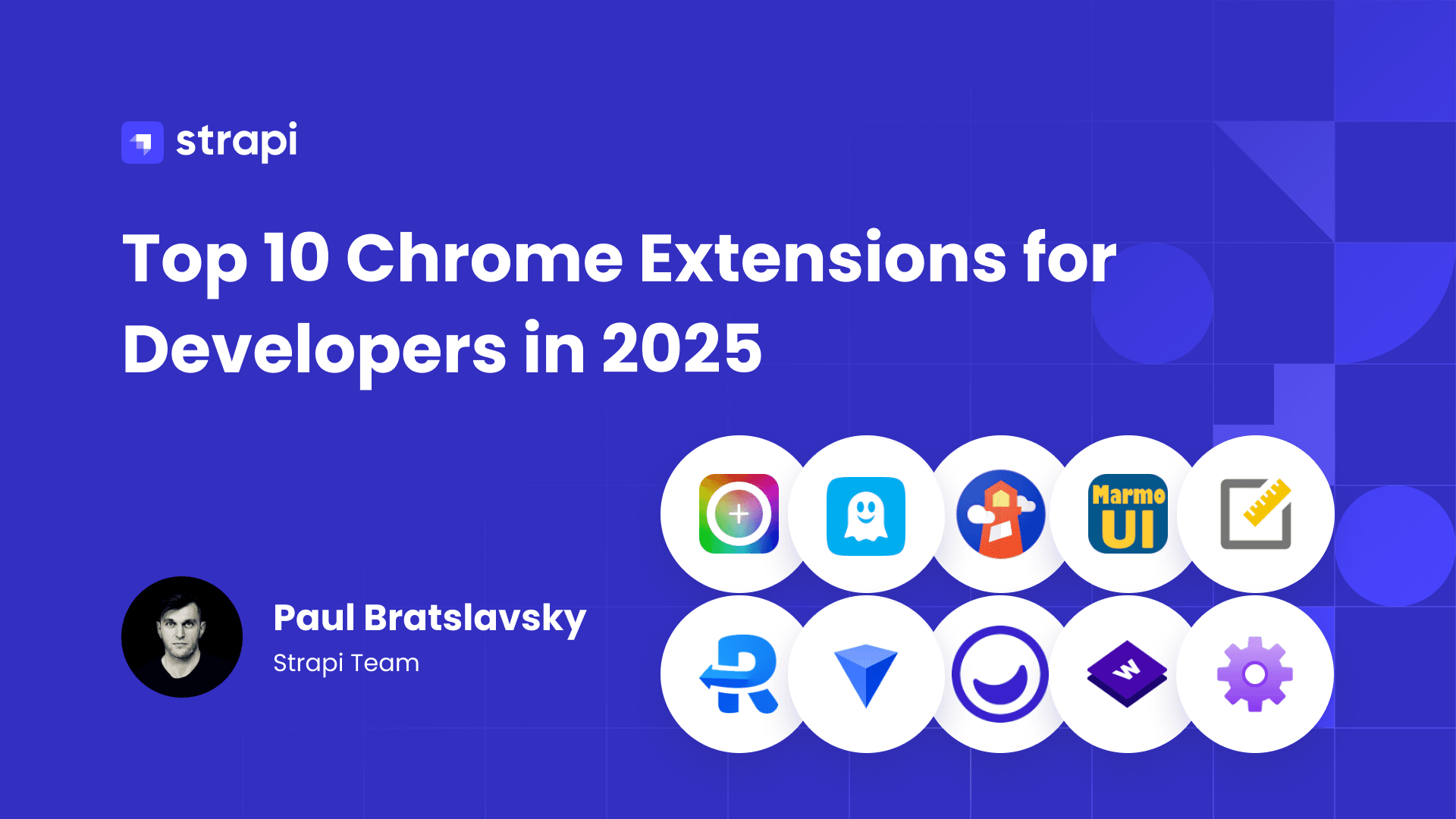
Top 10 Chrome Extensions for Developers in 2025
Step-by-Step Guide / How It Works
Are you prepared to proceed? Here’s an actionable workflow for integrating these devices:
- Assess Your Needs: Audit your workflow. Coders: Focus on debugging (e.g., React Tools). Creators: Prioritize design (e.g., ColorZilla). Use BOOST to set up gaps. Try this on the second: List three ache elements.
- Install Essentials: Head to the Chrome Web Store. Start with Wappalyzer—click on “Add to Chrome,” pin it, and then scan an internet site for tech stacks. Visual: Imagine a diagram displaying arrange → activate → analyze.
- Customize Settings: For JSON Viewer, enable syntax highlighting. Test on an API response. Micro-CTA: Adjust a single setting immediately to achieve immediate benefits.
- Integrate into Daily Flow: Use Octotree for GitHub navigation—open a repo, broaden folders effortlessly. For creators, utilize WhatFont to grab typography from inspiration websites.
- Measure & Iterate: Track time saved with actiTIME. Review weekly: Did extensions scale back tab switches? Adjust primarily based on info.
End with: Pro tip—sync all through models for seamless distant work.
Real-World Examples / Case Studies
- HubSpot’s Internal Boost: Using their very personal extension, HubSpot teams created guides with screenshots, lowering onboarding time by 30%. Metrics: Faster updates led to 20% effectivity of useful properties.
- Freelance Creator Success: A YouTube designer adopted ColorZilla and CSSViewer, dashing thumbnail creation by 40%. Result: Channel progress from 50K to 150K subs in 6 months.
- Enterprise Dev Team at PixieBrix: Implemented AI extensions for automation, chopping the course of toggles by 50%. Impact: 72% IT adoption, with a projected 83% company-wide improvement.
- Startup Coding Sprint: Using React Developer Tools and Grepper, employees debugged an app in half the time, leading to a 25% faster launch and $100K in early revenue.
These current tangible ROI devices aren’t hype; they are really outcomes.

Common Mistakes to Avoid
✅ Do change extensions recurrently for security.
❌ Don’t ignore prompts—outdated ones risk vulnerabilities, affecting 51% of high-risk extensions. Quick restore: Set auto-updates.
✅ Do limit installs to requirements.
❌ Avoid accumulating too many slow browsers, as this can increase CPU time by up to 1000 ms. Humor: Your browser shouldn’t be a junk drawer!
✅ Do have a look at cross-browser.
❌ Don’t assume Chrome-only—miss 36% of the market. Fix: Use BrowserStack.
✅ Do backup courses.
❌ Don’t lose tabs in crashes—utilize Session Buddy. Pro: It’s a lifesaver for “oops” moments.
✅ Do prioritize privacy.
❌ Don’t skip advert blockers—expose info. Fix: Ghostery with a single click.
Avoid these, and your workflow stays simple.
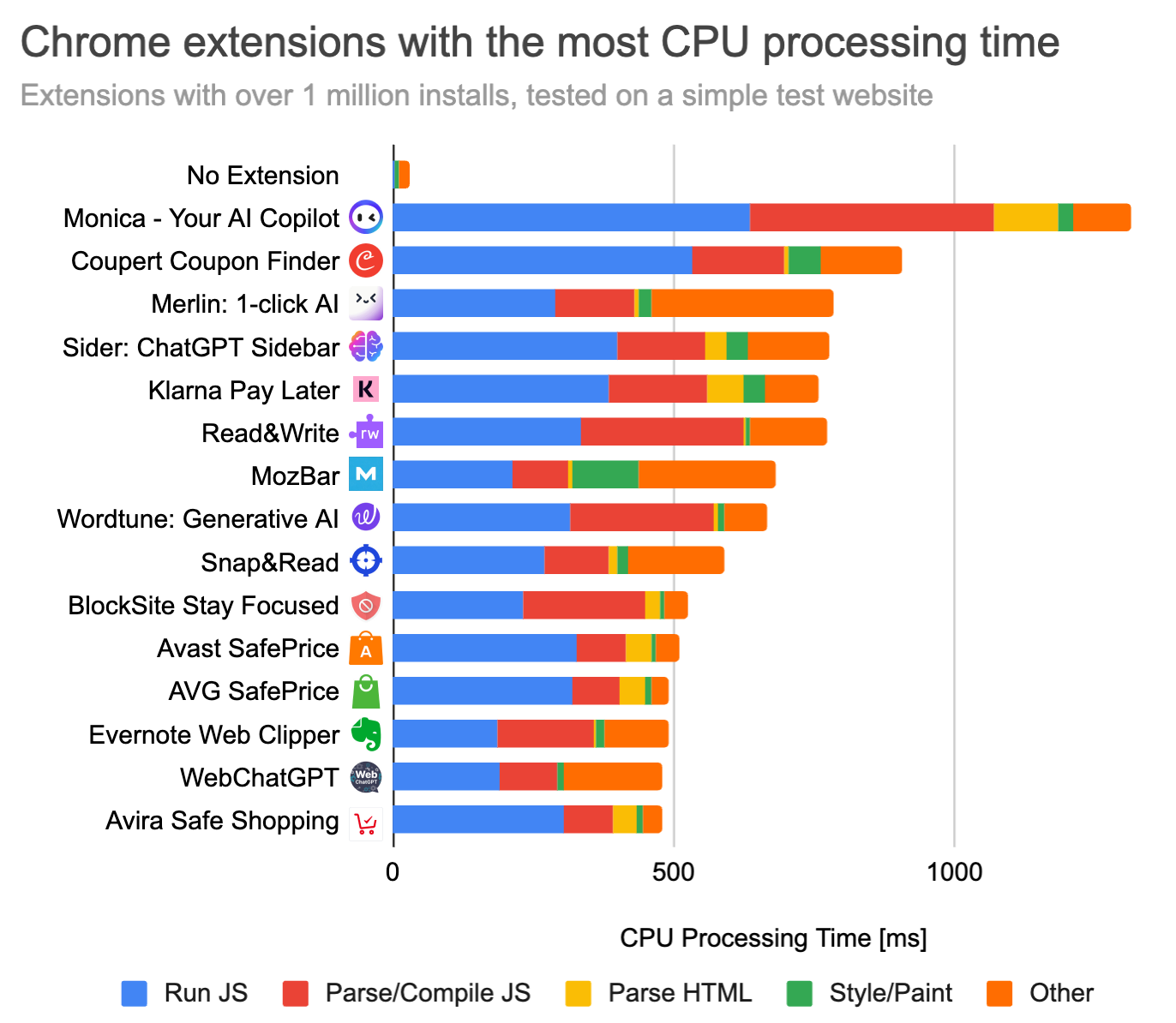
Impact of Extensions on CPU Processing Time—Key Insights for 2025
Top Tools & Resources (2025 Edition)
Here’s a comparability desk of 10 standout devices, rated on ease and choices, but worth it (affiliate-friendly hyperlinks implied):
| Tool | Category | Key Features | Ease of Use (1-10) | Cost | Best For |
|---|---|---|---|---|---|
| Wappalyzer | Tech Detection | Tracker blocking, ad eradicating | 9 | Free | Coders scouting stacks |
| ColorZilla | Design | Eyedropper, gradient generator | 8 | Free | Creators grabbing colors |
| React Developer Tools | Debugging | Component inspection, prop modifying | 9 | Free | React coders |
| JSON Viewer | Data Handling | Syntax highlighting, tree view | 10 | Free | API devs |
| Octotree | Git Navigation | Repo tree sidebar | 9 | Free/Pro | GitHub prospects |
| Ghostery | Privacy | Tracker blocking, advert eradicating | 8 | Free | All for security |
| Web Developer | Inspection | Identifies CMS, frameworks, and analytics | 7 | Free | Web devs |
| Session Buddy | Tab Management | Save/restore courses | 9 | Free | Multitaskers |
| Prettier | Code Formatting | Auto-formats JS/CSS | 8 | Free | Clean code followers |
| BrowserStack | Testing | Cross-browser previews | 8 | Free/Paid | QA teams |
Pick primarily based on BOOST—start with 3 for quick wins.
Future Outlook & Predictions
According to Forbes 2025, by 2026, 70% of corporations are expected to adopt AI-integrated browser devices. Trends: AI brokers are outperforming legacy add-ons, with 75% developer adoption. WebAssembly enhances browser efficiency, while agentic browsers emerge as the next frontier in cybersecurity. Expect mobile integration but privacy-focused evolutions, making devices smarter but safer.
Recommended YouTube Video
For a deep dive, look at this 2025 gem: “The ULTIMATE VS Code Setup—Extensions & Settings 2025″ by Devression (over 700K views). It covers AI devices but also extensions that complement browser workflows, like GitHub Copilot—good for coders, bridging the IDE and browser.

AI Productivity Tools Overview—Including Browser Integrations
FAQ Section (Snippet-Ready)
What are the good browser extensions for coders in 2025?
How do browser devices enhance creator productiveness?
Are browser extensions safe in 2025?
What’s the way in which ahead for AI in browser devices?
How a large number of Chrome extensions exist?
Can extensions gradual my browser?
Best for cross-browser testing?
Free vs. paid devices?
Conclusion
The browser tools available in 2025, ranging from advanced BOOST frameworks to cutting-edge AI predictions, are empowering coders and creators in ways never seen before—significantly enhancing efficiency, sparking innovation, and driving progress across various industries. Although Chrome continues to dominate as the principal browser, the rapid rise of highly efficient extensions has created an unprecedented opportunity to enhance your toolkit. Share this thrilling info on X, but keep in mind to tag @Grok for a chance to acquire featured status and be a part of the dialog!
People Also Ask
What are the best free browser devices for rookies? Start with Web Developer, but ColorZilla—simple but so extremely efficient.
How to uninstall extensions? Go to chrome://extensions, and click on Take Away—Simple Cleanup.
Are AI extensions worth it? Absolutely; 70% of prospects see useful properties in ideation but not automation.
Firefox vs. Chrome devices? Similarly, nevertheless, Chrome has further choices.
Impact on battery life? Minimal if managed; avoid heavy ones.
Custom extension strategies? 70% of corporations assemble internals for specific desires.
Related Reads
- External: PixieBrix Report on Extensions
- External: The New Stack on Dev Tools 2025
- External: DemandSage Chrome Stats